


Cancer last year remained the leading cause of death in Taipei for the 47th consecutive year, the Taipei Department of Health said yesterday.
A total of 18,050 Taipei residents died last year, up 2.4 percent from the previous year, the department’s statistics office director Shen Chung-hsien (沈忠憲) said, adding that the average age of death was 76.4, slightly higher than the average of 73 nationwide.
The standardized mortality rate in the city was 317.6 deaths per 100,000 people, 1.4 percent lower than the average rate over the past decade, and lower than the national standardized mortality of 415 deaths last year, he said.
About 78 percent of the deaths in Taipei were caused by the 10 leading causes of death — 29 percent due to cancer (malignant tumor) and 64.3 percent due to seven types of chronic diseases.
The top 10 causes were cancer, heart disease (16.6 percent), pneumonia (9 percent), cerebrovascular disease (6.4 percent), diabetes (3.8 percent), nephritis and kidney disease (3.4 percent), chronic lower respiratory disease (2.8 percent), accidental injury (2.5 percent), sepsis (2.5 percent) and hypertensive diseases (2.1 percent).
Shen said that 5,238 city residents died of cancer last year, an average of 14.4 deaths per day due to cancer.
The five leading causes of death from cancer were trachea and bronchial tumors and lung cancer, followed by colorectal and anal cancer, cholangiocarcinoma and liver cancer, female breast cancer and prostate cancer, he said.
Cancer has been the leading cause of death nationwide for 37 consecutive years, so the department urges people to maintain a healthy and balanced diet, exercise regularly and maintain a healthy weight, avoid smoking or chewing betel nuts, and make regular use of the nation’s cancer screening programs, Shen said.
Lung cancer is the deadliest cancer for both genders in Taipei due to air pollution, Taipei City Hospital’s Renai Branch digestive disease physician Chen Kuan-yang (陳冠仰) said.
Men were believed more likely to develop lung cancer due to a higher prevalence of smoking, but studies have found that the incidence of lung cancer in women was not significantly lower, because many women are exposed to cooking fumes, Chen added.
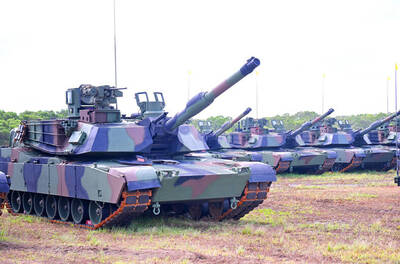
The manufacture of the remaining 28 M1A2T Abrams tanks Taiwan purchased from the US has recently been completed, and they are expected to be delivered within the next one to two months, a source said yesterday. The Ministry of National Defense is arranging cargo ships to transport the tanks to Taiwan as soon as possible, said the source, who is familiar with the matter. The estimated arrival time ranges from late this month to early next month, the source said. The 28 Abrams tanks make up the third and final batch of a total of 108 tanks, valued at about NT$40.5 billion

A group from the Taiwanese Designers in Australia association yesterday represented Taiwan at the Midsumma Pride March in Melbourne. The march, held in the St. Kilda suburb, is the city’s largest LGBTQIA+ parade and the flagship event of the annual Midsumma Festival. It attracted more than 45,000 spectators who supported the 400 groups and 10,000 marchers that participated this year, the association said. Taiwanese Designers said they organized a team to march for Taiwan this year, joining politicians, government agencies, professionals and community organizations in showing support for LGBTQIA+ people and diverse communities. As the first country in Asia to legalize same-sex
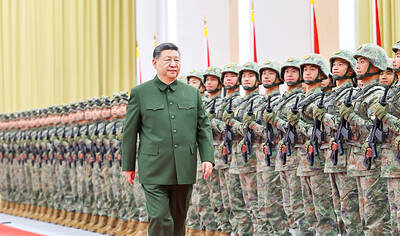
MOTIVES QUESTIONED The PLA considers Xi’s policies toward Taiwan to be driven by personal considerations rather than military assessment, the Epoch Times reports Chinese President Xi Jinping’s (習近平) latest purge of the Chinese People’s Liberation Army (PLA) leadership might have been prompted by the military’s opposition to plans of invading Taiwan, the Epoch Times said. The Chinese military opposes waging war against Taiwan by a large consensus, putting it at odds with Xi’s vision, the Falun Gong-affiliated daily said in a report on Thursday, citing anonymous sources with insight into the PLA’s inner workings. The opposition is not the opinion of a few generals, but a widely shared view among the PLA cadre, the Epoch Times cited them as saying. “Chinese forces know full well that

Travel agencies in Taiwan are working to secure alternative flights for travelers bound for New Zealand for the Lunar New Year holiday, as Air New Zealand workers are set to strike next week. The airline said that it has confirmed that the planned industrial action by its international wide-body cabin crew would go ahead on Thursday and Friday next week. While the Auckland-based carrier pledged to take reasonable measures to mitigate the impact of the workers’ strike, an Air New Zealand flight arriving at Taipei from Auckland on Thursday and another flight departing from Taipei for Auckland on Saturday would have to


 RSS
RSS