


Taipei Times (TT): As a member of the “DPP presidential primary observer group,” what are your observation of the primary? Some said outsiders should leave the DPP’s internal affairs alone. What are your thoughts?
Chen Yung-hsing (陳永興): Although a primary is a party’s own affair, if the mechanism is ill-constructed, it would have a negative effect on society. The process of the DPP primary was full of flaws.
Rules for primaries were promulgated a long time ago, yet after [former premier] William Lai (賴清德) registered, the DPP’s performance has been preposterous. Aside from delaying the timetable twice, it changed the design of polling [in the middle of the primary] by adding cellphone polling to what had previously been done exclusively via landline.
Cellphone polling is prone to fraud and cannot reflect actual public opinion, as there are many in Taiwan who have multiple cellphone numbers, while junior-high school students and foreign migrant workers also have them.
There are also questions over how the sampling base was assembled.
The DPP cannot provide a reasonable answer to these questions and many, including polling experts, remain doubtful over the poll results.
President Tsai Ing-wen’s (蔡英文) supporters of course welcomed the primary result, while most DPP officials likely breathed a sigh of relief.
For Lai’s supporters, the reactions are complex: Some are of the opinion that despite the legitimacy concerns, the result is out and Lai was a good sport by not challenging the results, so they should nonetheless “vote for the DPP with tears,” while others, infuriated over the lack of fairness in the primary process, refuse to support the DPP.
TT: With democracy billed as a core value, why did no one challenge the primary process?
Chen: We are just as astounded over how the party, after Tsai gained total dominance — and particularly while it had the executive and legislative branches — would become unrecognizable to people who knew it.
In light of the events of the primary, the DPP’s insistence that it is democratic is no longer convincing; it has become a party that allows no dissenting opinions.
It is like watching a contest with two players on the field, and Tsai, seeing she would lose, asking the referee to change the rules from a 100m sprint to a 1,500m middle-distance race, then to 5,000m run. In the end, she won.
Tricks were pulled and bad examples were set. If I were to support such a candidate, it would be like telling Taiwanese that resorting to any means to win is acceptable.
We should let Taiwanese see that there is a standard of right and wrong, and winning is not all that matters.
TT: Holding referendums is another founding ideal of the DPP. After the DPP-controlled legislature amended the Referendum Act (公民投票法) and excluded issues such as the nation’s official title and territory from being put to referendums, it last month also decoupled referendums from national elections, a move that critics say is tantamount to depriving Taiwanese of comprehensive referendum rights, as delinking would reduce voter turnout and the chances of a successful referendum. As a long-time advocate of democracy who witnessed the DPP arising from the "dangwai" [黨外, “outside the party”] movement with its founding in 1986 to now having held total control of the central government, do you feel that it has undergone a qualitative change?
Chen: Yes. The only explanation for it is “absolute power corrupts absolutely.”
When the DPP was in opposition, it had no resources or spoils to divide; people who shared common ideals were drawn to the party. At the time, without resources and power, those with the tenacity to hold fast to their ideals rose. Many at that time were unbridled and expressed their opinions with vigour.
One reason that the DPP obtained the power — aside from winning the public’s approval by virtue of its campaign promises — was because the adjustment it made by enlisting people from local KMT forces, such as [now-DPP Legislator] Chen Ming-wen (陳明文).
Chen was originally a KMT member, a provincial council member with ties to farmers’ associations, which dominated the local political scene. Because it took over the KMT’s local forces, the DPP grew quickly. However, with quantitative change there came qualitative change.
For instance, Chen was convicted for revealing to a bidder the lowest tender offered for a project during his stint as Chiayi county commissioner. In the past, if one was convicted of corruption, they would have been stripped of their DPP membership, or at least have it suspended. Not only did that not happen to Chen, he became a co-convener of the party’s Electoral Strategy Committee.
It appears that ideals and principles are being cast aside by the DPP and what prevails is political reality, with no one daring challenge the one in power.
The second time the DPP came to power was because people were disappointed with [former president] Ma Ying-jeou’s (馬英九) eight-year governance. Having won the executive and legislative branches should have been a good thing [giving the party an opportunity to realize its funding ideals.] However, it has become more conservative, walking the path of the old KMT, which used to oppose to people’s right to exercise direct democracy.
It seems that the party has given up its responsibilities and just wants to enjoy the power.
TT: You mentioned those who will “vote for the DPP with tears.” Wouldn’t such a rationale end up consolidating a party’s power, rather than its founding ideals and values?
Chen: In recent years the DPP indeed has given rise to the feeling that it is holding pan-green camp voters hostage in the sense that “if you don’t vote for me, who else can you vote for, as you will not vote for the KMT.”
However, as I have often said, the DPP is not the highest value, and nor is the KMT. Back then [during the party-state era] when there were no political parties, we challenged authority by fighting for freedom of expression, and pursuing democracy and sovereignty for Taiwan.
How are these things not important now that we have political parties?
Why is the importance now placed on which party wins an election?
A DPP election win is not wanted if it is suppressing human rights and failing to uphold its ideal of Taiwanese independence, and social justice and such things.
I think there is room for a third force. It is simply a matter of whether it possesses the credibility needed to prove to Taiwanese that they can have confidence in it. That could be a reminder to the two major parties not to take the people for granted.
TT: How is Taiwan to deepen its democracy if a party that championed democracy is seen as losing touch with its founding ideals?
Chen: First, there should be a force within the DPP capable of engaging in introspection.
Then, there should be a group of people — be it the media, cultural workers, businesspeople or legal practitioners — upholding right from wrong and virtue from vice, and the principles of fairness and justice.
Democracy itself is of diverse powers counterbalancing each other. Society is not made up solely of political parties, nor can they represent the values of the public. Only when forces such as the judiciary, academia, the press and civil groups are strong and independent can Taiwan’s democracy truly consolidate.

SPACE VETERAN: Kjell N. Lindgren, who helps lead NASA’s human spaceflight missions, has been on two expeditions on the ISS and has spent 311 days in space Taiwan-born US astronaut Kjell N. Lindgren is to visit Taiwan to promote technological partnerships through one of the programs organized by the US for its 250th national anniversary. Lindgren would be in Taiwan from Tuesday to Saturday next week as part of the US Bureau of Educational and Cultural Affairs’ US Speaker Program, organized to celebrate the 250th anniversary of the signing of the Declaration of Independence, the American Institute in Taiwan (AIT) said in a statement yesterday. Lindgren plans to engage with key leaders across the nation “to advance cutting-edge technological partnerships and inspire the next generation of scientists and engineers,”

UNREASONABLE SURVEILLANCE: A camera targeted on an road by a neighbor captured a man’s habitual unsignaled turn into home, netting him dozens of tickets The Taichung High Administrative Court has canceled all 45 tickets given to a man for failing to use a turn signal while driving, as it considered long-term surveillance of his privacy more problematic than the traffic violations. The man, surnamed Tseng (曾), lives in Changhua County and was reported 45 times within a month for failing to signal while driving when he turned into the alley where his residence is. The reports were filed by his neighbor, who set up security cameras that constantly monitored not only the alley but also the door and yard of Tseng’s house. The surveillance occurred from July

A Japan Self-Defense Forces vessel entered the Taiwan Strait yesterday, Japanese media reported. After passing through the Taiwan Strait, the Ikazuchi was to proceed to the South China Sea to take part in a joint military exercise with the US and the Philippines, the reports said. Japan Self-Defense Force vessels were first reported to have passed through the strait in September, 2024, with two further transits taking place in February and June last year, the Asahi Shimbun reported. Yesterday’s transit also marked the first time since Japanese Prime Minister Sanae Takaichi took office that a Japanese warship has been sent through the Taiwan
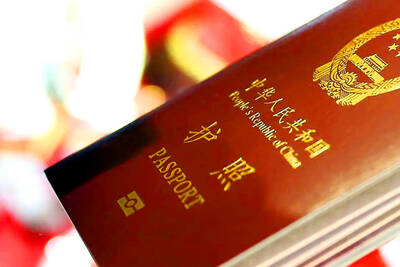
ANOTHER OPTION: The 13-year-old, whose residency status was revoked for holding a Chinese passport, could still apply for residency on humanitarian grounds, the government said The Executive Yuan has rejected an appeal from a 13-year-old Chinese student surnamed Lu (陸), whose permanent residency was revoked after immigration officers discovered he held a Chinese passport. Lu in December 2023 applied to settle in Taiwan to be with his mother, surnamed Lin (林), who is a Taiwan resident, an appeal decision released this month by the Executive Yuan showed. Lin settled in Taiwan after marrying a Taiwanese man in 2003, but the two divorced in 2011, and after marrying a Chinese man, she had Lu, the Executive Yuan’s appeals committee said. Lu’s application was approved in December 2024, and in


 RSS
RSS