


The Taoyuan Flight Attendants’ Union yesterday responded to questions about the breakdown of strike negotiations on Saturday, saying that the vote it held with union members never implied that the strike was over.
The vote simply ensured that the company’s proposal was considered by all employees democratically, it said.
Members of the public had been asking if the vote was “just an act,” but this was not the case, the union said.
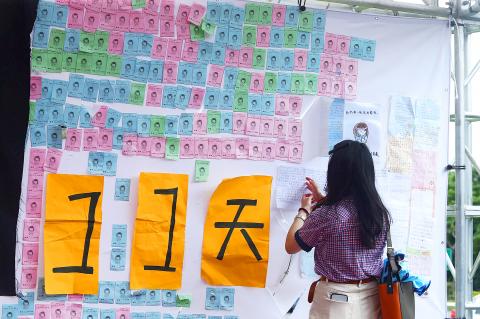
Photo: CNA
Union members were asked whether they agreed with a proposal made by EVA Airways management on Friday, and if they disagreed, whether they would continue the strike in accordance with Article 11 of the union’s strike regulations, the union said.
Article 11 requires the union to hold a vote every 10 days, it added.
The terms and conditions proposed by EVA on Friday afternoon during negotiations between the union and the airline included a pledge that the company would not take action against the strikers and would cooperate with the union to end the strike.
The airline also agreed to a bonus of NT$300 per trip for overnight flights and NT$500 for transoceanic flights, and said it would allow attendants to rest overnight on flights BR198 and BR108, which fly to Tokyo from October to March, and on flight BR716, which flies to Beijing from April to August, excluding May.
EVA would also host monthly employer-employee meetings, a quarterly board of directors or general manager’s meeting, and semi-annual reviews of duty rosters and work arrangements on regular, predetermined dates, the proposed agreement says.
A personnel evaluation committee would include five elected instructors, who would take turns, one coevaluator with the right to speak and vote, and one serving flight attendant to accompany the person being evaluated, it says, adding that the union would also appoint 11 people as directors or supervisors on the board.
The union’s board appointees would be entitled to 25 annual paid leave days for participating and would have the company’s cooperation in arranging their schedules, it added.
A majority of the union members voted in favor of the proposed deal after it was submitted to union members for a vote from 10pm on Friday to noon on Saturday.
Union and airline representatives met at the Taoyuan City Government building on Saturday to negotiate final terms before signing an agreement, but the talks broke down after three hours.
Union representative Liao Yi-chin (廖以勤) said the company would not agree to not punish the 18 flight attendants who the airline said went on strike on June 20, before the union officially began its strike action, and would not agree to reinstate the benefits and working conditions that striking employees enjoyed before going on strike.
According to a statement issued by EVA on May 8, if a strike hurt its profitability and caused financial losses, it would consider freezing annual wage increases and suspending year-end bonus payments to employees, and would stop offering discount air fares to employees and their families for three years.
EVA on Saturday said it wished to implement a notification period before the start of strikes, but this was not in the proposal originally sent to the union that members voted on, Liao said.
Unlike China Airlines, EVA is a private company and answerable to stockholders, so it cannot agree to unreasonable demands, the company member said, on condition of anonymity, adding that if the airline gave in to the union, it would not be fair to those who continued working under stressful conditions.
Meanwhile, one senior flight attendant said that the union could not rationally defend the 18 flight attendants who walked off the job from 2:30pm to 2:40pm on the day of the strike, as the union had announced that the strike would begin at 4pm.
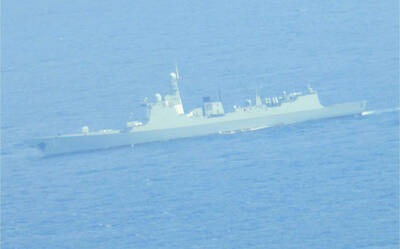
The military has spotted two Chinese warships operating in waters near Penghu County in the Taiwan Strait and sent its own naval and air forces to monitor the vessels, the Ministry of National Defense (MND) said. Beijing sends warships and warplanes into the waters and skies around Taiwan on an almost daily basis, drawing condemnation from Taipei. While the ministry offers daily updates on the locations of Chinese military aircraft, it only rarely gives details of where Chinese warships are operating, generally only when it detects aircraft carriers, as happened last week. A Chinese destroyer and a frigate entered waters to the southwest
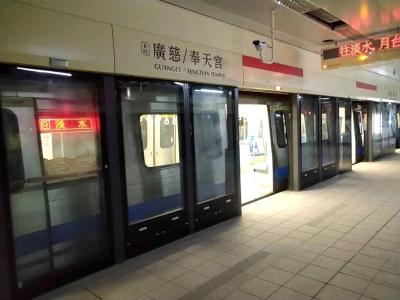
The eastern extension of the Taipei MRT Red Line could begin operations as early as late June, the Taipei Department of Rapid Transit Systems said yesterday. Taipei Rapid Transit Corp said it is considering offering one month of free rides on the new section to mark its opening. Construction progress on the 1.4km extension, which is to run from the current terminal Xiangshan Station to a new eastern terminal, Guangci/Fengtian Temple Station, was 90.6 percent complete by the end of last month, the department said in a report to the Taipei City Council's Transportation Committee. While construction began in October 2016 with an
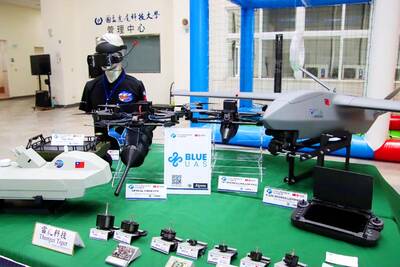
NON-RED SUPPLY: Boosting the nation’s drone industry is becoming increasingly urgent as China’s UAV dominance could become an issue in a crisis, an analyst said Taiwan’s drone exports to Europe grew 41.7-fold from 2024 to last year, with demand from Ukraine’s fight against Russian aggression the most likely driver of growth, a study showed. The Institute for Democracy, Society and Emerging Technology (DSET) in a statement on Wednesday said it found that many of Taiwan’s uncrewed aerial vehicle (UAV) sales were from Poland and the Czech Republic. These countries likely transferred the drones to Ukraine to aid it in its fight against the Russian invasion that started in 2022, it said. Despite the gains, Taiwan is not the dominant drone exporter to these markets, ranking second and fourth
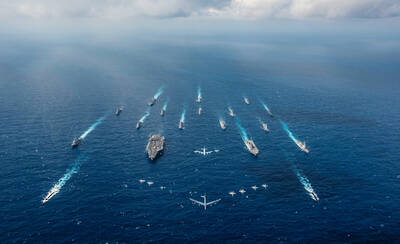
Japanese Prime Minister Sanae Takaichi’s comment last year on Tokyo’s potential reaction to a Taiwan-China conflict has forced Beijing to rewrite its invasion plans, a retired Japanese general said. Takaichi told the Diet on Nov. 7 last year that a Chinese naval blockade or military attack on Taiwan could constitute a “survival-threatening situation” for Japan, potentially allowing Tokyo to exercise its right to collective self-defense. Former Japan Ground Self-Defense Force general Kiyofumi Ogawa said in a recent speech that the remark has been interpreted as meaning Japan could intervene in the early stages of a Taiwan Strait conflict, undermining China’s previous assumptions


 RSS
RSS