


Air pollution remains a significant concern for most people, a survey released yesterday by the Professor Huang Kun-huei Education Foundation showed.
Among respondents in the nationwide poll, 74.7 percent said air pollution from scooters and restaurant exhaust fans was “very serious,” with the rate being 81.3 percent among respondents in Kaohsiung, and Pingtung and Penghu counties.
The survey asked respondents whether they would confront a person who was “harming the public interest,” with 1.9 percent saying that they would.

Photo: Wang Yi-sung, Taipei Times
“Today’s society has too few busybodies, but for a society to be good, there needs to be more nosy people, more virtuous and courageous people,” foundation chairman Huang Kun-huei (黃昆輝) said.
Eighty percent of those polled said that Taiwanese are “friendly toward strangers,” including people from overseas.
A refined moral character among the majority of the population is necessary for a nation to be great, poll committee convener Kuo Sheng-yu (郭生玉) said, adding that the survey was conducted to measure the nation’s moral character.
People in the US are nosy about small things, even telling strangers to take home leftovers from restaurants, Kuo said.
However, in Taiwan when he confronted a driver who ran a red light, the person was completely unapologetic and even defended themselves, he said.
This was why people in Taiwan prefer not to stir up trouble and get involved in issues, he said.
On areas where society could be improved, 67 percent said environmental protection needed the most attention, followed by “respect for others” and “respect for the law,” the survey showed.
On other behavioral issues, 64.7 percent said they felt satisfied with how often Taiwanese use “polite language” such as “please,” “thank you” and “sorry,” 50 percent said they felt Taiwanese spoke at a respectable volume in public and 67.3 percent said they felt Taiwanese dressed “appropriately for the occasion.”
On the issue of driving behavior, respondents were largely unsatisfied, with 70 percent saying Taiwanese often change lanes without signaling, block lanes while parking, fail to yield to pedestrians and run red lights.
The survey showed that 66.5 percent said Taiwanese are likely to break rules if they were sure they would not get caught or fined, while 77 percent said they believed Taiwanese “expressed a moral attitude more often than they acted morally.”
Regarding environmental issues, 56 percent said that a shift to green energy was not being given enough attention, with the rate rising to 66 percent among respondents in Tainan, and Yunnan and Chiayi counties — while 67.3 percent said that littering was a serious problem.
Nearly all of the respondents said they believed a perceived lack of morals was due to poor upbringing, misinformation in the media, a lack of attention to the issues in school curricula and the influence of poor behavior among famous people.
University of Taipei professor Tan Chao-wei (但昭偉) said Taiwanese should be commended for improvements to their public spirit over the past few decades, despite the nation being crowded and bustling with commercial activity.
The cleanliness of parks near his home were evidence of that civil spirit, he said.

Taiwanese can file complaints with the Tourism Administration to report travel agencies if their activities caused termination of a person’s citizenship, Mainland Affairs Council Minister Chiu Chui-cheng (邱垂正) said yesterday, after a podcaster highlighted a case in which a person’s citizenship was canceled for receiving a single-use Chinese passport to enter Russia. The council is aware of incidents in which people who signed up through Chinese travel agencies for tours of Russia were told they could obtain Russian visas and fast-track border clearance, Chiu told reporters on the sidelines of an event in Taipei. However, the travel agencies actually applied

New measures aimed at making Taiwan more attractive to foreign professionals came into effect this month, the National Development Council said yesterday. Among the changes, international students at Taiwanese universities would be able to work in Taiwan without a work permit in the two years after they graduate, explainer materials provided by the council said. In addition, foreign nationals who graduated from one of the world’s top 200 universities within the past five years can also apply for a two-year open work permit. Previously, those graduates would have needed to apply for a work permit using point-based criteria or have a Taiwanese company
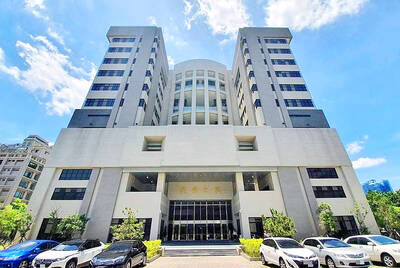
The Shilin District Prosecutors’ Office yesterday indicted two Taiwanese and issued a wanted notice for Pete Liu (劉作虎), founder of Shenzhen-based smartphone manufacturer OnePlus Technology Co (萬普拉斯科技), for allegedly contravening the Act Governing Relations Between the People of the Taiwan Area and the Mainland Area (臺灣地區與大陸地區人民關係條例) by poaching 70 engineers in Taiwan. Liu allegedly traveled to Taiwan at the end of 2014 and met with a Taiwanese man surnamed Lin (林) to discuss establishing a mobile software research and development (R&D) team in Taiwan, prosecutors said. Without approval from the government, Lin, following Liu’s instructions, recruited more than 70 software

Taiwanese singer Jay Chou (周杰倫) plans to take to the courts of the Australian Open for the first time as a competitor in the high-stakes 1 Point Slam. The Australian Open yesterday afternoon announced the news on its official Instagram account, welcoming Chou — who celebrates his 47th birthday on Sunday — to the star-studded lineup of the tournament’s signature warm-up event. “From being the King of Mandarin Pop filling stadiums with his music to being Kato from The Green Hornet and now shifting focus to being a dedicated tennis player — welcome @jaychou to the 1 Point Slam and #AusOpen,” the


 RSS
RSS