


The Chinese Nationalist Party (KMT) yesterday urged China to confront the history of the Tiananmen Square protests and acknowledge the protesters’ calls for democracy and freedom.
The KMT in a statement on the 30th anniversary of the Tiananmen Square Massacre said it believes that “historical facts must not be concealed and that truth must not be undermined.”
Chinese authorities should acknowledge and value the protesters’ calls for democracy and freedom, because “facing history and allowing those requests from people to be truthfully presented is the only way to heal the pain from the past and move toward a better future,” it said.
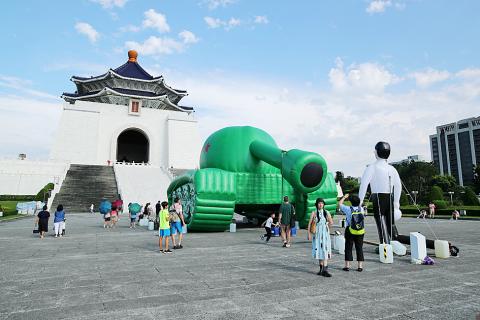
Photo: Ritchie B Tongo / EPA-EFE
In the past 30 years, the Republic of China (ROC) has lifted martial law to become the first Chinese-speaking nation to embrace democracy and the rule of law, the KMT said.
“The party will continue to stand with the people to commemorate June 4, support democracy, respect the rule of law and defend the ROC — so that it can continue to be a beacon of freedom for Chinese around the world,” it said.
It would also “continue telling the mainland and the world that it values freedom, democracy and diversity,” the KMT said.
To advance their political interests, certain political leaders have tried to distort history under the pretense of promoting justice or reforms, against the principles of democracy and the rule of law, it added.
“Leaders on both sides of the Taiwan Strait must return to what they had committed to do: identify with the nation, respect the rights of the people and improve people’s lives,” the party said.
Over the past three decades, China has made impressive progress following successful economic reforms, Kaohsiung Mayor Han Kuo-yu (韓國瑜) said in a statement.
Hopefully Taiwan’s experience and conviction in promoting democracy would be helpful to China when it takes the next step to promote political reforms, he said.
“What happened on June 4 three decades ago was a historical tragedy,” Han said, adding: “We hope everyone can learn from history and avoid making the same mistake.”
The Chinese government should deal with the historical trauma “wisely” and seek to build a political system that would meet the expectations of a majority of Chinese, he said.
Former New Taipei City mayor Eric Chu (朱立倫) said on Facebook that some believe that they should not mention the Cultural Revolution or the massacre to avoid offending China, but he disagrees with that view.
Memories of the incident still haunt those who lived through it and their families, and their pain would not end until the truth is uncovered, responsibility allotted and lessons learned, he said.
As Taiwan’s experience with the 228 Incident and the White Terror era shows, “history can never be concealed and the best approach is to face it,” Chu said.
Hon Hai Precision Industry Co chairman Terry Gou said that the massacre has left a “trauma that needs to be healed.”
He feels great sorrow and sympathy for the people who were hurt during the massacre as well as their families, and hopes that Taiwan’s freedom and democracy would serve as an example to China, he told reporters on the sidelines of an event in Taipei.
Asked to comment on the massacre at an event at National Taiwan Normal University, KMT Legislator Wang Jin-pyng (王金平) said: “June 4 must not be forgotten, and we must defend Taiwan’s democracy and freedom.”
Chu, Gou and Wang are seeking the KMT’s presidential nomination for next year’s presidential election, while Han has yet to announce a presidential bid.

Taipei and Kaohsiung have extended an open invitation to Japanese pop star Ayumi Hamasaki after Chinese authorities abruptly canceled her scheduled concert in Shanghai. Hamasaki, 47, had been slated to perform on Saturday before organizers pulled the show at the last minute, citing “force majeure,” a move widely viewed as retaliation for Japanese Prime Minister Sanae Takaichi’s recent remark that a Chinese attack on Taiwan could draw a military response from Tokyo. Taipei Mayor Chiang Wan-an (蔣萬安) yesterday said the city “very much welcomes” Hamasaki’s return and would continue to “surprise” her. Hamasaki, who has a large global fan base, including
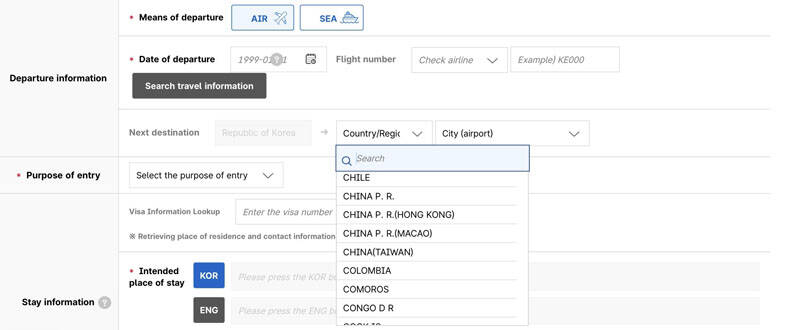
‘REGRETTABLE’: Travelers reported that Seoul’s online arrival card system lists Taiwan as ‘China (Taiwan),’ the Ministry of Foreign Affairs said The Ministry of Foreign Affairs yesterday urged South Korea to correct the way Taiwan is listed in its newly launched e-Arrival card system, saying the current designation downgrades the nation’s status. South Korea rolled out the online system on Feb. 24 to gradually replace paper arrival cards, which it plans to phase out by next year. Travelers must complete the electronic form up to 72 hours before entering the country. The ministry said it has received multiple complaints from Taiwanese travelers saying that the system lists Taiwan as “China (Taiwan)” in dropdown menus for both “place of departure” and “next
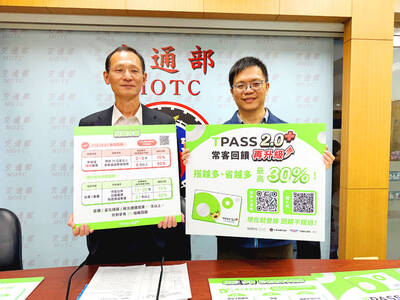
Starting next month, people who signed up for the TPass 2.0 program can receive a 15 percent rebate for trips on mid to long-distance freeway buses or on buses headed to the east coast twice every month, the Highway Bureau said. Bureau Director-General Lin Fu-shan (林福山) said the government started TPass 2.0 to offer rebates to frequent riders of public transportation, or people who use city buses, highway buses, trains or MRTs at least 11 times per month. As of Nov. 12, 265,000 people have registered for TPass 2.0, and about 16.56 million trips between February and September qualified for

HOW RUDE: Joe Biden’s Indo-Pacific defense chief condemned China’s response to Takaichi’s remarks as inappropriate and heavy-handed, while praising Japan’s nerve A former US defense official under former US president Joe Biden has voiced support for Japanese Prime Minister Sanae Takaichi for her remarks suggesting that Japan could help defend Taiwan, while describing Beijing’s response as “inappropriate.” Ely Ratner, who served as assistant secretary of defense for Indo-Pacific security affairs from 2021 to this year, said in a CNA interview that Takaichi’s comments on Taiwan simply reflected Japan’s position and stance on Taiwan. On Nov. 7, the Japanese prime minister commented in a parliamentary session that a Chinese attack on Taiwan could constitute “a situation threatening Japan’s survival” that could trigger a military


 RSS
RSS