


Ministry of Justice’s Investigation Bureau (MJIB) officials and police yesterday raided six locations in the greater Taipei area as part of an investigation into suspected fraud and money laundering by a top executive of Cheng Mei Materials Technology (CMMT).
CMMT, which manufactures polarizers and other optoelectronics components, is a subsidiary of Chi Mei Group.
Taipei prosecutors coordinated the raids with the bureau and police and served summons to 13 people, including CMMT vice chairperson Yeh Mei-li (葉美麗), for questioning regarding the alleged transfer of about NT$260 million (US$8.43 million at the current exchange rate) into private hands.
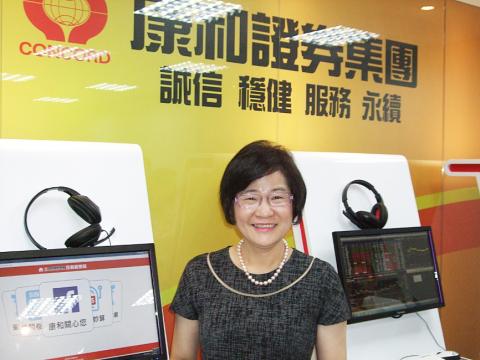
Photo: Chen Yung-chi, Taipei Times
Yeh’s residence and the offices of companies that she controls were among the sites searched.
Yeh and four others have been listed as suspects in the case, and would face charges of breach of trust, money laundering and contravening provisions of the Business Entity Accounting Act (商業會計法) and the Securities and Exchange Act (證券交易法), prosecutors said.
Nine people were questioned as witnesses by prosecutors, who scheduled bail hearings for the suspects last night.
The investigation is focused on Yeh’s actions as chairperson of Mao Fong Trading, an international trading unit of CMMT, and the transfer in September last year of NT$88.26 million to Hong Kong-based Bao Dui International, reportedly to pay for supplies.
Prosecutors said Bao Dui is a shell company, registered in the name of Kuo Ya-wen, who is reportedly Yeh’s daughter.
Kuo and Bao Dui were named in the Panama Papers in 2015, with Bao Dui allegedly being used to launder money from criminal activities, they said.
Prosecutors and other officials are also investigating Yeh’s purchase of shares in Jun Hong Optronics in January last year.
Yeh reportedly paid NT$42 million for 1,000 Jun Hong Optronics shares, which she then sold to a third person before the shares were bought for NT$90 million by Mao Fong Trading and Mao Yu Investment, another firm she controlled.
Prosecutors said they received complaints from other shareholders that these were fraudulent transactions aimed at siphoning off about NT$48 million in corporate assets from Mao Fong Trading.
They said Yeh might have made about NT$260 million from the deals and then laundered the money through her daughter’s bank accounts in Hong Kong.
Yeh in January tried to gain control of CMMT when an illness prevented CMMT chairman Ho Jau-yang (何昭陽) from attending a company meeting. She called an emergency board of directors meeting on Jan. 14, where she directed the board to dismiss Ho and name her chairperson, which it did.
Ho, a founding member of Chi Mei Group and former general manager of Chi Mei Optoeletronics, fought the move in court and won reinstatement.
The court ruled that Yeh’s calling of the emergency meeting and the decisions taken by the board at the meeting had contravened business laws.

Taiwanese can file complaints with the Tourism Administration to report travel agencies if their activities caused termination of a person’s citizenship, Mainland Affairs Council Minister Chiu Chui-cheng (邱垂正) said yesterday, after a podcaster highlighted a case in which a person’s citizenship was canceled for receiving a single-use Chinese passport to enter Russia. The council is aware of incidents in which people who signed up through Chinese travel agencies for tours of Russia were told they could obtain Russian visas and fast-track border clearance, Chiu told reporters on the sidelines of an event in Taipei. However, the travel agencies actually applied
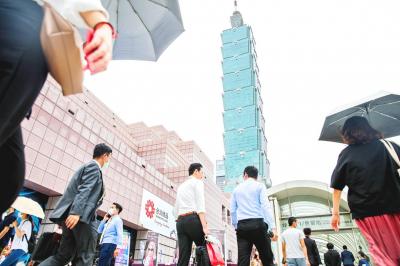
Japanese footwear brand Onitsuka Tiger today issued a public apology and said it has suspended an employee amid allegations that the staff member discriminated against a Vietnamese customer at its Taipei 101 store. Posting on the social media platform Threads yesterday, a user said that an employee at the store said that “those shoes are very expensive” when her friend, who is a migrant worker from Vietnam, asked for assistance. The employee then ignored her until she asked again, to which she replied: "We don't have a size 37." The post had amassed nearly 26,000 likes and 916 comments as of this

New measures aimed at making Taiwan more attractive to foreign professionals came into effect this month, the National Development Council said yesterday. Among the changes, international students at Taiwanese universities would be able to work in Taiwan without a work permit in the two years after they graduate, explainer materials provided by the council said. In addition, foreign nationals who graduated from one of the world’s top 200 universities within the past five years can also apply for a two-year open work permit. Previously, those graduates would have needed to apply for a work permit using point-based criteria or have a Taiwanese company
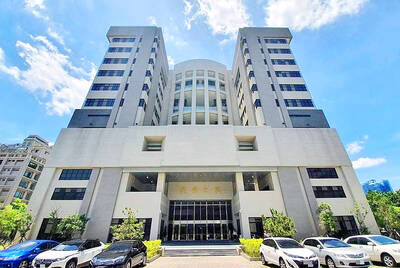
The Shilin District Prosecutors’ Office yesterday indicted two Taiwanese and issued a wanted notice for Pete Liu (劉作虎), founder of Shenzhen-based smartphone manufacturer OnePlus Technology Co (萬普拉斯科技), for allegedly contravening the Act Governing Relations Between the People of the Taiwan Area and the Mainland Area (臺灣地區與大陸地區人民關係條例) by poaching 70 engineers in Taiwan. Liu allegedly traveled to Taiwan at the end of 2014 and met with a Taiwanese man surnamed Lin (林) to discuss establishing a mobile software research and development (R&D) team in Taiwan, prosecutors said. Without approval from the government, Lin, following Liu’s instructions, recruited more than 70 software


 RSS
RSS