


The Centers for Disease Control (CDC) yesterday raised its travel warning for the Inner Mongolia Autonomous Region to the “alert” level after China confirmed the world’s first case of influenza virus A subtype H7N9 in a human this year.
The Chinese government on Friday last week informed the centers that a case of H7N9 avian influenza in a human was confirmed in Jiuquan, Gansu Province, CDC Epidemic Intelligence Center Director Liu Ting-ping (劉定萍) said.
The patient, an 82-year-old man who began exhibiting symptoms on March 18 and was hospitalized on Sunday last week, was confirmed to be infected with the virus, she said.
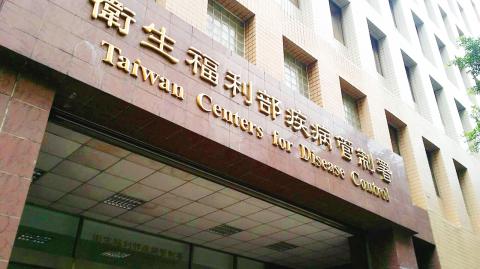
Photo: Lin Hui-ching, Taipei Times
The man’s history of exposure to animals was unknown, but he was reportedly likely to have come into contact with animals in Inner Mongolia’s Alxa League area, she added.
The travel warning was raised to the “alert” level due to the confirmation of the novel infection, Liu said.
Most cases of H7N9 avian influenza in humans are transmitted from birds to humans, with human-to-human transmissions being rare, CDC Deputy Director-General Philip Lo (羅一鈞) said.
The early symptoms of H7N9 infection are a fever, coughing, a headache, sore muscles, chills and fatigue, he said, adding that in serious cases, patients might develop pneumonia about three to seven days after the onset of symptoms.
Serious cases with pneumonia can also rapidly develop into respiratory failure, septic shock and multiple organ dysfunction syndrome, Lo said, adding that the mortality rate of H7N9 avian influenza infection is as high as 30 to 40 percent.
Three H7N9 avian influenza infections, including one death, were confirmed in the previous flu season and all three cases were in China, he said, but added that the tally was a significant reduction from previous years.
A total of 1,568 H7N9 avian influenza infections have been reported worldwide since 2013, including 615 deaths, and 98 percent of the cases were in China, Lo said, adding that five accumulated cases, including two deaths, were confirmed in Taiwan, and were all imported from China.
In addition to Inner Mongolia, the CDC has also issued a travel “alert” for novel influenza A infections in eight Chinese cities and provinces, with a “watch” warning issued for other areas of the country.
The CDC urged people traveling to China to avoid eating raw eggs and poultry; avoid feeding or touching wild birds or poultry; wash their hands frequently with soap; get vaccinated against avian influenza if they need to work with poultry for long periods of time; wear a surgical mask; and seek immediate medical attention if symptoms occur.

Taiwanese can file complaints with the Tourism Administration to report travel agencies if their activities caused termination of a person’s citizenship, Mainland Affairs Council Minister Chiu Chui-cheng (邱垂正) said yesterday, after a podcaster highlighted a case in which a person’s citizenship was canceled for receiving a single-use Chinese passport to enter Russia. The council is aware of incidents in which people who signed up through Chinese travel agencies for tours of Russia were told they could obtain Russian visas and fast-track border clearance, Chiu told reporters on the sidelines of an event in Taipei. However, the travel agencies actually applied
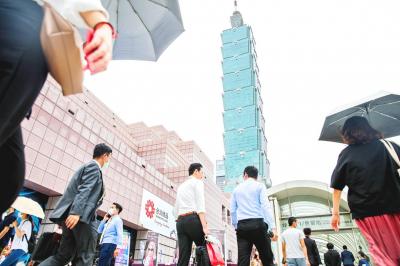
Japanese footwear brand Onitsuka Tiger today issued a public apology and said it has suspended an employee amid allegations that the staff member discriminated against a Vietnamese customer at its Taipei 101 store. Posting on the social media platform Threads yesterday, a user said that an employee at the store said that “those shoes are very expensive” when her friend, who is a migrant worker from Vietnam, asked for assistance. The employee then ignored her until she asked again, to which she replied: "We don't have a size 37." The post had amassed nearly 26,000 likes and 916 comments as of this

New measures aimed at making Taiwan more attractive to foreign professionals came into effect this month, the National Development Council said yesterday. Among the changes, international students at Taiwanese universities would be able to work in Taiwan without a work permit in the two years after they graduate, explainer materials provided by the council said. In addition, foreign nationals who graduated from one of the world’s top 200 universities within the past five years can also apply for a two-year open work permit. Previously, those graduates would have needed to apply for a work permit using point-based criteria or have a Taiwanese company

The Shilin District Prosecutors’ Office yesterday indicted two Taiwanese and issued a wanted notice for Pete Liu (劉作虎), founder of Shenzhen-based smartphone manufacturer OnePlus Technology Co (萬普拉斯科技), for allegedly contravening the Act Governing Relations Between the People of the Taiwan Area and the Mainland Area (臺灣地區與大陸地區人民關係條例) by poaching 70 engineers in Taiwan. Liu allegedly traveled to Taiwan at the end of 2014 and met with a Taiwanese man surnamed Lin (林) to discuss establishing a mobile software research and development (R&D) team in Taiwan, prosecutors said. Without approval from the government, Lin, following Liu’s instructions, recruited more than 70 software


 RSS
RSS