


Hong Kong Democratic Party founder and attorney Martin Lee (李柱銘) yesterday in Taipei said that Beijing is deviating from the “one country, two systems” framework originally proposed by former Chinese leader Deng Xiaoping (鄧小平) and China’s tight grip on the territory would only discourage Taiwanese from seeking unification.
“Since Beijing issued the 2014 white paper on Hong Kong, it has been implementing the ‘one country, two systems’ framework in a way that completely contradicted [Deng’s] original vision,” Lee told a Taipei news conference held by the Friends of Hong Kong and Macau Association.
Seeing the way the framework has been implemented in Hong Kong, “of course Taiwanese would be uninterested in it,” he added.
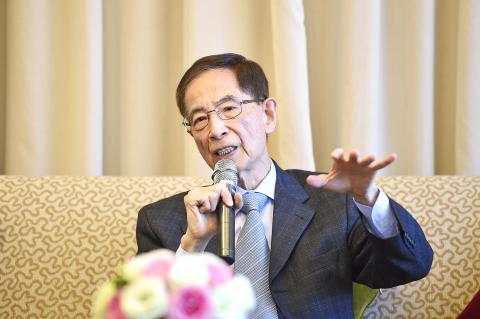
Photo: George Tsorng, Taipei Times
While Deng envisioned a system that would allow Hong Kong to remain highly autonomous, the white paper asserts that Beijing has “complete jurisdiction” over the territory, Lee said.
Beijing’s attempts to “control everything would not work,” as Hong Kongers deeply value democracy, the rule of law and freedom, he said.
He urged Beijing to step back from trying to maintain “complete jurisdiction” over the territory and to return to Deng’s vision of the “one country, two systems” framework.
“I completely support the ‘one country, two systems’ framework, which is in line with the agreement [between China and Britain] and the Basic Law. I just want Beijing to give us real elections,” Lee said.
By allowing democracy in Hong Kong, Beijing would be giving the framework a chance, he said.
“Currently, there is no democracy. Hong Kong’s chief executives always follow Beijing’s instructions. They do not have much of their own opinion and always side with the central government on major policies,” Lee said.
“If Hong Kong and Beijing have confidence in each other, the framework should work and Taiwanese would be more convinced that it could work for them too,” he said. “However, if Hong Kong and Beijing cannot trust each other, and the latter keeps a firm hand on the territory, it would be bad for cross-strait unification.”
Asked about his view on cross-strait relations, Lee said he believes bringing about unification under the “one country, two systems” framework would be “difficult,” because Taiwan has been holding its own elections for years.
Taiwan and Beijing should first engage in dialogue to build mutual trust, he said.
“Once there is mutual trust, you can discuss anything. Without it, it would be very difficult to solve Taiwan’s problem,” he said.
Working on building mutual trust with Hong Kong and allowing democracy would not only encourage Taiwanese to consider unification, but also show the world that Chinese President Xi Jinping (習近平) is not an authoritarian, Lee said.
“I really believe that, as a strong country, China should try and show the world — not just Taiwan or Hong Kong — that it is a reformer, not an authoritarian country,” he added.
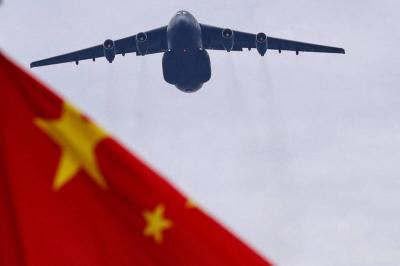
Beijing could eventually see a full amphibious invasion of Taiwan as the only "prudent" way to bring about unification, the US Department of Defense said in a newly released annual report to Congress. The Pentagon's "Annual Report to Congress: Military and Security Developments Involving the People's Republic of China 2025," was in many ways similar to last year’s report but reorganized the analysis of the options China has to take over Taiwan. Generally, according to the report, Chinese leaders view the People's Liberation Army's (PLA) capabilities for a Taiwan campaign as improving, but they remain uncertain about its readiness to successfully seize

Taiwan is getting a day off on Christmas for the first time in 25 years. The change comes after opposition parties passed a law earlier this year to add or restore five public holidays, including Constitution Day, which falls on today, Dec. 25. The day marks the 1947 adoption of the constitution of the Republic of China, as the government in Taipei is formally known. Back then the Chinese Nationalist Party (KMT) governed China from Nanjing. When the KMT, now an opposition party in Taiwan, passed the legislation on holidays, it said that they would help “commemorate the history of national development.” That

Taiwan has overtaken South Korea this year in per capita income for the first time in 23 years, IMF data showed. Per capita income is a nation’s GDP divided by the total population, used to compare average wealth levels across countries. Taiwan also beat Japan this year on per capita income, after surpassing it for the first time last year, US magazine Newsweek reported yesterday. Across Asia, Taiwan ranked fourth for per capita income at US$37,827 this year due to sustained economic growth, the report said. In the top three spots were Singapore, Macau and Hong Kong, it said. South

Snow fell on Yushan (Jade Mountain, 玉山) yesterday morning as a continental cold air mass sent temperatures below freezing on Taiwan’s tallest peak, the Central Weather Administration (CWA) said. Snowflakes were seen on Yushan’s north peak from 6:28am to 6:38am, but they did not fully cover the ground and no accumulation was recorded, the CWA said. As of 7:42am, the lowest temperature recorded across Taiwan was minus-5.5°C at Yushan’s Fengkou observatory and minus-4.7°C at the Yushan observatory, CWA data showed. On Hehuanshan (合歡山) in Nantou County, a low of 1.3°C was recorded at 6:39pm, when ice pellets fell at Songsyue Lodge (松雪樓), a


 RSS
RSS