


The return of the so-called “1992 consensus” in political rhetoric after Nov. 24’s local elections is the result of an attempt by the pan-blue camp to mislead Taiwanese, academics have said.
After the local elections, Kaohsiung mayor-elect Han Kuo-yu (韓國瑜) and Taichung mayor-elect Lu Shiow-yen (盧秀燕) of the Chinese Nationalist Party (KMT) have publicly endorsed the “1992 consensus,” making it a popular search term on the Internet, especially in Kaohsiung.
However, a 2016 study published by Academia Sinica showed that although 90 percent of respondents had heard of the “1992 consensus,” only 24.9 percent were aware of its content, compared with 64.3 percent who were not.
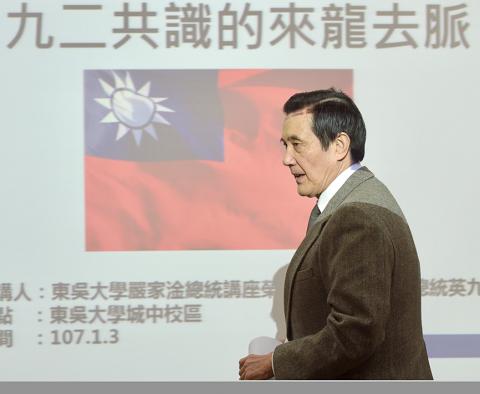
Photo: Huang Yao-cheng, Taipei Times
The “1992 consensus,” a term former Mainland Affairs Council chairman Su Chi (蘇起) in 2006 admitted making up in 2000, refers to a tacit understanding between the KMT and the Chinese Communist Party that both sides acknowledge that there is “one China,” with each side having its own interpretation of what “China” means.
Beijing has never publicly acknowledged that it accepts different interpretations.
An Internet survey conducted by National Chengchi University’s Election Study Center at the behest of Austin Wang (王宏恩), an assistant professor in the Department of Political Science at the University of Nevada, Las Vegas, and others in July, also showed that Taiwanese do not have a correct understanding of the “1992 consensus.”
The survey, published in The Diplomat online magazine last month, showed that 33 percent of the 1,001 respondents thought the “1992 consensus” means that “the Republic of China (ROC) represents Taiwan, the People’s Republic of China (PRC) represents the mainland and the two governments belong to two different countries.”
Of the respondents, 34 percent believed the “1992 consensus” means that the ROC represents Taiwan, the PRC represents the “mainland” and the two governments belong to the same country waiting for unification.
About 17 percent said it suggests that both the ROC and PRC claim to represent all Chinese, including Taiwan and China, while 5 percent chose: “The PRC represents all Chinese people including both mainland and Taiwan, and the ROC is the local government.”
In terms of acceptability, 75 percent agreed with “two different countries,” meaning, 48 percent supported the idea that the two governments belong to the same country waiting for unification, and 10 percent who believed the PRC represents all of China, with Taiwan being only a local government.
Even within the KMT, there are different versions of what the “1992 consensus” really means, Taiwan Thinktank researcher Tung Li-wen (董立文) said.
Cross-strait relations were not a focus during campaigns for the local elections, as evidenced by some KMT candidates’ attempts to distance themselves from former president Ma Ying-jeou (馬英九) after he revised his previous “no unification” policy to “no opposition to unification” earlier last month, Tung said.
“That the consensus has re-entered the main political rhetoric after the elections is clearly the result of manipulation and attempts to mislead the people of Taiwan,” he said.
Yen Chien-fa (顏建發), a professor at the Chien Hsin University of Science and Technology’s Department of Business Administration, said that Beijing and the incoming KMT mayors want different things, with the former seeking to fulfill its political agenda and the latter looking for economic exchanges.
Academia Sinica Institute of Sociology associate research fellow Wu Chieh-min (吳介民) said the KMT should be careful not to be seen again as a “local representative of China” before the 2020 presidential and legislative elections, because being labeled as “China-leaning” could result in a repeat of the mistake Ma made during his presidential terms.
That is why Han has decided not to attend a cross-strait entrepreneur summit scheduled for Xiamen, China, on Tuesday and why Lu decided against setting up a cross-strait working group after taking office, Wu said.

Taiwanese can file complaints with the Tourism Administration to report travel agencies if their activities caused termination of a person’s citizenship, Mainland Affairs Council Minister Chiu Chui-cheng (邱垂正) said yesterday, after a podcaster highlighted a case in which a person’s citizenship was canceled for receiving a single-use Chinese passport to enter Russia. The council is aware of incidents in which people who signed up through Chinese travel agencies for tours of Russia were told they could obtain Russian visas and fast-track border clearance, Chiu told reporters on the sidelines of an event in Taipei. However, the travel agencies actually applied
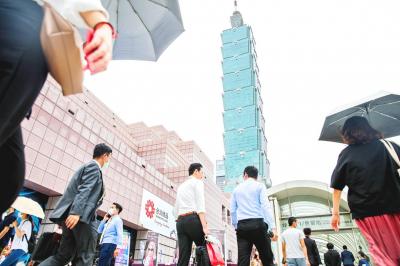
Japanese footwear brand Onitsuka Tiger today issued a public apology and said it has suspended an employee amid allegations that the staff member discriminated against a Vietnamese customer at its Taipei 101 store. Posting on the social media platform Threads yesterday, a user said that an employee at the store said that “those shoes are very expensive” when her friend, who is a migrant worker from Vietnam, asked for assistance. The employee then ignored her until she asked again, to which she replied: "We don't have a size 37." The post had amassed nearly 26,000 likes and 916 comments as of this

New measures aimed at making Taiwan more attractive to foreign professionals came into effect this month, the National Development Council said yesterday. Among the changes, international students at Taiwanese universities would be able to work in Taiwan without a work permit in the two years after they graduate, explainer materials provided by the council said. In addition, foreign nationals who graduated from one of the world’s top 200 universities within the past five years can also apply for a two-year open work permit. Previously, those graduates would have needed to apply for a work permit using point-based criteria or have a Taiwanese company
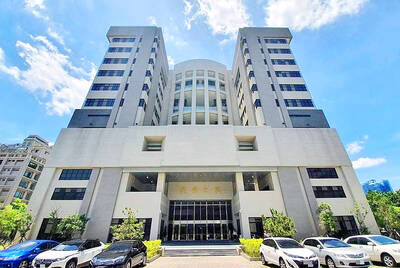
The Shilin District Prosecutors’ Office yesterday indicted two Taiwanese and issued a wanted notice for Pete Liu (劉作虎), founder of Shenzhen-based smartphone manufacturer OnePlus Technology Co (萬普拉斯科技), for allegedly contravening the Act Governing Relations Between the People of the Taiwan Area and the Mainland Area (臺灣地區與大陸地區人民關係條例) by poaching 70 engineers in Taiwan. Liu allegedly traveled to Taiwan at the end of 2014 and met with a Taiwanese man surnamed Lin (林) to discuss establishing a mobile software research and development (R&D) team in Taiwan, prosecutors said. Without approval from the government, Lin, following Liu’s instructions, recruited more than 70 software


 RSS
RSS