


The Chinese Nationalist Party (KMT) yesterday said that the latest Cabinet reshuffle was creating an “election Cabinet,” showing that the Democratic Progressive Party (DPP) is more concerned with staying in power than protecting the public’s rights.
Appointing Executive Yuan spokesman Hsu Kuo-yung (徐國勇) as Minister of the Interior shows that the DPP is solely concerned with candidates’ political correctness, rather than their capabilities, KMT Culture and Communications Committee deputy director-general Hung Meng-kai (洪孟楷) said.
Reappointing Minister of the Interior Yeh Jiunn-rong (葉俊榮) as minister of education after a month-long vacancy shows that academics were reluctant to accept the position following the DPP government’s handling of the “Kuan Chung-ming (管中閔) incident,” Hung said.
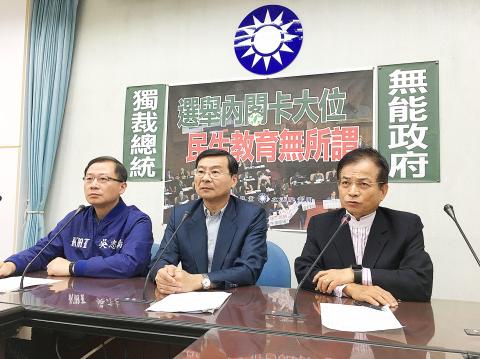
Photo: Lin Liang-sheng, Taipei Times
The government has refused to confirm Kuan as National Taiwan University (NTU) president after his election by committee on Jan. 5 and in April said it would not appoint him, as he faced allegations that he failed to report a potential conflict of interest and of possible academic misconduct, including illegally teaching at Xiamen University in China.
Yeh is also accused of illegally having taught in China, so appointing him as education minister would only cause further controversy, Hung said.
Yeh was in April accused of having broken the law by teaching at Zhejiang University’s Guanhua Law School from Dec.19, 2011, to Jan. 15, 2012, while he was a professor at NTU.
He has denied the allegations, saying that he was not paid for the lectures in China.
While the unpopularity of Minister of Transportation and Communications Hochen Tan (賀陳旦) merited his dismissal, replacing him with Taiwan International Ports Corp chairman Wu Hong-mo (吳宏謀) — who is said to be part of Presidential Office Secretary-General Chen Chu’s (陳菊) clique — is an obvious political plum, Hung said.
The politically-inspired appointments on the heel of the Legislative Yuan’s extraordinary session were made with the year-end elections in mind, but such blatant “redirection” of resources is a double-edged sword that could turn the public against the DPP, Hung said.
A Cabinet reshuffle was to be expected, as there had not been a major one since Premier William Lai (賴清德) was appointed to the position in September last year, KMT legislative caucus secretary-general William Tseng (曾銘宗) said.
However, an election-oriented Cabinet is not in the nation’s long-term interest, as elections are held every four years, he said.
Yeh’s performance as interior minister was adequate, but he is not a suitable appointment as minister of education, Tseng added.
Hsu’s appointment as Minister of the Interior was politically motivated, Tseng said, adding that Hsu’s public image has been tarnished by his attempts to obfuscate information and tendency to argue, rather than communicate, during his tenure as Executive Yuan spokesman.
New Power Party (NPP) caucus convener Hsu Yung-ming (徐永明) said he hopes that the Cabinet reshuffle was not entirely politically motivated and was somehow meant to strengthen ongoing reforms.
“We hope the new ministers will address expectations on sports reform, protection of rights for police and firefighters, renewed efforts to introduce judicial reforms and financial reforms,” Hsu said.
People First Party caucus whip Lee Hung-chun (李鴻鈞) said that the DPP should appoint individuals with the national interest in mind.
The national interest, not party interest, should be of primary concern when planning Cabinet reshuffles, Lee said.
Additional reporting by CNA
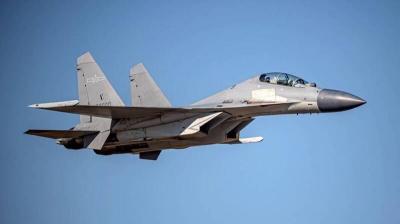
Eight Chinese naval vessels and 24 military aircraft were detected crossing the median line of the Taiwan Strait between 6am yesterday and 6am today, the Ministry of National Defense said this morning. The aircraft entered Taiwan’s northern, central, southwestern and eastern air defense identification zones, the ministry said. The armed forces responded with mission aircraft, naval vessels and shore-based missile systems to closely monitor the situation, it added. Eight naval vessels, one official ship and 36 aircraft sorties were spotted in total, the ministry said.
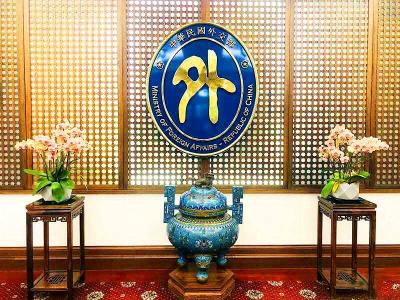
The Ministry of Foreign Affairs (MOFA) today said that if South Korea does not reply appropriately to its request to correct Taiwan’s name on its e-Arrival card system before March 31, it would take corresponding measures to alter how South Korea is labeled on the online Taiwan Arrival Card system. South Korea’s e-Arrival card system lists Taiwan as “China (Taiwan)” in the “point of departure” and “next destination” fields. The ministry said that it changed the nationality for South Koreans on Taiwan’s Alien Resident Certificates from “Korea” to “South Korea” on March 1, in a gesture of goodwill and based on the
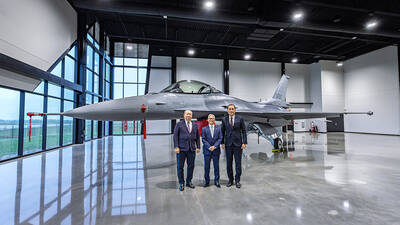
Taiwanese officials were shown the first of 66 F-16V fighter jets purchased by Taiwan from the United States, the Ministry of National Defense said yesterday, adding the aircraft has completed an initial flight test and is expected to be delivered later this year. A delegation led by Deputy Minister of National Defense Hsu Szu-chien (徐斯儉) visited Lockheed Martin’s F-16 C/D Block 70 (also known as F-16V) assembly line in South Carolina on March 16 to view the aircraft. The jet will undergo a final acceptance flight in the US before being delivered to Taiwan, the
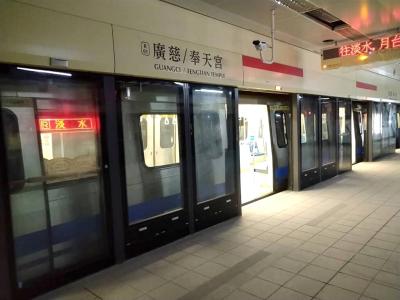
The New Taipei Metro's Sanyin Line and the eastern extension of the Taipei Metro's Tamsui-Xinyi Line (Red Line) are scheduled to begin operations in June, the National Development Council said today. The Red Line, which terminates at Xiangshan Station, would be connected by the 1.4km extension to a new eastern terminal, Guangci/Fengtian Temple Station, while the Sanyin Line would link New Taipei City's Tucheng and Yingge stations via Sanxia District (三峽). The council gave the updates at a council meeting reviewing progress on public construction projects for this year. Taiwan's annual public infrastructure budget would remain at NT$800 billion (US$25.08 billion), with NT$97.3


 RSS
RSS