


Taiwan could play an important role in global efforts to prevent the spread of communicable diseases, Minister of Health and Welfare Chen Shih-chung (陳時中) said on Sunday at a reception in Geneva, Switzerland, held by the Ministry of Foreign Affairs.
The spread of communicable diseases knows no borders, Chen said, adding that as a hub in Asia that receives many international travelers, Taiwan, which has cultivated advanced medical services and technologies, plays an important role in preventing the spread of infectious diseases.
A delegation led by Chen arrived in the city on Saturday and is to hold a series of events on the sidelines of the 71st annual meeting of the World Health Assembly (WHA), which Taiwan has for the second consecutive year not been invited to attend as an observer due to opposition from China.
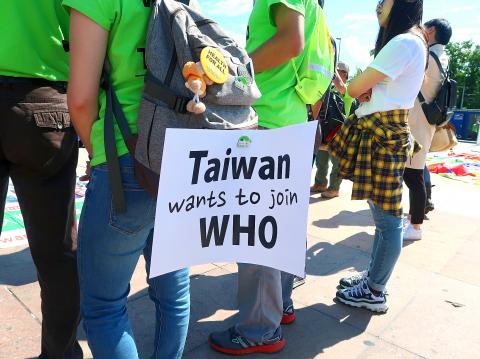
Photo: Lu Yi-hsuan, Taipei Times
At the reception, which was attended by representatives of Taiwan’s 19 allies, Chen said that the WHO’s exclusion of Taiwan from the WHA meeting is unfair to Taiwan and violates the organization’s platform, which designates healthcare as a universal value.
Taiwan’s participation in the WHA has nothing to do with politics and everything to do with basic human rights, Chen said.
Echoing Chen, Marshallese Minister of Health Kalani Kaneko said Taiwan not only needs the WHO, but the WHO needs Taiwan.
He cited the theme of this year’s WHA: “Health for All, All for Health.”
The Marshall Islands is one of Taiwan’s diplomatic allies.
The leaders of all countries in the world should promote healthcare as a universal value to everybody on the planet to realize the message of the WHA meeting, Kaneko said.
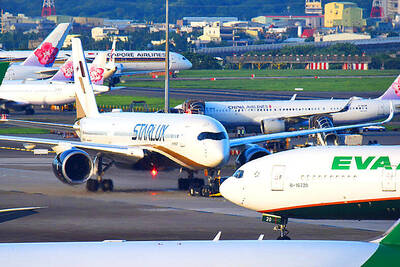
Trips for more than 100,000 international and domestic air travelers could be disrupted as China launches a military exercise around Taiwan today, Taiwan’s Civil Aviation Administration (CAA) said yesterday. The exercise could affect nearly 900 flights scheduled to enter the Taipei Flight Information Region (FIR) during the exercise window, it added. A notice issued by the Chinese Civil Aviation Administration showed there would be seven temporary zones around the Taiwan Strait which would be used for live-fire exercises, lasting from 8am to 6pm today. All aircraft are prohibited from entering during exercise, it says. Taipei FIR has 14 international air routes and
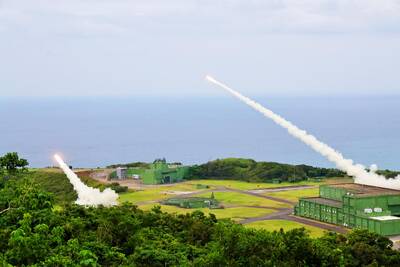
Taiwan lacks effective and cost-efficient armaments to intercept rockets, making the planned “T-Dome” interception system necessary, two experts said on Tuesday. The concerns were raised after China’s military fired two waves of rockets during live-fire drills around Taiwan on Tuesday, part of two-day exercises code-named “Justice Mission 2025.” The first wave involved 17 rockets launched at 9am from Pingtan in China’s Fujian Province, according to Lieutenant General Hsieh Jih-sheng (謝日升) of the Office of the Deputy Chief of the General Staff for Intelligence at the Ministry of National Defense. Those rockets landed 70 nautical miles (129.6km) northeast of Keelung without flying over Taiwan,
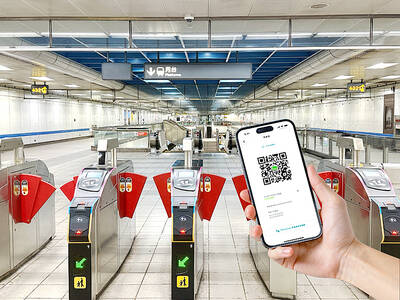
City buses in Taipei and New Taipei City, as well as the Taipei MRT, would on Saturday begin accepting QR code payments from five electronic payment providers, the Taipei Department of Transportation said yesterday. The new option would allow passengers to use the “transportation QR code” feature from EasyWallet, iPass Money, iCash Pay, Jkopay or PXPay Plus. Passengers should open their preferred electronic payment app, select the “transportation code” — not the regular payment code — unlock it, and scan the code at ticket readers or gates, General Planning Division Director-General Liu Kuo-chu (劉國著) said. People should move through the
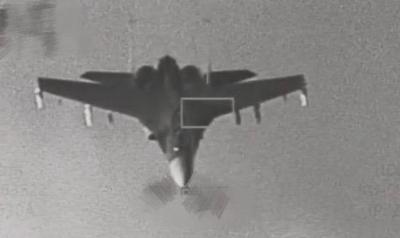
The Ministry of National Defense (MND) today released images of the military tracking China’s People's Liberation Army (PLA) movements during the latest round of Chinese drills around Taiwan. The PLA began "Justice Mission 2025" drills today, carrying out live-fire drills, simulated strikes on land and maritime targets, and exercises to blockade the nation's main ports. The exercises are to continue tomorrow, with the PLA announcing sea and air space restrictions for five zones around Taiwan for 10 hours starting from 8:30am. The ministry today released images showing a Chinese J-16 fighter jet tracked by a F-16V Block 20 jet and the


 RSS
RSS