


As part of the government’s efforts to promote transitional justice, the Executive Yuan has finished a review of a draft political archives bill, which, if passed, would serve as the legal basis for the government to collect political files dating to the 228 Incident and the White Terror era, including those in the Chinese Nationalist Party’s (KMT) archives, sources said.
The bill is expected to be approved by the Executive Yuan soon and has been prioritized for review by the Legislative Yuan in the current legislative session, sources added.
An official with knowledge of the matter who requested anonymity said that the proposed bill includes punishments for political parties if they refuse to turn in files relating to the 228 Incident or the ensuing White Terror era.
The KMT has voiced its strong opposition to the Act on Promoting Transitional Justice (促進轉型正義條例), which was passed on Dec. 5 last year, over a rule that gives the government the right to seize political files held by political parties and their affiliates.
The draft bill proposes imposing a fine of between NT$1 million and NT$5 million (US$33,866 and US$169,331) on political parties or their affiliates that refuse to transfer the files to the government, the official said, adding that they could be repeatedly fined if they persist in ignoring the government’s request.
An intergovernmental review on March 20 led by National Development Council Minister Chen Mei-ling (陳美伶), Minister Without Portfolio Lo Ping-cheng (羅秉成) and National Archives Administration Director-General Lin Chiu-yen (林秋燕) saw the bill undergo a minor rewording.
According to the proposed bill, political files include any file or document from Aug. 15, 1945, to Nov. 6, 1992, relating to the 228 Incident, the Martial Law period and the Period of National Mobilization for Suppression of the Communist Rebellion that is held by a government agency, political party, their affiliate or the business they operate.
Concerned agencies are to finish collecting, classifying and forwarding political files to the National Archives Administration within six months, the proposed bill says, adding that, if necessary, the preparation time may be extended to, but must not exceed, 12 months.
It proposes that the government be given the authority to request political files kept in the custody of the Ministry of National Defense and the Investigation Bureau.
The proposed bill is positioned as a “special archives act” with an aim to collate, preserve and apply political files for educational and research purposes, considering that the period during which the mission to pursue transitional justice lasts is finite, but there should not be a time limit on the disclosure of political files, sources said.
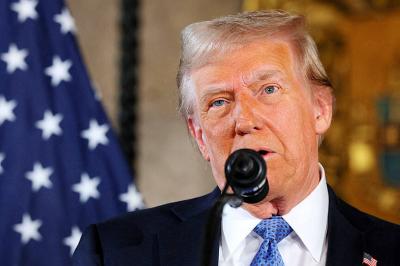
US President Donald Trump said "it’s up to" Chinese President Xi Jinping (習近平) what China does on Taiwan, but that he would be "very unhappy" with a change in the "status quo," the New York Times said in an interview published yesterday. Xi "considers it to be a part of China, and that’s up to him what he’s going to be doing," Trump told the newspaper on Wednesday. "But I’ve expressed to him that I would be very unhappy if he did that, and I don’t think he’ll do that," he added. "I hope he doesn’t do that." Trump made the comments in
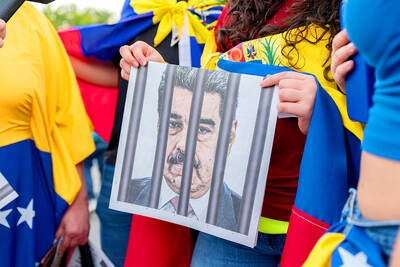
NOT AN OPENING: Trump’s violation of international law does not affect China’s consideration in attacking Taiwan; Beijing lacks capability, not precedent, an official said Taiwanese officials see the US’ capture of the president of Venezuela as a powerful deterrent to Beijing’s aggression and a timely reminder of the US’ ability to defeat militaries equipped with Chinese-made weapons. The strikes that toppled Venezuelan President Nicolas Maduro signaled to authoritarian leaders, including Chinese President Xi Jinping (習近平), US President Donald Trump’s willingness to use military might for international affairs core to US interests, one senior official in Taipei’s security circle said. That reassured Taiwan, the person said. Taipei has also dismissed the idea that Trump’s apparent violation of international law could embolden Beijing, said the official, who was not
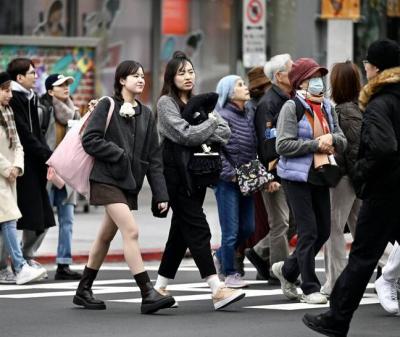
A cold surge advisory was today issued for 18 cities and counties across Taiwan, with temperatures of below 10°C forecast during the day and into tonight, the Central Weather Administration (CWA) said. New Taipei City, Taipei, Taoyuan and Hsinchu, Miaoli and Yilan counties are expected to experience sustained temperatures of 10°C or lower, the CWA said. Temperatures are likely to temporarily drop below 10°C in most other areas, except Taitung, Pingtung, Penghu and Lienchiang (Matsu) counties, CWA data showed. The cold weather is being caused by a strong continental cold air mass, combined with radiative cooling, a process in which heat escapes from
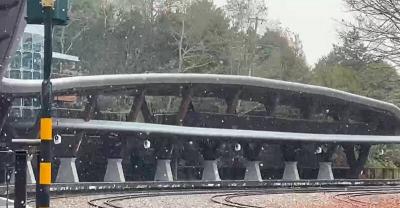
Snow this morning fell on Alishan for the first time in seven years, as a strong continental cold air mass sent temperatures plunging across Taiwan, the Central Weather Administration (CWA) said. The Alishan weather station, located at an elevation of about 2,200m in central Taiwan, recorded snowfall from 8:55am to 9:15am, when the temperature dropped to about 1°C, the CWA said. With increased moisture and low temperatures in the high-altitude Alishan area, the conditions were favorable for snow, CWA forecaster Tsai Yi-chi (蔡伊其) said. The last time snow fell at the Alishan weather station was on Jan. 10, 2018, while graupel fell there


 RSS
RSS