


Cross-strait academics have called China’s reported plan to merge its Taiwan Affairs Office (TAO) with its Hong Kong and Macau Affairs Office (HKMAO) an example of the country portraying issues related to Taiwan and the two Chinese territories as “local” affairs.
Hong Kong Chinese-language daily Ming Pao on Friday reported that China is to merge several government agencies, including the TAO and HKMAO.
One reason for Beijing to merge the two agencies could be that a stronger link between Hong Kong and Taiwan on many issues has developed before and following the territory’s Occupy Central movement, National Chengchi University Institute of International Relations director Kou Chien-wen (寇健文) said, adding that Hong Kong relations have already entered a new phase.
Under these circumstances, Beijing needs to improve the coordination of its relations with Taiwan and the territory, which are currently managed by separate agencies, he said, adding that merging the two would meet this need.
Hong Kong and Macau relations are local affairs under Beijing’s “one country, two systems” framework, and merging the TAO and HKMAO would send out the message that Beijing is “localizing” the “Taiwan problem,” Kou said.
Merging the two offices would be a huge change, said Chang Wu-yueh (張五岳), an associate professor in Tamkang University’s Graduate Institute of China Studies.
It would mean nominally integrating Taiwan, Hong Kong and Macau, he said, adding that China’s intention of including Taiwan under the “one country, two systems” framework is clear.
There are differences between Chinese President Xi Jinping (習近平) and late Chinese leader Deng Xiaoping’s (鄧小平) interpretations of the “one country, two systems” framework proposed by the latter, Chang said.
Xi’s “one country, two systems” framework appears to represent a different idea, Chang said.
Xi’s framework emphasizes that the two sides should each mind their own business, that China is to share the fruits of its development with Taiwanese and that there should be a “spiritual agreement” between the two, Chang said.
Whether the offices’ rumored merger would benefit China’s fight against Taiwanese independence and Hong Kong independence campaigners is “a very secondary question.”
The two situations are not alike, Chang said, adding, for example, that many pro-Hong Kong independence campaigners do not believe that the movement could succeed.
To Beijing, Hong Kong and Macau have “already been unified,” while Taiwan is “yet to be unified” with China, making the problem altogether different, Chang said.
Lau Siu-kai (劉兆佳), a former head of Hong Kong’s Central Policy Unit advisory body to the chief executive, said that according to his knowledge, China is indeed planning to merge the two agencies.
Asked whether “abolishing” the TAO could be part of a plan to belittle Taiwan, Lau said Beijing has always seen issues related to Taiwan and Hong Kong in the same light — as local affairs.
Furthermore, to Beijing, the TAO and HKMAO are only small agencies, Lau said.
The real reason behind the mergers and integration of government agencies is likely that the Chinese Communist Party wants to strengthen the party’s leadership and improve its governing ability, Lau said.

The Centers for Disease Control (CDC) yesterday reported the first case of a new COVID-19 subvariant — BA.3.2 — in a 10-year-old Singaporean girl who had a fever upon arrival in Taiwan and tested positive for the disease. The girl left Taiwan on March 20 and the case did not have a direct impact on the local community, it said. The WHO added the BA.3.2 strain to its list of Variants Under Monitoring in December last year, but this was the first imported case of the COVID-19 variant in Taiwan, CDC Deputy Director-General Lin Ming-cheng (林明誠) said. The girl arrived in Taiwan on

South Korea is planning to revise its controversial electronic arrival card, a step Taiwanese officials said prompted them to hold off on planned retaliatory measures, a South Korean media report said yesterday. A Yonhap News Agency report said that the South Korean Ministry of Foreign Affairs is planning to remove the “previous departure place” and “next destination” fields from its e-arrival card system. The plan, reached after interagency consultations, is under review and aims to simplify entry procedures and align the electronic form with the paper version, a South Korean ministry official said. The fields — which appeared only on the electronic form

The Ministry of Foreign Affairs (MOFA) is suspending retaliation measures against South Korea that were set to take effect tomorrow, after Seoul said it is updating its e-arrival system, MOFA said today. The measures were to be a new round of retaliation after Taiwan on March 1 changed South Korea's designation on government-issued alien resident certificates held by South Korean nationals to "South Korea” from the "Republic of Korea," the country’s official name. The move came after months of protests to Seoul over its listing of Taiwan as "China (Taiwan)" in dropdown menus on its new online immigration entry system. MOFA last week
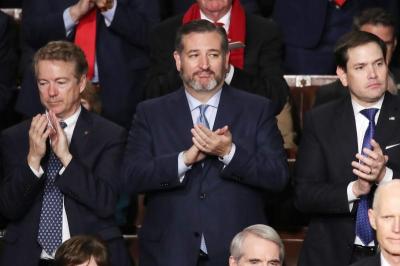
A bipartisan group of US senators has introduced a bill to enhance cooperation with Taiwan on drone development and to reduce reliance on supply chains linked to China. The proposed Blue Skies for Taiwan Act of 2026 was introduced by Republican US senators Ted Cruz and John Curtis, and Democratic US senators Jeff Merkley and Andy Kim. The legislation seeks to ease constraints on Taiwan-US cooperation in uncrewed aerial systems (UAS), including dependence on China-sourced components, limited access to capital and regulatory barriers under US export controls, a news release issued by Cruz on Wednesday said. The bill would establish a "Blue UAS


 RSS
RSS