


Taiwan-US relations should not be affected by the opinions of China or any other nation, Premier William Lai (賴清德) said yesterday.
Lai made the remarks at the Legislative Yuan when asked by Chinese Nationalist Party (KMT) caucus deputy secretary-general William Tseng (曾銘宗) to share his view on commentaries that Beijing could step up measures to suppress Taiwan in the international community as a response to the US Senate’s passage of the Taiwan Travel Act on Wednesday.
“The US is a world leader, and Taiwan is a sovereign nation. The exchanges between Taiwan and the US should not rely on the opinions of China or any other nation,” Lai said. “It is unnecessary to worry about China’s unreasonable opinions.”
Asked whether he had made plans to visit Washington, Lai said that he had not, but that it would be “great” if US President Donald Trump signed the act into law to normalize bilateral visits between Taiwanese and US officials — a view echoed by Tseng.
US academics on Thursday said that Taiwan should think about the implications of the act, especially what it means for relations across the Taiwan Strait, and to assess whether the nation can stand up to the pressure that will come from China as a result.
The act was a topic during a panel discussion hosted by the Washington-based Center for Strategic and International Studies (CSIS) titled “Japanese Views on China and Taiwan: Implications for the US-Japan Alliance.”
The discussion was moderated by CSIS senior vice president for Asia and Japan Chair Michael Green, who called into question the usefulness of the act, which would allow high-level officials from the US and Taiwan to travel to each other’s nations.
For Taiwan, it is more important to have a “very closely aligned US-Japan alliance on cross-strait issues” than “a slight upgrade in US visits or access,” Green said.
While both options would represent upgrades in Taiwan-US relations, Green said that a solid alliance between the US and Japan on issues related to cross-strait relations would be a “far more important deterrent and shaper of Chinese policies.”
He called the act only a symbolic change in Taiwan-US relations.
China will likely react to the passage of the act by going after Taiwan, not the US, so Taipei needs to be sure that “it really wants this,” Green said.
CSIS senior adviser and China Power Project director Bonnie Glaser acknowledged that the act “encourages” visits to take place between high-level officials between Taiwan and the US, but is not binding.
However, she expressed confidence that the act, if signed into law, would see a loosening of such restrictions, and is more likely to be implemented than clauses in the US’ National Defense Authorization Act that allow, but do not order, the re-establishment of regular port calls to Taiwan by the US Navy and Taiwan’s participation in joint military drills.
Additional reporting by Sean Lin
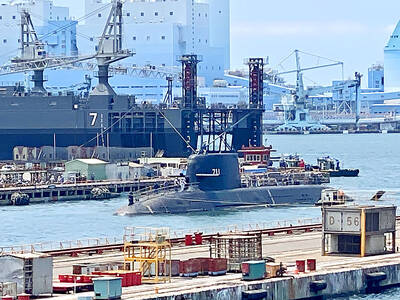
AGING: While Japan has 22 submarines, Taiwan only operates four, two of which were commissioned by the US in 1945 and 1946, and transferred to Taiwan in 1973 Taiwan would need at least 12 submarines to reach modern fleet capabilities, CSBC Corp, Taiwan chairman Chen Cheng-hung (陳政宏) said in an interview broadcast on Friday, citing a US assessment. CSBC is testing the nation’s first indigenous defense submarine, the Hai Kun (海鯤, Narwhal), which is scheduled to be delivered to the navy next month or in July. The Hai Kun has completed torpedo-firing tests and is scheduled to undergo overnight sea trials, Chen said on an SET TV military affairs program. Taiwan would require at least 12 submarines to establish a modern submarine force after assessing the nation’s operational environment and defense
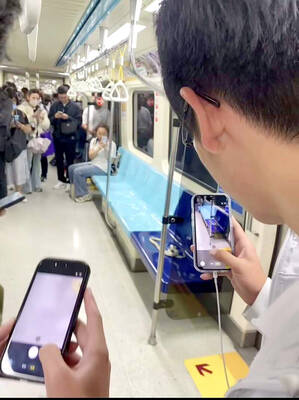
A white king snake that frightened passengers and caused a stir on a Taipei MRT train on Friday evening has been claimed by its owner, who would be fined, Taipei Rapid Transit Corp (TRTC) said yesterday. A person on Threads posted that he thought he was lucky to find an empty row of seats on Friday after boarding a train on the Bannan (Blue) Line, only to spot a white snake with black stripes after sitting down. Startled, he jumped up, he wrote, describing the encounter as “terrifying.” “Taipei’s rat control plan: Release snakes on the metro,” one person wrote in reply, referring
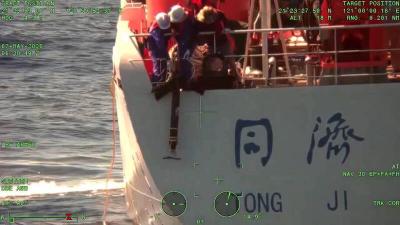
The coast guard today said that it had disrupted "illegal" operations by a Chinese research ship in waters close to the nation and driven it away, part of what Taipei sees a provocative pattern of China's stepped up maritime activities. The coast guard said that it on Thursday last week detected the Chinese ship Tongji (同濟號), which was commissioned only last year, 29 nautical miles (54km) southeast of the southern tip of Taiwan, although just outside restricted waters. The ship was observed lowering ropes into the water, suspected to be the deployment of scientific instruments for "illegal" survey operations, and the coast
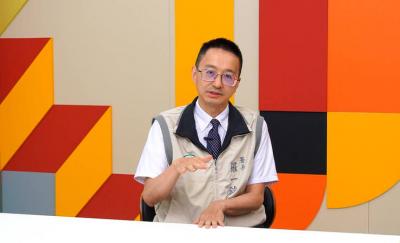
Taiwan’s two cases of hantavirus so far this year are on par with previous years’ case numbers, and the government is coordinating rat extermination work, so there should not be any outbreaks, Centers for Disease Control (CDC) Director-General Philip Lo (羅一鈞) said today in an interview with the Liberty Times (the Taipei Times’ sister newspaper). An increase in rat sightings in Taipei and New Taipei City has raised concerns about the spread of hantavirus, as rats can carry the disease. In January, a man in his 70s who lived in Taipei’s Daan District (大安) tested positive posthumously for hantavirus, Taiwan’s


 RSS
RSS