

Users of public bicycle systems in Taipei, New Taipei City, Taoyuan and Kaohsiung are to enjoy free insurance beginning in the second quarter of this year, the Non-Life Insurance Association of the Republic of China said yesterday.
The association said public bicycle insurance can be divided into two types: third-party liability and personal injury.
Taipei, New Taipei City and Taoyuan are to purchase third-party liability insurance, meaning users of public bicycles in the three municipalities would be covered should they get into an accident or cause injury to other people while riding the public bikes, the association said.
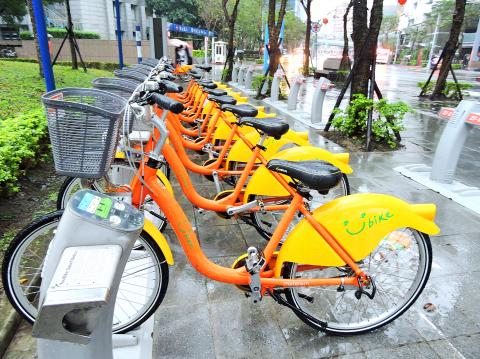
Photo: Lai Hsiao-tung, Taipei Times
The compensation for the death of a third party caused by a bike rider would be a maximum of NT$2 million (US$68,251).
Kaohsiung, on the other hand, is to purchase a personal injury insurance policy that would disburse up to NT$1 million in compensation in case of death or disability of riders due to accidents that occur while cycling, as well as NT$1,000 for each day of hospitalization.
There are about 13,000 public bicycles in Taipei, 11,000 in New Taipei City and 4,700 in Taoyuan, the association said, adding that the number in Kaohsiung was yet to be determined.
The annual premium for third-party liability insurance would be about NT$400 per bicycle, while the price of Kaohsiung’s personal injury insurance would be slightly higher, but has not yet been decided, the association said.
The four municipalities are to pay for the coverage and the public would not need to pay any insurance fees, it added.
Both forms of insurance are to be administered by Cathay Century Insurance Co and coinsured by 15 property insurance companies, the association said.

Taiwan’s growing defense preparations might be sending a stronger signal to the US than to Beijing, highlighting the need for Taipei to tailor its deterrence efforts to different audiences, a US security academic said yesterday. Stanford University Freeman Spogli Institute for International Studies fellow Oriana Skylar Mastro made the comment during a Taipei Security Dialogue panel examining lessons Taiwan could draw from the wars in Ukraine and the Middle East. Mastro said she was impressed by Taiwan’s increased defense spending, emphasis on asymmetric capabilities and efforts to prepare society for conflict, but questioned whom those initiatives were influencing. She said when she asked

A total of 400 foreign “high- level” professionals have been naturalized as Republic of China (Taiwan) citizens over the past decade as the government has eased nationality rules to attract talent from a wider range of fields, the Ministry of the Interior said yesterday. The 400th high-level professional, who works in the electronics industry, was approved for ROC citizenship on Aug. 26, the MOI said. The MOI quoted the newly naturalized citizen as saying that Taiwan is a leader in fields such as semiconductors, electronics manufacturing, artificial intelligence development and energy technology. He also said
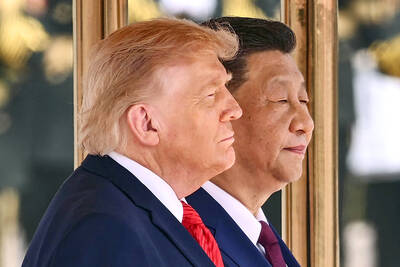
China has warned that it could cancel a planned US-China leaders’ summit if Washington approves new arms sales to Taiwan, a Japanese media outlet quoted sources as saying yesterday. US President Donald Trump, “apparently eager to showcase some diplomatic achievements ahead of November’s midterm congressional elections, places great importance on holding the summit with Chinese President Xi Jinping (習近平),” Japan’s Kyodo News reported. “While preparing for Xi’s upcoming trip, China has restated its position that the Taiwan issue is a ‘red line’ in bilateral relations,” the report said. The report said that when Xi met with Trump in Beijing in May, Xi said
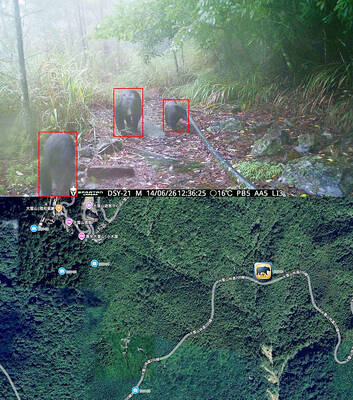
RARE PEEK: The footage released showed one of the bears staying in a cave for as long as 70 days, providing the first record of Formosan black bear’s overwintering The Forestry and Nature Conservation Agency yesterday released tracking records of released Formosan black bears for the first time, showing that they get much closer to human settlements than previously thought. The agency said it had captured two bears, Da Qu-ali (達古阿里) and Aziman (阿里曼), in indigenous villages in Hualien County and began to track them with a camera-mounted satellite collar after releasing them back into the wild. The results confirmed that the bears have moved from deep mountain areas into lowland hills closer to human communities, leading to an increase in human-bear conflicts, it said. The agency has introduced artificial intelligence-assisted early


 RSS
RSS