


It has been nearly seven years since the Fukushima Dai-ichi nuclear power plant disaster, and Taiwan should lift its ban on food products from Japanese prefectures affected by the disaster based on principles of free trade and scientific data, Taiwan’s Representative to Japan Frank Hsieh (謝長廷) said in an interview.
Taiwan should come up with a policy that is based on the government’s years of food product testing and that takes into consideration what many developed countries in the West are doing about the situation, Hsieh said.
Following the disaster in March 2011, Taiwan imposed a ban on food imports from Fukushima, Ibaraki, Tochigi, Gunma and Chiba prefectures, fearing that they could contain radioactive substances.
This action was in line with global practices at the time, as 54 countries implementing restrictions on certain Japanese goods following the meltdown, but several countries have eased bans in recent years, Hsieh said.
The US announced in September last year and the EU in November that they would partially lift the ban on certain Japanese products imposed after the disaster.
As Taiwan is the third-largest importer of Japanese food, the Japanese government has asked Taipei to reconsider its ban on several occasions.
However, while the Democratic Progressive Party (DPP) government has been sympathetic to the appeals, the idea has been met with strong public resistance.
Not long after the DPP took power in May 2016, there was talk of lifting the ban except for food products from Fukushima, but the plan was shelved after stiff opposition from civil groups and opposition parties.
Hsieh’s comments came after Minister of Health and Welfare Chen Shih-chung (陳時中) recommended that the government ease rules on non-contaminated food products from Japan.
Amid these appeals, Executive Yuan spokesman Hsu Kuo-yung (徐國勇) on Tuesday said that the government would look at three factors — public health, global standards and scientific data — in determining how it wants to move forward.
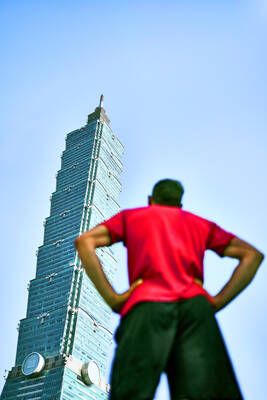
US climber Alex Honnold is to attempt to scale Taipei 101 without a rope and harness in a live Netflix special on Jan. 24, the streaming platform announced on Wednesday. Accounting for the time difference, the two-hour broadcast of Honnold’s climb, called Skyscraper Live, is to air on Jan. 23 in the US, Netflix said in a statement. Honnold, 40, was the first person ever to free solo climb the 900m El Capitan rock formation in Yosemite National Park — a feat that was recorded and later made into the 2018 documentary film Free Solo. Netflix previewed Skyscraper Live in October, after videos

Starting on Jan. 1, YouBike riders must have insurance to use the service, and a six-month trial of NT$5 coupons under certain conditions would be implemented to balance bike shortages, a joint statement from transportation departments across Taipei, New Taipei City and Taoyuan announced yesterday. The rental bike system operator said that coupons would be offered to riders to rent bikes from full stations, for riders who take out an electric-assisted bike from a full station, and for riders who return a bike to an empty station. All riders with YouBike accounts are automatically eligible for the program, and each membership account

A classified Pentagon-produced, multiyear assessment — the Overmatch brief — highlighted unreported Chinese capabilities to destroy US military assets and identified US supply chain choke points, painting a disturbing picture of waning US military might, a New York Times editorial published on Monday said. US Secretary of Defense Pete Hegseth’s comments in November last year that “we lose every time” in Pentagon-conducted war games pitting the US against China further highlighted the uncertainty about the US’ capability to intervene in the event of a Chinese invasion of Taiwan. “It shows the Pentagon’s overreliance on expensive, vulnerable weapons as adversaries field cheap, technologically
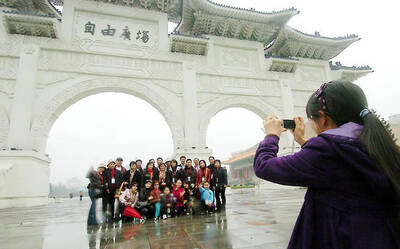
NUMBERs IMBALANCE: More than 4 million Taiwanese have visited China this year, while only about half a million Chinese have visited here Beijing has yet to respond to Taiwan’s requests for negotiation over matters related to the recovery of cross-strait tourism, the Tourism Administration said yesterday. Taiwan’s tourism authority issued the statement after Chinese-language daily the China Times reported yesterday that the government’s policy of banning group tours to China does not stop Taiwanese from visiting the country. As of October, more than 4.2 million had traveled to China this year, exceeding last year. Beijing estimated the number of Taiwanese tourists in China could reach 4.5 million this year. By contrast, only 500,000 Chinese tourists are expected in Taiwan, the report said. The report


 RSS
RSS