


A total of 48 new laws and regulations are to take effect on Monday, ranging from a lower tax exemption threshold for foreign e-commerce Web sites to increases in the minimum wage and tighter environmental regulations.
The custom tax exemption threshold for goods purchased on foreign e-commerce platforms is to be lowered from NT$3,000 to NT$2,000.
The change is to ensure equal taxation, because goods sold on local e-commerce platforms are levied according to national laws.
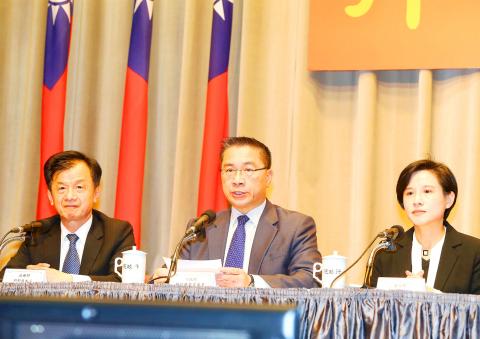
Photo: CNA
The monthly minimum wage is to increase from NT$21,009 to NT$22,000, benefiting 1.66 million workers, and the minimum hourly pay is to rise from NT$133 to NT$140, benefiting 390,000 workers.
Civil servants, military personnel and public school staff are to receive a 3 percent pay raise.
Changes to environmental regulations include a ban on the use of microbeads — tiny plastic particles that are too small to be picked up by sewage filtration systems before entering the ocean and food chain — in personal care products.
A full ban on asbestos is to take effect, with the prohibition on the use of asbestos in brake pads — the last legal use of the carcinogenic substance in Taiwan.
To reduce air pollution, a seasonal pollution tax system is to be introduced, with higher tax rates during autumn and winter when pollution is most severe.
The measure is expected to lower emissions of sulfur oxides, nitrogen oxides and other volatile chemical compounds by 3,226 tonnes every season.
Two-stroke scooter owners who retire the environmentally unfriendly vehicle can claim a cash reward of NT$1,000, with the amount rising to between NT$4,000 and NT$6,000 if they also purchase an electric scooter.
Buyers of electric scooters will be entitled to a cash reward of between NT$1,500 and NT$3,500.
The reward is to decrease by NT$500 every year until 2020 when the program expires.
“The measures are designed to improve air quality and protect public health,” Cabinet spokesman Hsu Kuo-yung (徐國勇) said.
Meanwhile, the Cabinet and the Democratic Progressive Party (DPP) caucus have reached a consensus on the priority bills to be reviewed during an extraordinary legislative session next month.
The five priority bills are the central government’s general budget, a draft amendment to the Labor Standards Act (勞動基準法), a set of bills on tax reform, the review of nominees for Control Yuan members and a draft amendment to the Act of Irrigation Association Organization (農田水利會組織通則).
The caucus on Tuesday will request an extraordinary session to be held from Friday next week to Jan. 31.
While the limited number of legislation scheduled for the extraordinary session might be a result of the anticipated opposition from opposition parties, the absence of amendments to the Mining Act (礦業法), the Air Pollution Control Act (空氣污染防制法) and the Company Act (公司法) — legislations believed to be urgent — was determined by the caucus, and the Cabinet respected its decision, Executive Yuan deputy spokeswoman Chang Hsiu-chen (張秀禎) said.
Premier William Lai (賴清德) and the caucus reached the understanding during a regular meeting yesterday, and Lai expressed gratitude for DPP caucus whip Ker Chien-ming’s (柯建銘) support, Chang said.

Kenting National Park service technician Yang Jien-fon (楊政峰) won a silver award in World Grand Prix Photography Awards Spring Season for his photograph of two male rat snakes intertwined in combat. Yang’s colleagues at Kenting National Park said he is a master of nature photography who has been held back by his job in civil service. The awards accept entries in all four seasons across six categories: architectural and urban photography, black-and-white and fine art photography, commercial and fashion photography, documentary and people photography, nature and experimental photography, and mobile photography. Awards are ranked according to scores and divided into platinum, gold and

More than half of the bamboo vipers captured in Tainan in the past few years were found in the city’s Sinhua District (新化), while other districts had smaller catches or none at all. Every year, Tainan captures about 6,000 snakes which have made their way into people’s homes. Of the six major venomous snakes in Taiwan, the cobra, the many-banded krait, the brown-spotted pit viper and the bamboo viper are the most frequently captured. The high concentration of bamboo vipers captured in Sinhua District is puzzling. Tainan Agriculture Bureau Forestry and Nature Conservation Division head Chu Chien-ming (朱健明) earlier this week said that the
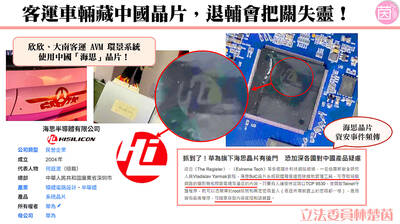
BREACH OF CONTRACT: The bus operators would seek compensation and have demanded that the manufacturer replace the chips with ones that meet regulations Two bus operators found to be using buses with China-made chips are to demand that the original manufacturers replace the systems and provide compensation for breach of contract, the Veterans Affairs Council said yesterday. Democratic Progressive Party Legislator Michelle Lin (林楚茵) yesterday said that Da Nan Bus Co and Shin-Shin Bus Co Ltd have fielded a total of 82 buses that are using Chinese chips. The bus models were made by Tron-E, while the systems provider was CYE Electronics, Lin said. Lin alleged that the buses were using chips manufactured by Huawei subsidiary HiSilicon Co, which presents a national security risk if the

The National Immigration Agency has banned two Chinese from returning to Taiwan, after they published social media content it described as disrespectful to national sovereignty. The agency imposed a two-month ban on a Chinese man surnamed Liang (梁) and a permanent ban on a woman surnamed Yang (楊), an influencer with 23 million followers, in October last year and last week respectively. Minister of the Interior Liu Shyh-fang (劉世芳) yesterday said on the sidelines of a legislative meeting that Chinese visitors to Taiwan are required to comply with the rules and regulations governing their entry permits. The government has handled the ban and


 RSS
RSS