


The Ill-gotten Party Assets Settlement Committee yesterday issued an ultimatum to the National Women’s League, saying that if talks between the committee, the league and the Ministry of the Interior fail to produce substantial results before Dec. 26, the committee would deal with the league as it does Chinese Nationalist Party (KMT) affiliates.
The committee criticized the league for postponing negotiations on an administrative contract that is to be signed between the committee and the league, which would set out penal measures if the league’s chairpersons are found to have hidden assets.
The deadline for concluding negotiations was last month, but was extended by a month after league chairwoman Cecilia Koo (辜嚴倬雲) reportedly threatened to withdraw the window for negotiation, allegedly due to her reluctance to give up control of the assets personally entrusted to her by league founder Soong Mayling (宋美齡).
“Over the past few months, the committee has exercised patience and extended goodwill to settle disputes and facilitate reconciliation, but discussions over the National Women’s League must not be allowed to drag on indefinitely,” the committee said.
“If the negotiations fail to yield substantial results by Dec. 26, when a committee meeting is to be held, the committee is to make its decision according to the law,” it added.
The purpose of transitional justice is not to persecute, but to establish historical facts behind a nation’s transition from an authoritarian regime to a democracy, thereby bolstering democracy, it said.
The committee thanked the ministry — the league’s governing body — for mediating between it and the league since July.
A source close to the matter said that the main contributing factor behind the deadlock is the league’s unbridled decisionmaking process, which has caused the league’s members to repeatedly overturn agreements.
Koo is furious over the clause that aims to punish league chairpersons over asset-hiding and has requested that the clause be changed so that punishments would be assigned to the league as a whole, rather than to individual chairpersons, the source said.
In related developments, the committee yesterday said that new evidence that Broadcasting Corp of China (BCC, 中廣) is a KMT-run enterprise has come to light.
The committee released results of its ongoing investigation into BCC, which showed that Chiang Kai-shek (蔣介石) in a September 1960 KMT Central Committee meeting gave the company instructions to step up psychological warfare against China.
BCC officials during the meeting advised the KMT administration to renew the company’s mission, the committee said.
“Newspapers and other media cannot compare to broadcasting when it comes to fighting a psychological war. The party should review and correct its current broadcasting policy,” the committee’s investigation report showed Chiang as saying.
Chiang had also in a 1963 Central Committee meeting instructed that the KMT’s renewal of its contract with the BCC should ensure that all of the company’s expenses are covered by the government, as it “was assisting in government affairs by waging psychological warfare against China and broadcasting propaganda to the world,” the report said.
The report cited a passage from the book 60 Years of BCC, which said the company vowed to “be loyal to the party-state and to contribute to society.”
“Let us not forget that we are a party-run cultural company. We must fight for the KMT’s outstanding cause and the Three Principles of the People it practices,” it said.
In Highlights of the BCC, published in 1978, the company said it “had never forgotten that it is a model enterprise operated by the party,” the report said.
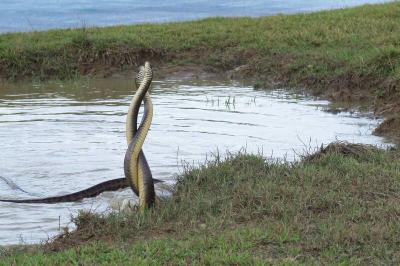
Kenting National Park service technician Yang Jien-fon (楊政峰) won a silver award in World Grand Prix Photography Awards Spring Season for his photograph of two male rat snakes intertwined in combat. Yang’s colleagues at Kenting National Park said he is a master of nature photography who has been held back by his job in civil service. The awards accept entries in all four seasons across six categories: architectural and urban photography, black-and-white and fine art photography, commercial and fashion photography, documentary and people photography, nature and experimental photography, and mobile photography. Awards are ranked according to scores and divided into platinum, gold and

More than half of the bamboo vipers captured in Tainan in the past few years were found in the city’s Sinhua District (新化), while other districts had smaller catches or none at all. Every year, Tainan captures about 6,000 snakes which have made their way into people’s homes. Of the six major venomous snakes in Taiwan, the cobra, the many-banded krait, the brown-spotted pit viper and the bamboo viper are the most frequently captured. The high concentration of bamboo vipers captured in Sinhua District is puzzling. Tainan Agriculture Bureau Forestry and Nature Conservation Division head Chu Chien-ming (朱健明) earlier this week said that the

The Chinese Nationalist Party (KMT) caucus yesterday said it opposes the introduction of migrant workers from India until a mechanism is in place to prevent workers from absconding. Minister of Labor Hung Sun-han (洪申翰) on Thursday told the Legislative Yuan that the first group of migrant workers from India could be introduced as early as this year, as part of a government program. The caucus’ opposition to the policy is based on the assessment that “the risk is too high,” KMT caucus secretary-general Lin Pei-hsiang (林沛祥) said. Taiwan has a serious and long-standing problem of migrant workers absconding from their contracts, indicating that
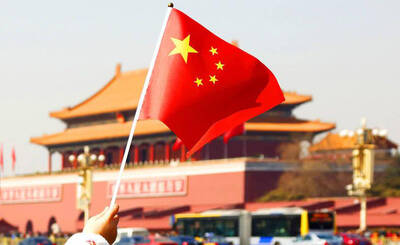
TRADE-OFF: Beijing seeks to trade a bowl of tempura for a Chinese delicacy, an official said, while another said its promises were attempts to interfere in the polls The government must carefully consider the national security implications of building a bridge connecting Kinmen County and Xiamen, China, the Public Construction Commission (PCC) said yesterday. PCC Commissioner Derek Chen (陳金德), who is also a minister without portfolio, made the remarks in a meeting of the legislature’s Transportation Committee, after Democratic Progressive Party Legislator Hsu Fu-kuei (徐富癸) asked about China’s proposal of new infrastructure projects to further connect Kinmen and Lienchiang (Matsu) counties with Xiamen. China unveiled the bridge plan, along with nine other policies for Taiwan, on Sunday, the last day of Chinese Nationalist Party (KMT) Chairwoman Cheng Li-wun’s (鄭麗文) visit


 RSS
RSS