


The US should step up efforts to encourage China to cooperate in reining in North Korea’s nuclear ambitions, a former US official said, adding that it can start by deepening ties with Taiwan.
The North’s missile test on Tuesday last week showed that China “has not delivered on North Korea” as Chinese President Xi Jinping (習近平) has promised, Institute for Korean-American Studies fellow Joseph Bosco said in an article titled “There have to be consequences for China” published on Wednesday on the Web site RealClearWorld.
Instead, China “continues to deliver for North Korea,” undermining the UN Security Council sanctions for which it voted, he said.
China has parlayed its leverage over North Korea into leverage over the West, which has granted China immunity regarding its violations of international law on trade, currency, intellectual property, human rights, Taiwan, and maritime and aviation security, Bosco said.
When it comes to these issues, the West’s hands are tied, because it needs China’s cooperation to face the North Korea threat, Bosco said, adding that efforts to address the issue “must now be directed at China.”
“We still do need China on North Korea, but Washington needs to up its game to get that critical cooperation,” said Bosco, who served as director for China in the US secretary of defense’s office from 2005 to 2006.
The US can “start by picking up the Taiwan thread” that US President Donald Trump pulled on when he on Dec. 2 last year accepted a telephone call from President Tsai Ing-wen (蔡英文) to congratulate him on his election victory, Bosco said.
In taking the call, Trump told China that “he does not regard as sacrosanct the ‘one China’ policy,” let alone care for Beijing’s distorted “one China” principle, he said.
There are myriad ways the Trump administration can deepen its relationship with Taiwan on diplomatic, economic and military fronts, he said.
For example, more frequent interactions between the two nations and visits by higher-level officials is essential, he said.
Despite the personal chemistry that has developed between Trump and Xi, Trump should make it clear to his Chinese counterpart that “we hold his government’s policies responsible for allowing the situation to come to this,” Bosco said.
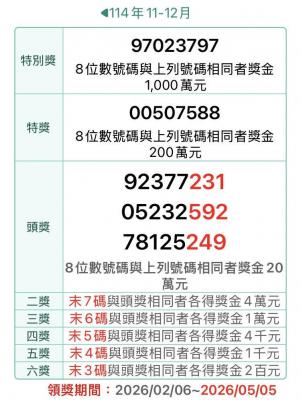
Seven of the 17 NT$10 million (US$311,604) winning receipts from the November-December uniform invoice lottery remain unclaimed as of today, the Ministry of Finance said, urging winners to redeem their prizes by May 5. The reminder comes ahead of the release of the winning numbers for the January-February lottery tomorrow. Among the unclaimed receipts was one for a NT$173 phone bill in Keelung, while others were for a NT$5,913 purchase at Costco in Taipei's Neihu District (內湖), a NT$49 purchase at a FamilyMart in New Taipei City's Tamsui District (淡水), and a NT$500 purchase at a tea shop in New Taipei City's
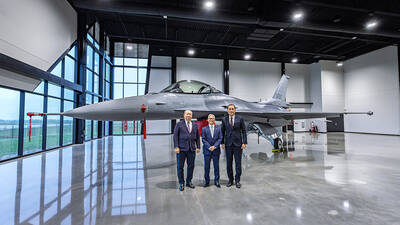
Taiwanese officials were shown the first of 66 F-16V fighter jets purchased by Taiwan from the United States, the Ministry of National Defense said yesterday, adding the aircraft has completed an initial flight test and is expected to be delivered later this year. A delegation led by Deputy Minister of National Defense Hsu Szu-chien (徐斯儉) visited Lockheed Martin’s F-16 C/D Block 70 (also known as F-16V) assembly line in South Carolina on March 16 to view the aircraft. The jet will undergo a final acceptance flight in the US before being delivered to Taiwan, the
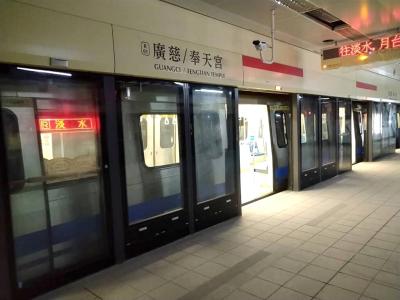
The New Taipei Metro's Sanyin Line and the eastern extension of the Taipei Metro's Tamsui-Xinyi Line (Red Line) are scheduled to begin operations in June, the National Development Council said today. The Red Line, which terminates at Xiangshan Station, would be connected by the 1.4km extension to a new eastern terminal, Guangci/Fengtian Temple Station, while the Sanyin Line would link New Taipei City's Tucheng and Yingge stations via Sanxia District (三峽). The council gave the updates at a council meeting reviewing progress on public construction projects for this year. Taiwan's annual public infrastructure budget would remain at NT$800 billion (US$25.08 billion), with NT$97.3
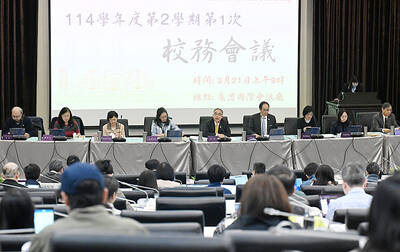
TALENT SCOUTING: The university is investing substantial funds in its future to bring in the kind of researchers that would keep the college internationally competitive National Taiwan University (NTU) plans to invest NT$2 billion (US$62.6 million) to launch two programs aimed at attracting and retaining top research talent, university president Chen Wen-chang (陳文章) said yesterday. The funding would support the “Palm Grove Scholars Project,” which targets academics aged 40 to 55. Up to 20 scholars would be selected, each receiving as much as NT$10 million annually, Chen said. The initiative is designed to attract leading researchers to Taiwan and strengthen NTU’s global competitiveness by fostering a more research-friendly environment and expanding international collaboration, he said. NTU is also introducing a “Hong Hu” chair grant, which would provide Palm


 RSS
RSS