


The Executive Yuan yesterday called on the Legislative Yuan to swiftly approve a budget plan for a 3 percent pay raise for government employees, public-school teachers and military personnel, adding that delays in passing the proposal would affect about 1 million people.
The Cabinet in September announced that public-sector employees and those working in state-run businesses are to receive a pay raise next year after a freeze of more than six years, adding that it hopes the plan would stimulate a similar move in the private sector to boost the economy.
Senior Executive Yuan officials, who declined to be named, yesterday called on the legislature to swiftly pass the third reading of the proposal so that the executive branch can implement the salary increase on Jan. 1 as scheduled.
Despite the legislative session’s close being scheduled for the end of this month, the legislature has avoided scheduling negotiations over the proposed salary hike, reportedly out of concern that the Chinese Nationalist Party (KMT) caucus would boycott the negotiations.
The officials expressed concern that the salary increase might be delayed until February after the ruling Democratic Progressive Party (DPP) caucus passes a motion to hold an extraordinary session next month.
While the number of active military personnel is confidential, delays in approving the proposal is estimated to affect about 1 million people, including 580,000 public-school teachers and 300,000 veterans.
The salary increase would require NT$24 billion (US$799.25 million), with the Executive Yuan and local governments contributing NT$18 billion and NT$6 billion respectively.
The Executive Yuan has earmarked NT$3.8 billion from the NT$18 billion budget to subsidize 14 local governments that are short of capital so that they can afford to pay the salary increase.
No subsidies have been planned for the more affluent six special municipalities, Hsinchu City or Kinmen County.
Since the salary hike is considered as one-time spending, it has been listed as a new project, meaning that no funds related to the salary increase should be drawn before a budget request is passed by lawmakers.
A source familiar with the issue said that despite a potential delay in passing the proposal, civil servants, public-school teachers and soldiers are to receive their proposed monthly salaries on time.
No funds should be drawn before the legislature approves the proposed salary hike, Directorate-General of Budget, Accounting and Statistics Minister Chu Tzer-ming (朱澤民) said, while expressing the hope that lawmakers will soon approve the budget proposal.
Even though civil servants, teachers and soldiers might have to wait until February for the raise, they are to be reimbursed the salary increase due to them in January after the budget passes, Chu said.
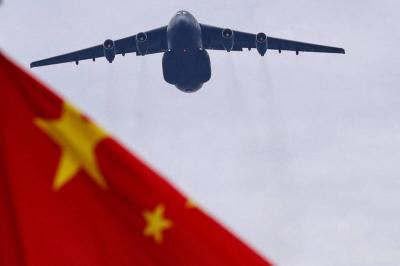
Beijing could eventually see a full amphibious invasion of Taiwan as the only "prudent" way to bring about unification, the US Department of Defense said in a newly released annual report to Congress. The Pentagon's "Annual Report to Congress: Military and Security Developments Involving the People's Republic of China 2025," was in many ways similar to last year’s report but reorganized the analysis of the options China has to take over Taiwan. Generally, according to the report, Chinese leaders view the People's Liberation Army's (PLA) capabilities for a Taiwan campaign as improving, but they remain uncertain about its readiness to successfully seize

Taiwan is getting a day off on Christmas for the first time in 25 years. The change comes after opposition parties passed a law earlier this year to add or restore five public holidays, including Constitution Day, which falls on today, Dec. 25. The day marks the 1947 adoption of the constitution of the Republic of China, as the government in Taipei is formally known. Back then the Chinese Nationalist Party (KMT) governed China from Nanjing. When the KMT, now an opposition party in Taiwan, passed the legislation on holidays, it said that they would help “commemorate the history of national development.” That

Taiwan has overtaken South Korea this year in per capita income for the first time in 23 years, IMF data showed. Per capita income is a nation’s GDP divided by the total population, used to compare average wealth levels across countries. Taiwan also beat Japan this year on per capita income, after surpassing it for the first time last year, US magazine Newsweek reported yesterday. Across Asia, Taiwan ranked fourth for per capita income at US$37,827 this year due to sustained economic growth, the report said. In the top three spots were Singapore, Macau and Hong Kong, it said. South

Snow fell on Yushan (Jade Mountain, 玉山) yesterday morning as a continental cold air mass sent temperatures below freezing on Taiwan’s tallest peak, the Central Weather Administration (CWA) said. Snowflakes were seen on Yushan’s north peak from 6:28am to 6:38am, but they did not fully cover the ground and no accumulation was recorded, the CWA said. As of 7:42am, the lowest temperature recorded across Taiwan was minus-5.5°C at Yushan’s Fengkou observatory and minus-4.7°C at the Yushan observatory, CWA data showed. On Hehuanshan (合歡山) in Nantou County, a low of 1.3°C was recorded at 6:39pm, when ice pellets fell at Songsyue Lodge (松雪樓), a


 RSS
RSS