


The passage late on Wednesday night of the Forward-looking Infrastructure Development Program budget was achieved by unconstitutionally distorting legislative rules, members of a Chinese Nationalist Party (KMT)-affiliated think tank said yesterday, adding that Legislative Yuan Speaker Su Jia-chyuan (蘇嘉全) set a dangerous precedent for handling opposition motions.
“Their actions amounted to blocking off our ability to propose amendments and hold the government accountable, effectively announcing that the Democratic Progressive Party [DPP] will do what it pleases in the Legislative Yuan in the future,” KMT Legislator Johnny Chiang (江啟臣) said at a National Policy Foundation news conference.
Chiang accused Su of using “majority violence” to back up a Tuesday night announcement that no issue would be voted on twice.
Chiang slammed the speaker’s interpretation of procedural rule, saying that it relied on a set of rules of order for civic organizations promulgated by the Ministry of the Interior, rather than on the Legislative Yuan’s own rules of order.
The KMT caucus has said that the interpretation was to ensure that only DPP-sponsored amendments would be considered by effectively precluding rival opposition amendments on the same issue from being discussed.
“There is a passage about not voting on the same issue twice in official legislature rules, but what it refers to is not voting on any identical measure twice,” former Taipei Law and Regulations Commission chairman Ye Ching-yuan (葉慶元) said.
More than 2,500 votes on the budget were held over the past several days, a record for the Legislative Yuan, after the KMT proposed thousands of amendments and motions in a “procedural boycott” of the special budget that it has criticized as wasteful and unfairly targeting localities controlled by the DPP.
“This amounts to the DPP poking a hole in a legal boycott method,” KMT Legislator Chiang Wan-an (蔣萬安) said, blasting the DPP for using “tank-like” procedural moves to push the budget through.
He recommends that the party caucus seek a constitutional ruling, Chiang said.
“Put simply, the threat of massive numbers of amendments allows us to use time to win space,” he said, adding that party caucuses had maintained continual backroom negotiations throughout the legislative battle of the past several days.
“The DPP is under time pressure and if we do not have this kind of a tool in the future, what incentive will they have to negotiate with us?” he added.
Amendments should have been lined up for consideration based on the degree they diverged from the original proposal, rather than the time at which they were submitted, Chiang said.

The military has spotted two Chinese warships operating in waters near Penghu County in the Taiwan Strait and sent its own naval and air forces to monitor the vessels, the Ministry of National Defense (MND) said. Beijing sends warships and warplanes into the waters and skies around Taiwan on an almost daily basis, drawing condemnation from Taipei. While the ministry offers daily updates on the locations of Chinese military aircraft, it only rarely gives details of where Chinese warships are operating, generally only when it detects aircraft carriers, as happened last week. A Chinese destroyer and a frigate entered waters to the southwest

A magnitude 6.1 earthquake struck off the coast of Yilan County at 8:39pm tonight, the Central Weather Administration (CWA) said, with no immediate reports of damage or injuries. The epicenter was 38.7km east-northeast of Yilan County Hall at a focal depth of 98.3km, the CWA’s Seismological Center said. The quake’s maximum intensity, which gauges the actual physical effect of a seismic event, was a level 4 on Taiwan’s 7-tier intensity scale, the center said. That intensity level was recorded in Yilan County’s Nanao Township (南澳), Hsinchu County’s Guansi Township (關西), Nantou County’s Hehuanshan (合歡山) and Hualien County’s Yanliao (鹽寮). An intensity of 3 was

Japanese Prime Minister Sanae Takaichi’s comment last year on Tokyo’s potential reaction to a Taiwan-China conflict has forced Beijing to rewrite its invasion plans, a retired Japanese general said. Takaichi told the Diet on Nov. 7 last year that a Chinese naval blockade or military attack on Taiwan could constitute a “survival-threatening situation” for Japan, potentially allowing Tokyo to exercise its right to collective self-defense. Former Japan Ground Self-Defense Force general Kiyofumi Ogawa said in a recent speech that the remark has been interpreted as meaning Japan could intervene in the early stages of a Taiwan Strait conflict, undermining China’s previous assumptions
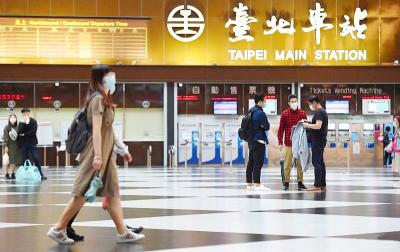
Taiwan Railways Corp (TRC) today announced that Shin Kong Mitsukoshi has been selected as the preferred bidder to operate the Taipei Railway Station shopping mall, replacing the current operator, Breeze Development Co Ltd. Among eight qualified firms that delivered presentations and were evaluated by a review committee, Shin Kong Mitsukoshi was ranked first, while Breeze was named the runner-up, the rail company said in a statement. Contract negotiations are to proceed in accordance with regulations, it said, adding that if negotiations with the top bidder fail, it could invite the second-ranked applicant to enter talks. Breeze in a statement today expressed doubts over


 RSS
RSS