


President Tsai Ing-wen (蔡英文) was resorting to bombast when she pledged to develop independent power grids to provide the nation with stable “green” energy, National Policy Foundation chief executive officer Sun Lih-chyun (孫立群) said on Wednesday.
The head of the Chinese Nationalist Party (KMT) think tank made the remarks during a presentation at a weekly KMT Central Standing Committee meeting after Tsai apologized to the public over a power outage on Tuesday that affected 6.68 million homes and offices.
“The power supply issue is simple,” Sun said. “Tsai’s administration only needs to answer two questions: How and with what kind of energy does it propose to achieve a stable and affordable power supply before and after 2025, when it expects to build a ‘nuclear-power-free homeland?’” he said.
Tsai’s pledge suggests her misconception of base-load energy supplies, which are characterized by uninterrupted power transmission around the clock, which renewable energies lack, he said.
The legal energy reserve rate is 15 percent of the nation’s overall power supply capacity, but the Tsai administration has allowed that figure to slump to about 3 percent, he said.
Datan Natural Gas Power Plant in Taoyuan’s Datan Township (大潭), the breakdown of which allegedly triggered Tuesday’s power outage, provide between 11 percent and 12 percent of the nation’s power supply, indicating that the outages could have been prevented if the administration had adhered to the legal rate, he said.
The talk of establishing independent green power grids is also unrealistic, as renewable energy cannot be consistently generated — solar power plants require large tracts of land and wind turbines are considered “nimby” infrastructure due to their noise, Sun said.
“The Tsai administration should stop deceiving the public with bombast,” he added.
Separately, members of the committee at Wednesday’s meeting discussed the election rules for local chapter chairpersons, which are likely to undergo changes.
Committee member Lee Che-hua (李哲華) told reporters that after assuming office on Sunday, KMT chairman-elect Wu Den-yih (吳敦義) is likely to appoint local chapter chairpersons for areas where competition is fiercer among different party factions.
In areas where there are fewer factions, the election would be carried out in October as originally scheduled, Lee said.
KMT Culture and Communications Committee deputy director-general Lee Ming-hsien (李明賢) was made the committee’s acting director-general after Central Standing Committee members passed a motion by KMT acting chairman Lin Cheng-tse (林政則) to appoint Lee to the post.
Lee, best known as a TV personality, is to fill the post left vacant by Yang Yung-ming (楊永明), who tendered his resignation this month and is to accept a teaching job at a Japanese university.
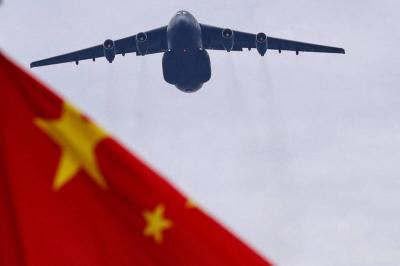
Beijing could eventually see a full amphibious invasion of Taiwan as the only "prudent" way to bring about unification, the US Department of Defense said in a newly released annual report to Congress. The Pentagon's "Annual Report to Congress: Military and Security Developments Involving the People's Republic of China 2025," was in many ways similar to last year’s report but reorganized the analysis of the options China has to take over Taiwan. Generally, according to the report, Chinese leaders view the People's Liberation Army's (PLA) capabilities for a Taiwan campaign as improving, but they remain uncertain about its readiness to successfully seize

Taiwan is getting a day off on Christmas for the first time in 25 years. The change comes after opposition parties passed a law earlier this year to add or restore five public holidays, including Constitution Day, which falls on today, Dec. 25. The day marks the 1947 adoption of the constitution of the Republic of China, as the government in Taipei is formally known. Back then the Chinese Nationalist Party (KMT) governed China from Nanjing. When the KMT, now an opposition party in Taiwan, passed the legislation on holidays, it said that they would help “commemorate the history of national development.” That

Taiwan has overtaken South Korea this year in per capita income for the first time in 23 years, IMF data showed. Per capita income is a nation’s GDP divided by the total population, used to compare average wealth levels across countries. Taiwan also beat Japan this year on per capita income, after surpassing it for the first time last year, US magazine Newsweek reported yesterday. Across Asia, Taiwan ranked fourth for per capita income at US$37,827 this year due to sustained economic growth, the report said. In the top three spots were Singapore, Macau and Hong Kong, it said. South

Snow fell on Yushan (Jade Mountain, 玉山) yesterday morning as a continental cold air mass sent temperatures below freezing on Taiwan’s tallest peak, the Central Weather Administration (CWA) said. Snowflakes were seen on Yushan’s north peak from 6:28am to 6:38am, but they did not fully cover the ground and no accumulation was recorded, the CWA said. As of 7:42am, the lowest temperature recorded across Taiwan was minus-5.5°C at Yushan’s Fengkou observatory and minus-4.7°C at the Yushan observatory, CWA data showed. On Hehuanshan (合歡山) in Nantou County, a low of 1.3°C was recorded at 6:39pm, when ice pellets fell at Songsyue Lodge (松雪樓), a


 RSS
RSS