


US academics on Friday expressed positive views about President Tsai Ing-wen’s (蔡英文) approach toward China during a conference in Washington, with some saying she has been dealing with Beijing in a careful and relatively conservative manner.
Tsai has been “an extraordinarily careful practitioner of statecraft,” said Patrick Cronin, a senior advisor and senior director of the Asia-Pacific security program at the Center for a New American Security, at the conference titled “The Future of US-Taiwan Relations in New Administrations.”
Every time Tsai tries to come up with a new framework for ties with China other than the so-called “1992 consensus” or proposes a new type of interaction across the Taiwan Strait, the Chinese government dismisses it, Cronin said.
That is because China does not want Tsai to “regain some new leverage” on cross-strait issues and is intent on squeezing her space even further, including by stealing Taiwan’s diplomatic allies and cutting back on the number of Chinese tourists visiting Taiwan, he said.
The “1992 consensus” — a term former Mainland Affairs Council chairman Su Chi (蘇起) admitted to making up in 2000 — refers to a tacit understanding between the Chinese Nationalist Party (KMT) and the Chinese government that both sides acknowledge there is “one China,” with each side having its own interpretation of what “China” means.
China has attempted through this coercion to unilaterally write rules on cross-strait relations, which is similar to what has been happening in the South China Sea, and the answer for Tsai and for US President Donald Trump in each situation should be to say “no,” Cronin said.
Scott Kastner, an associate professor at the University of Maryland, said cross-strait relations are relatively stable despite the recent uptick in tensions, because the scenarios in which China might use a militarily coercive approach to Taiwan are relatively unlikely to happen in part due to Tsai’s approach.
A scenario in which Beijing would use military coercion to push Taiwan to adopt more accommodating policies is unlikely, because it is “generally recognized that it’s easier to make coercive threats to deter changes to the status quo than it is to use coercive threats to try to compel changes to the status quo,” he said.
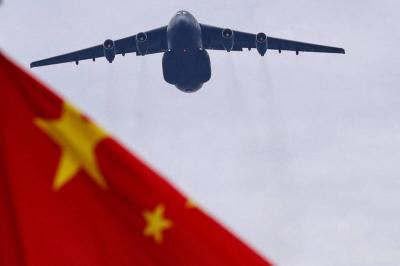
Beijing could eventually see a full amphibious invasion of Taiwan as the only "prudent" way to bring about unification, the US Department of Defense said in a newly released annual report to Congress. The Pentagon's "Annual Report to Congress: Military and Security Developments Involving the People's Republic of China 2025," was in many ways similar to last year’s report but reorganized the analysis of the options China has to take over Taiwan. Generally, according to the report, Chinese leaders view the People's Liberation Army's (PLA) capabilities for a Taiwan campaign as improving, but they remain uncertain about its readiness to successfully seize

Taiwan is getting a day off on Christmas for the first time in 25 years. The change comes after opposition parties passed a law earlier this year to add or restore five public holidays, including Constitution Day, which falls on today, Dec. 25. The day marks the 1947 adoption of the constitution of the Republic of China, as the government in Taipei is formally known. Back then the Chinese Nationalist Party (KMT) governed China from Nanjing. When the KMT, now an opposition party in Taiwan, passed the legislation on holidays, it said that they would help “commemorate the history of national development.” That

Taiwan has overtaken South Korea this year in per capita income for the first time in 23 years, IMF data showed. Per capita income is a nation’s GDP divided by the total population, used to compare average wealth levels across countries. Taiwan also beat Japan this year on per capita income, after surpassing it for the first time last year, US magazine Newsweek reported yesterday. Across Asia, Taiwan ranked fourth for per capita income at US$37,827 this year due to sustained economic growth, the report said. In the top three spots were Singapore, Macau and Hong Kong, it said. South

Snow fell on Yushan (Jade Mountain, 玉山) yesterday morning as a continental cold air mass sent temperatures below freezing on Taiwan’s tallest peak, the Central Weather Administration (CWA) said. Snowflakes were seen on Yushan’s north peak from 6:28am to 6:38am, but they did not fully cover the ground and no accumulation was recorded, the CWA said. As of 7:42am, the lowest temperature recorded across Taiwan was minus-5.5°C at Yushan’s Fengkou observatory and minus-4.7°C at the Yushan observatory, CWA data showed. On Hehuanshan (合歡山) in Nantou County, a low of 1.3°C was recorded at 6:39pm, when ice pellets fell at Songsyue Lodge (松雪樓), a


 RSS
RSS