


Guidelines issued by China’s Xinhua news agency banning Chinese media from using “Republic of China (ROC)” and the Taiwanese interpretation of the so-called “1992 consensus” accentuate that the “consensus” is a fabrication and eliminate any gray area in Beijing’s “one China” principle, lawmakers said yesterday.
The “1992 consensus” — a term former Mainland Affairs Council chairman Su Chi (蘇起) admitted making up in 2000 — refers to a tacit understanding between the Chinese Nationalist Party (KMT) and the Chinese government that both sides acknowledge there is “one China,” with each side having its own interpretation of what “China” means.
The list also bans Chinese media from using the term “president/vice president of the ROC,” instead instructing them to use “leader/deputy leader of the Taiwan authorities.”
Former president Ma Ying-jeou (馬英九) and KMT chairman-elect Wu Den-yih’s (吳敦義) “‘one China, different interpretations’ has failed,” Democratic Progressive Party Legislator Chen Chi-mai (陳其邁) said.
“The condition on which Taiwan and China have their respective interpretations of what ‘China’ means never existed. It is political rhetoric that the KMT has used to fool Taiwanese for years,” DPP Legislator Lai Jui-jung (賴瑞隆) said.
That each side of the Taiwan Strait has its own interpretation of what “China” means has been proved false now that Beijing has eliminated any room for ambiguity, he added.
“‘China’ means the People’s Republic of China. The government must not fall under the delusion that ‘one China, different interpretations’ would work like it did for the KMT,” he said.
New Power Party (NPP) Legislator Hsu Yung-ming (徐永明) said Beijing’s guidelines banning the use of “one China, different interpretations” are “a slap in the face for the KMT.”
“Beijing is limiting interpretation of cross-strait issues, which shows that the ‘different interpretations’ of the ‘consensus’ have been cut, and to Beijing, the ‘consensus’ is synonymous with ‘one China,’” he said.
President Tsai Ing-wen’s (蔡英文) administration should take countermeasures to stop Beijing’s actions eliminating the ROC, Hsu said.
KMT Legislator Lee Yen-hsiu (李彥秀) said she hopes that Xinhua would treat the ROC with respect, adding that “the nation is a sovereign state. If things go on like this, it would be detrimental to cross-strait relations.”
KMT Legislator Chiang Wan-an (蔣萬安) said that Xinhua had always rejected the ROC, but now it has upped the ante by banning the “different interpretations.”
“The move is a clear warning to Taiwan that China wants to drive cross-strait relations down to freezing point,” he said.
People First Party Legislator Chen Yi-chieh (陳怡潔) said the guidelines are observed by Chinese media outlets and Taiwanese should not be restrained by them.
“Whoever Beijing wants to slap or warn with its actions, we need not march to its beat,” she said. “China’s oppression of Taiwan started many years ago. Taiwan should continue to bolster press freedom and democracy.”
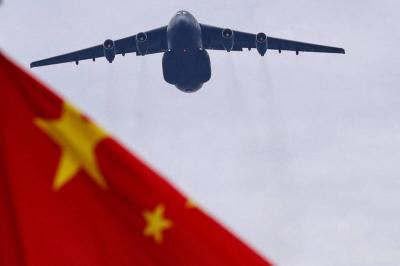
Beijing could eventually see a full amphibious invasion of Taiwan as the only "prudent" way to bring about unification, the US Department of Defense said in a newly released annual report to Congress. The Pentagon's "Annual Report to Congress: Military and Security Developments Involving the People's Republic of China 2025," was in many ways similar to last year’s report but reorganized the analysis of the options China has to take over Taiwan. Generally, according to the report, Chinese leaders view the People's Liberation Army's (PLA) capabilities for a Taiwan campaign as improving, but they remain uncertain about its readiness to successfully seize
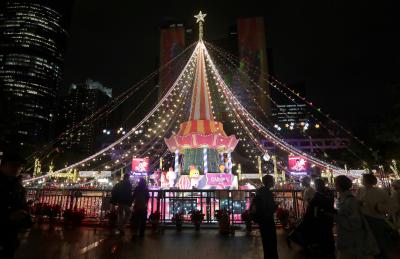
Taiwan is getting a day off on Christmas for the first time in 25 years. The change comes after opposition parties passed a law earlier this year to add or restore five public holidays, including Constitution Day, which falls on today, Dec. 25. The day marks the 1947 adoption of the constitution of the Republic of China, as the government in Taipei is formally known. Back then the Chinese Nationalist Party (KMT) governed China from Nanjing. When the KMT, now an opposition party in Taiwan, passed the legislation on holidays, it said that they would help “commemorate the history of national development.” That

Trips for more than 100,000 international and domestic air travelers could be disrupted as China launches a military exercise around Taiwan today, Taiwan’s Civil Aviation Administration (CAA) said yesterday. The exercise could affect nearly 900 flights scheduled to enter the Taipei Flight Information Region (FIR) during the exercise window, it added. A notice issued by the Chinese Civil Aviation Administration showed there would be seven temporary zones around the Taiwan Strait which would be used for live-fire exercises, lasting from 8am to 6pm today. All aircraft are prohibited from entering during exercise, it says. Taipei FIR has 14 international air routes and

Snow fell on Yushan (Jade Mountain, 玉山) yesterday morning as a continental cold air mass sent temperatures below freezing on Taiwan’s tallest peak, the Central Weather Administration (CWA) said. Snowflakes were seen on Yushan’s north peak from 6:28am to 6:38am, but they did not fully cover the ground and no accumulation was recorded, the CWA said. As of 7:42am, the lowest temperature recorded across Taiwan was minus-5.5°C at Yushan’s Fengkou observatory and minus-4.7°C at the Yushan observatory, CWA data showed. On Hehuanshan (合歡山) in Nantou County, a low of 1.3°C was recorded at 6:39pm, when ice pellets fell at Songsyue Lodge (松雪樓), a


 RSS
RSS