


Chinese Nationalist Party (KMT) chairperson-elect Wu Den-yih (吳敦義) yesterday said he would not put too much stock into KMT member Chang Ya-chung’s (張亞中) criticism that he was too “soft” on the Executive Yuan’s tightening of rules on former officials cognizant of sensitive information who plan to visit China.
The Executive Yuan on Thursday passed a draft amendment that introduces more stringent penalties for retired high-ranking military officers and senior political appointees who engage in political activities in China.
Under the draft amendment to the Act Governing Relations Between the People of the Taiwan Area and the Mainland Area (臺灣地區與大陸地區人民關係條例), former high-ranking military officers and political appointees are prohibited from participating in political activities in China for 15 years after they retire. Those who violate the regulation can have their monthly pension payments suspended or face a fine of up to NT$5 million (US$163,345).
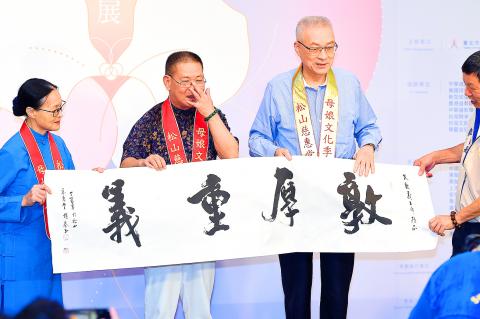
Photo: Liao Chen-huei, Taipei Times
According to the new regulations, military officers ranked lieutenant general or higher, deputy chiefs and chiefs of the National Security Bureau, Ministry of National Defense, Ministry of Foreign Affairs, Mainland Affairs Council and chiefs of intelligence agencies are prohibited from attending events and activities hosted by Chinese leaders and making gestures that harm the country’s national dignity, such as saluting flags and emblems, or singing songs that symbolize Chinese political power.
Wu, a former vice president, on Friday said in response to media queries that he also followed the Classified National Security Information Protection Act (國家機密保護法) in filing his application to make a speech in the US last year.
However, the tightening of rules is based on an “assumption of guilt,” he said, adding that they are “overly stringent and inappropriate.”
His remarks drew a response from Chang, a National Taiwan University professor of political science, who said that Wu’s stance on the issue was “too soft” and failed to live up to expectations given his status as KMT chairman-elect.
“I will not take his criticism,” Wu said yesterday on the sidelines of an art exhibition in Taipei.
“If it were coming from someone who is patriotic, I would treat it with respect and trust. If not, I would not put too much stock into it,” he said, adding that people have a clear understanding of Chang’s cross-strait stance, which is “one China, same interpretation.”
Chang is widely believed to have created the term “one China, same interpretation,” a variation of the so-called “1992 consensus.”
The 1992 consensus refers to a tacit understanding between China and the KMT that both sides of the Taiwan Strait acknowledge there is “one China,” with each side having its own interpretation of what “China” means. Former Mainland Affairs Council minister Su Chi (蘇起) said in 2006 that he made up the term in 2000.
“How am I soft?” Wu asked.
The act stipulates that former presidents and vice presidents must wait at least three years after leaving office before they are allowed to visit China, while former premiers wanting to visit China must obtain the approval of the premier, Wu said.
It is inappropriate for retired military officials to watch Chinese military parades, he said.
Additional reporting by CNA
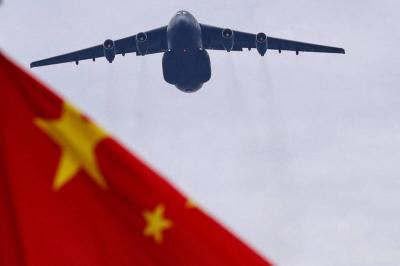
Beijing could eventually see a full amphibious invasion of Taiwan as the only "prudent" way to bring about unification, the US Department of Defense said in a newly released annual report to Congress. The Pentagon's "Annual Report to Congress: Military and Security Developments Involving the People's Republic of China 2025," was in many ways similar to last year’s report but reorganized the analysis of the options China has to take over Taiwan. Generally, according to the report, Chinese leaders view the People's Liberation Army's (PLA) capabilities for a Taiwan campaign as improving, but they remain uncertain about its readiness to successfully seize
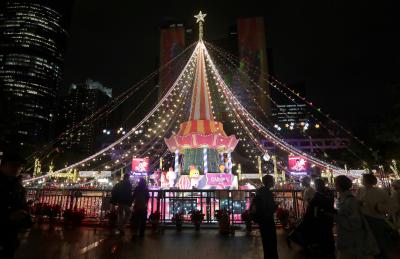
Taiwan is getting a day off on Christmas for the first time in 25 years. The change comes after opposition parties passed a law earlier this year to add or restore five public holidays, including Constitution Day, which falls on today, Dec. 25. The day marks the 1947 adoption of the constitution of the Republic of China, as the government in Taipei is formally known. Back then the Chinese Nationalist Party (KMT) governed China from Nanjing. When the KMT, now an opposition party in Taiwan, passed the legislation on holidays, it said that they would help “commemorate the history of national development.” That

Taiwan has overtaken South Korea this year in per capita income for the first time in 23 years, IMF data showed. Per capita income is a nation’s GDP divided by the total population, used to compare average wealth levels across countries. Taiwan also beat Japan this year on per capita income, after surpassing it for the first time last year, US magazine Newsweek reported yesterday. Across Asia, Taiwan ranked fourth for per capita income at US$37,827 this year due to sustained economic growth, the report said. In the top three spots were Singapore, Macau and Hong Kong, it said. South

Snow fell on Yushan (Jade Mountain, 玉山) yesterday morning as a continental cold air mass sent temperatures below freezing on Taiwan’s tallest peak, the Central Weather Administration (CWA) said. Snowflakes were seen on Yushan’s north peak from 6:28am to 6:38am, but they did not fully cover the ground and no accumulation was recorded, the CWA said. As of 7:42am, the lowest temperature recorded across Taiwan was minus-5.5°C at Yushan’s Fengkou observatory and minus-4.7°C at the Yushan observatory, CWA data showed. On Hehuanshan (合歡山) in Nantou County, a low of 1.3°C was recorded at 6:39pm, when ice pellets fell at Songsyue Lodge (松雪樓), a


 RSS
RSS