


Former president Ma Ying-jeou (馬英九) yesterday said the official recognition of the so-called “1992 consensus” by his administration did not damage national sovereignty, but resulted in “diplomatic room” and a “diplomatic truce” with China.
Ma made the remarks in his opening speech to an economic forum in Taipei held by the China Cross-Strait Culture and Trade Development Association.
The “1992 consensus” — a term former Mainland Affairs Council chairman Su Chi (蘇起) admitted making up in 2000 — refers to a tacit understanding between the Chinese Nationalist Party (KMT) and Beijing that both sides acknowledge there is “one China,” with each side having its own interpretation of what “China” means.

Photo: CNA
Ma said the mutual recognition of the “1992 consensus” led to eight years of diplomatic truce under his administration, allowing the nation’s participation in the World Health Assembly and the International Civil Aviation Organization, as well as visa-free travel with 164 nations.
President Tsai Ing-wen’s (蔡英文) refusal to recognize the “1992 consensus” is to blame for the nation’s exclusion from the same international meetings, its loss of diplomatic allies and the forced relocation of several of its representative offices, he said.
Ma gave the government credit for maintaining the “status quo,” but added that the “1992 consensus” is a part of the “status quo.”
Exchanges with China are pursued by many nations and Taiwan cannot afford to be closed off from China, he added.
It would bring him “great personal satisfaction” if the Democratic Progressive Party administration would recognize the “1992 consensus,” return cross-strait relations to normalcy and “restore original peace and posterity,” he said.
Unification with China should not be a closed topic, but the precondition of peace and democracy on both sides should be met before the talks can be held, he added.
Separately yesterday at a cross-strait summit, former vice president Wu Den-yih (吳敦義) said: “So long as the Chinese cultural heritage is preserved, it is impossible that ‘one China, with different interpretations’ will be interpreted as ‘two Chinas’ or ‘one China and one Taiwan.’ Rather, the term means the ‘one China’ principle, with each sides having its own interpretation, guaranteeing peace and prosperity across the strait.”
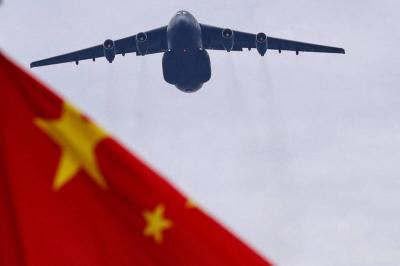
Beijing could eventually see a full amphibious invasion of Taiwan as the only "prudent" way to bring about unification, the US Department of Defense said in a newly released annual report to Congress. The Pentagon's "Annual Report to Congress: Military and Security Developments Involving the People's Republic of China 2025," was in many ways similar to last year’s report but reorganized the analysis of the options China has to take over Taiwan. Generally, according to the report, Chinese leaders view the People's Liberation Army's (PLA) capabilities for a Taiwan campaign as improving, but they remain uncertain about its readiness to successfully seize

Taiwan is getting a day off on Christmas for the first time in 25 years. The change comes after opposition parties passed a law earlier this year to add or restore five public holidays, including Constitution Day, which falls on today, Dec. 25. The day marks the 1947 adoption of the constitution of the Republic of China, as the government in Taipei is formally known. Back then the Chinese Nationalist Party (KMT) governed China from Nanjing. When the KMT, now an opposition party in Taiwan, passed the legislation on holidays, it said that they would help “commemorate the history of national development.” That

Taiwan has overtaken South Korea this year in per capita income for the first time in 23 years, IMF data showed. Per capita income is a nation’s GDP divided by the total population, used to compare average wealth levels across countries. Taiwan also beat Japan this year on per capita income, after surpassing it for the first time last year, US magazine Newsweek reported yesterday. Across Asia, Taiwan ranked fourth for per capita income at US$37,827 this year due to sustained economic growth, the report said. In the top three spots were Singapore, Macau and Hong Kong, it said. South

Snow fell on Yushan (Jade Mountain, 玉山) yesterday morning as a continental cold air mass sent temperatures below freezing on Taiwan’s tallest peak, the Central Weather Administration (CWA) said. Snowflakes were seen on Yushan’s north peak from 6:28am to 6:38am, but they did not fully cover the ground and no accumulation was recorded, the CWA said. As of 7:42am, the lowest temperature recorded across Taiwan was minus-5.5°C at Yushan’s Fengkou observatory and minus-4.7°C at the Yushan observatory, CWA data showed. On Hehuanshan (合歡山) in Nantou County, a low of 1.3°C was recorded at 6:39pm, when ice pellets fell at Songsyue Lodge (松雪樓), a


 RSS
RSS