


Eighteen categories of government officials, including the president and vice president, would be subjected to strict regulations against money laundering to ensure financial transparency and stability, according to a draft act prepared by the Ministry of Justice.
An amendment to the Money Laundering Control Act (洗錢防制法), which was approved last year and is to take effect on June 28, stipulates that financial institutions and certain non-financial agencies must improve their review of clients who hold key political offices, as well as their relatives and close associates, to assess and manage the risk of money laundering.
Transaction records of the people covered by the act must be preserved, according to the amendment.
The ministry, which has prepared bills pertaining to the amendment following discussions with the financial sector, yesterday announced a draft act to determine the government officials who would be subjected to stringent financial vetting process.
The draft act stipulates improved enforcement of money laundering laws for the president and vice president; legislators; mayors; county commissioners; council speakers; ministers; directors of political parties; Presidential Office and National Security Council secretaries-general and their deputies; the Academia Sinica president and vice president; presidents, vice presidents, secretaries-general and deputy secretaries-general of the Executive Yuan, Legislative Yuan, Judicial Yuan, Control Yuan and Examination Yuan; members of the Examination Yuan and Control Yuan; justices and the chief justice of the Supreme Court and the Supreme Administrative Court; ambassadors and diplomatic representatives; directors of military units ranking lieutenant general or higher; and directors and general managers of state-run businesses.
The ministry can also put officials tasked with the fulfillment of major public policies or the management of national or public assets of sizeable financial value, under regulation, according to the draft act.
Relatives of key officials to be regulated include their parents, children, siblings, spouses and their siblings, or partners living with them.
Close associates of key officials include their employers or employees, business partners, people having close business ties with the officials and directors of the organizations or unions of which the officials are members.
The duration during which the government officials would be subject to regulation after they leave office would depend on their influence, which is judged by the time they were in office and the connection between their former positions and future positions, according to the draft act.
If it is judged that a retired official should be placed under regulation, their relatives and close associates would also to be regulated, the draft act stipulates.
Tightened control on the financial activities of key government officials is not expected to discourage the private sector from hiring retired officials as company directors or independent directors, although their employment would subject the company to stricter regulation against money laundering, the ministry said.
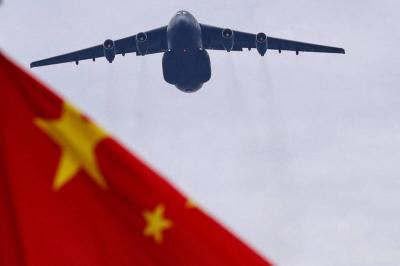
Beijing could eventually see a full amphibious invasion of Taiwan as the only "prudent" way to bring about unification, the US Department of Defense said in a newly released annual report to Congress. The Pentagon's "Annual Report to Congress: Military and Security Developments Involving the People's Republic of China 2025," was in many ways similar to last year’s report but reorganized the analysis of the options China has to take over Taiwan. Generally, according to the report, Chinese leaders view the People's Liberation Army's (PLA) capabilities for a Taiwan campaign as improving, but they remain uncertain about its readiness to successfully seize

Taiwan is getting a day off on Christmas for the first time in 25 years. The change comes after opposition parties passed a law earlier this year to add or restore five public holidays, including Constitution Day, which falls on today, Dec. 25. The day marks the 1947 adoption of the constitution of the Republic of China, as the government in Taipei is formally known. Back then the Chinese Nationalist Party (KMT) governed China from Nanjing. When the KMT, now an opposition party in Taiwan, passed the legislation on holidays, it said that they would help “commemorate the history of national development.” That

Taiwan has overtaken South Korea this year in per capita income for the first time in 23 years, IMF data showed. Per capita income is a nation’s GDP divided by the total population, used to compare average wealth levels across countries. Taiwan also beat Japan this year on per capita income, after surpassing it for the first time last year, US magazine Newsweek reported yesterday. Across Asia, Taiwan ranked fourth for per capita income at US$37,827 this year due to sustained economic growth, the report said. In the top three spots were Singapore, Macau and Hong Kong, it said. South

Snow fell on Yushan (Jade Mountain, 玉山) yesterday morning as a continental cold air mass sent temperatures below freezing on Taiwan’s tallest peak, the Central Weather Administration (CWA) said. Snowflakes were seen on Yushan’s north peak from 6:28am to 6:38am, but they did not fully cover the ground and no accumulation was recorded, the CWA said. As of 7:42am, the lowest temperature recorded across Taiwan was minus-5.5°C at Yushan’s Fengkou observatory and minus-4.7°C at the Yushan observatory, CWA data showed. On Hehuanshan (合歡山) in Nantou County, a low of 1.3°C was recorded at 6:39pm, when ice pellets fell at Songsyue Lodge (松雪樓), a


 RSS
RSS