


Victims of the Martial Law on Thursday called on the public not to forget the atrocities and human rights violations caused by the authoritarian regime, joining artists and Ministry of Culture officials to launch this year’s Green Island Human Rights Arts Festival.
The festival is to officially begin on Wednesday, designated as Green Island Human Rights Memorial Day.
May 17 marks the day on which the first group of political prisoners was shipped to the offshore island for incarceration in 1951, a pivotal episode marking the beginning of the White Terror era under the then-Chinese Nationalist Party (KMT) regime.
The Ministry of Culture, which organized the festival, has invited the public to visit Green Island and see the exhibition featuring letters, handicrafts and cultural items made by former prisoners, as well as another exhibition featuring wood carvings by political prisoner Chen Wu-jen (陳武鎮).
Chen was sentenced to two years in Green Island prison because he wrote “I am against KMT rule” during an examination in 1969, which he did not erase when handing in the paper.
“My works aim to reflect the fight against injustice. Many people were locked up and many were executed. We must never forget,” Chen said.
“I want to preserve their memory, as their souls will never die, and to help them speak out against the atrocities and hold the regime accountable for its deeds,” he said.
“These exhibitions present the cultural background and historical events of the island so people can experience the circumstances of the White Terror era,” Preparatory Office of the National Human Rights Museum director Wang Yi-chun (王逸群) said.
“We hope people can learn about how others were affected during the White Terror era, and the importance of human rights and freedom for all,” Wang said.
Former Council of Cultural Affairs chairwoman Tchen Yu-chiou (陳郁秀) said she has attended all prior May 17 activities to commemorate the political prisoners and victims of the White Terror era, and urged people to support the government’s initiative for transitional justice.
The exhibitions are to run until July 30 at the Green Island Human Rights Culture Park.
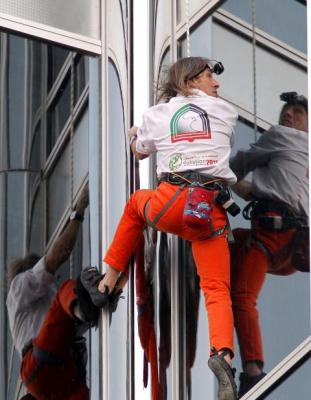
Alain Robert, known as the "French Spider-Man," praised Alex Honnold as exceptionally well-prepared after the US climber completed a free solo ascent of Taipei 101 yesterday. Robert said Honnold's ascent of the 508m-tall skyscraper in just more than one-and-a-half hours without using safety ropes or equipment was a remarkable achievement. "This is my life," he said in an interview conducted in French, adding that he liked the feeling of being "on the edge of danger." The 63-year-old Frenchman climbed Taipei 101 using ropes in December 2004, taking about four hours to reach the top. On a one-to-10 scale of difficulty, Robert said Taipei 101
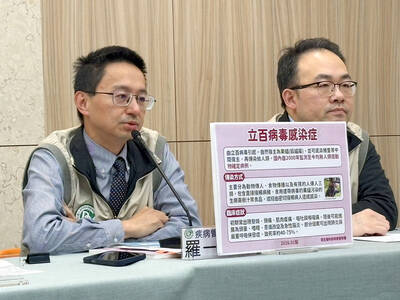
Nipah virus infection is to be officially listed as a category 5 notifiable infectious disease in Taiwan in March, while clinical treatment guidelines are being formulated, the Centers for Disease Control (CDC) said yesterday. With Nipah infections being reported in other countries and considering its relatively high fatality rate, the centers on Jan. 16 announced that it would be listed as a notifiable infectious disease to bolster the nation’s systematic early warning system and increase public awareness, the CDC said. Bangladesh reported four fatal cases last year in separate districts, with three linked to raw date palm sap consumption, CDC Epidemic Intelligence
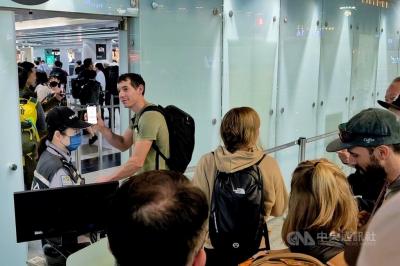
US climber Alex Honnold left Taiwan this morning a day after completing a free-solo ascent of Taipei 101, a feat that drew cheers from onlookers and gained widespread international attention. Honnold yesterday scaled the 101-story skyscraper without a rope or safety harness. The climb — the highest urban free-solo ascent ever attempted — took just more than 90 minutes and was streamed live on Netflix. It was covered by major international news outlets including CNN, the New York Times, the Guardian and the Wall Street Journal. As Honnold prepared to leave Taiwan today, he attracted a crowd when he and his wife, Sanni,

Taiwanese and US defense groups are collaborating to introduce deployable, semi-autonomous manufacturing systems for drones and components in a boost to the nation’s supply chain resilience. Taiwan’s G-Tech Optroelectronics Corp subsidiary GTOC and the US’ Aerkomm Inc on Friday announced an agreement with fellow US-based Firestorm Lab to adopt the latter’s xCell, a technology featuring 3D printers fitted in 6.1m container units. The systems enable aerial platforms and parts to be produced in high volumes from dispersed nodes capable of rapid redeployment, to minimize the risk of enemy strikes and to meet field requirements, they said. Firestorm chief technology officer Ian Muceus said


 RSS
RSS