


The six Chinese Nationalist Party (KMT) chairperson candidates yesterday held their second and final political platform presentation, with former vice president Wu Den-yih (吳敦義), whom a media poll puts in front, fielding challenges from his two closest rivals.
Although the event was intended to be a presentation rather than a debate, KMT chairwoman Hung Hsiu-chu (洪秀柱) and vice chairman Hau Lung-bing (郝龍斌) needled Wu with questions concerning his national identity and ability to unite the party, respectively.
Hung, citing former president Chiang Ching-kuo’s (蔣經國) oft-quoted remark that he was “a Taiwanese and also a Chinese [zhong guo ren, 中國人],” and said that she endorsed that sentiment and that Wu, “as a pupil of Chiang’s,” should also agree with it.
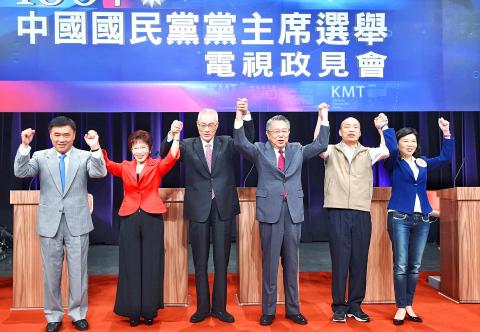
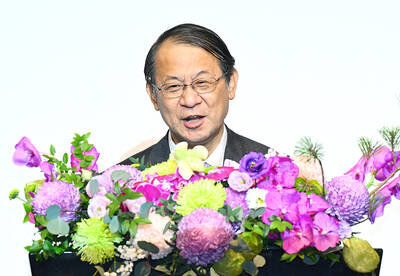
Photo: Fang Pin-chao, Taipei Times
“If ‘being Taiwanese is not being zhong guo ren’ was the mainstream belief in society, would you give up what Chiang Ching-kuo upheld?” Hung asked.
She also criticized a proposal — once rumored to be endorsed by Wu, who later called the rumor an attempt to vilify him — to rename the KMT the “Taiwan Nationalist Party.”
Deflecting Hung’s question about national identity, Wu said: “My academic background is in history, so I know that without Chiang Kai-shek’s (蔣介石) lead, the Republic of China [ROC] could not have won the war of resistance against Japan, without which there would not have been the glorious retrocession of Taiwan, without which [Sun Yat-sen’s, 孫逸仙] Three Principles of the People could not have been realized in Taiwan.”
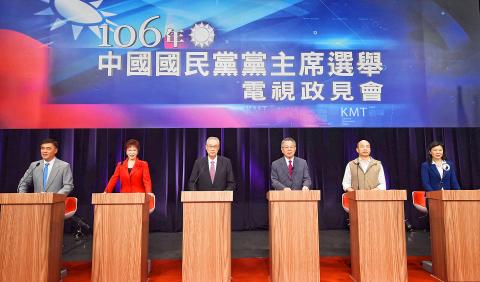
Photo: Fang Pin-chao, Taipei Times
He added that he opposes the “de-Chiang [Kai-shek] and de-ROC movements” and supports “one China, different interpretations.”
Hau questioned Wu’s resolution to unite the party and back military personnel, civil servants and public teachers against the Democratic Progressive Party (DPP) government’s “unjust policies.”
Wu said he has visited and offered assistance to protesters outside the Legislative Yuan.
He also cited his experience as a political veteran, saying it proves he can relate to and win the support of all.
In an apparent swipe at Wu, Hung said she wondered why some of the party’s best politicians lost their seats in last year’s legislative elections.
“During its eight years in office, the party failed to train and cultivate [the next generation of leaders] and kept falling over; the party elite at that time should be held accountable by the party’s supporters,” she said.
All candidates said the DPP administration had failed to boost the economy, polarized society and promulgated failed policies such as the “one fixed day off and one flexible rest day” and the Forward-looking Infrastructure Development Program.
Former KMT legislator Pan Wei-kang (潘維剛) referred to herself as “the only mother among the six candidates” and said that Taiwanese mothers have been unhappy since the DPP took over and feel apprehensive about their children’s futures.
Former KMT vice chairman Steve Chan (詹啟賢) and former Taipei Agricultural Products Marketing Corp president Han Kuo-yu (韓國瑜) tried to appeal to KMT members by touting themselves as outside the establishment and thus offering the party a fresh image.
They also proposed more inter-party operation between the pan-green and pan-blue camps.
“I propose that the KMT supports the DPP’s policies if they are good, and endorses their candidates in the upcoming elections, if they have excelled in their jobs, as Hsinchu Mayor Lin Chih-chien (林智堅) has,” Han said.
He said the KMT’s main difference from the DPP is that it does not support formal independence, which he compared to syphilis.
One way to reform the KMT is to “dump the old concepts and accommodate the mainstream view,” Chan said.
A party chairperson must want to win support across party lines and win the trust of non-affiliated voters, Chan said, criticizing the party for forgetting its core strength, the “middle way.”
The party is to hold the election on May 20.
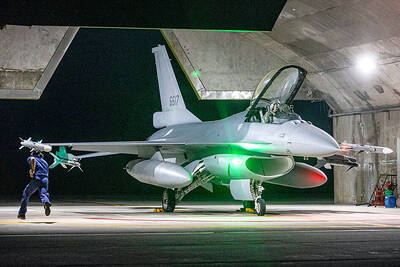
Taiwan has received more than US$70 million in royalties as of the end of last year from developing the F-16V jet as countries worldwide purchase or upgrade to this popular model, government and military officials said on Saturday. Taiwan funded the development of the F-16V jet and ended up the sole investor as other countries withdrew from the program. Now the F-16V is increasingly popular and countries must pay Taiwan a percentage in royalties when they purchase new F-16V aircraft or upgrade older F-16 models. The next five years are expected to be the peak for these royalties, with Taiwan potentially earning
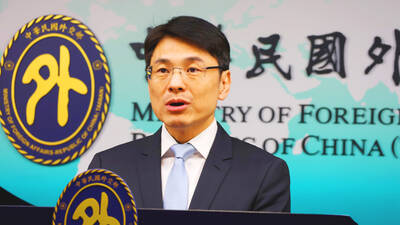
STAY IN YOUR LANE: As the US and Israel attack Iran, the ministry has warned China not to overstep by including Taiwanese citizens in its evacuation orders The Ministry of Foreign Affairs (MOFA) yesterday rebuked a statement by China’s embassy in Israel that it would evacuate Taiwanese holders of Chinese travel documents from Israel amid the latter’s escalating conflict with Iran. Tensions have risen across the Middle East in the wake of US and Israeli airstrikes on Iran beginning Saturday. China subsequently issued an evacuation notice for its citizens. In a news release, the Chinese embassy in Israel said holders of “Taiwan compatriot permits (台胞證)” issued to Taiwanese nationals by Chinese authorities for travel to China — could register for evacuation to Egypt. In Taipei, the ministry yesterday said Taiwan

‘LIKE-MINDED PARTNER’: Tako van Popta said it would be inappropriate to delay signing the deal with Taiwan because of China, adding he would promote the issue Canadian senators have stressed Taiwan’s importance for international trade and expressed enthusiasm for ensuring the Taiwan-Canada trade cooperation framework agreement is implemented this year. Representative to Canada Harry Tseng (曾厚仁) in an interview with the Central News Agency (CNA) said he was increasingly uneasy about Ottawa’s delays in signing the agreement, especially as Ottawa has warmed toward Beijing. There are “no negotiations left. Not only [is it] initialed, we have three versions of the text ready: English, French and Mandarin,” Tseng said. “That tells you how close we are to the final signature.” Tseng said that he hoped Canadian Prime Minister Mark Carney
POSITIVE DEVELOPMENT: Japan and the US are expected to hold in-depth discussions on Taiwan-related issues during the meeting next month, Japanese sources said The holding of a Japan-US leaders’ meeting ahead of US President Donald Trump’s visit to China is positive news for Taiwan, former Japan-Taiwan Exchange Association representative Hiroyasu Izumi said yesterday. After the Liberal Democratic Party’s landslide victory in Japan’s House of Representatives election, Japanese Prime Minister Sanae Takaichi is scheduled to visit the US next month, where she is to meet with Trump ahead of the US president’s planned visit to China from March 31 to April 2 for a meeting with Chinese President Xi Jinping (習近平). Japan and the US are expected to hold in-depth discussions on Taiwan-related issues during the


 RSS
RSS