


The US should keep a low profile if it wants to be involved in efforts to get China to release Taiwanese detainee Lee Ming-che (李明哲), former American Institute in Taiwan (AIT) chairman Richard Bush said on Wednesday.
“I think that if we’re involved, it would be good that we do it vigorously, but quietly. We know how to do that,” Bush told reporters after a seminar organized by the US-based Global Taiwan Institute after being asked if he thought the US would involve itself in Lee’s case.
Bush, who is now the director of the Brookings Institution’s Center for East Asia Policy Studies in Washington, said he hoped that the Chinese authorities “just decide that they’ve talked to him [Lee] enough and they let him go.”
Bush was one of 44 academics and former US officials who signed a joint open letter to Chinese President Xi Jinping (習近平) urging him to assist in the speedy release of Lee and ensure his safe return to Taiwan (“Open Letter to Chinese President Xi,” April 17, page 8).
The letter’s writers called Lee’s arrest and detention “detrimental to the mutual trust that is very much needed between Taiwan and China.”
“Any lengthy detention or legal procedure will damage China’s image, not only in Taiwan, but in countries around the world that uphold due process of law and human rights,” they said.
Lee, a former Democratic Progressive Party (DPP) employee who now works at the Wenshan Community College in Taipei and is a volunteer at the non-governmental organization Covenants Watch, was detained after entering the Chinese mainland via Macau on March 19.
Chinese officials have said that Lee is being investigated over matters related to China’s national security.
Bush said that China’s handling of Lee’s case shows the “stovepipe” nature of its government system.
“You have different agencies, each doing their job, so the [Chinese] Ministry of Public Security, which is responsible for carrying out domestic security, doesn’t necessarily think about the impact of detaining or arresting Mr Lee on cross-strait relations,” he said.
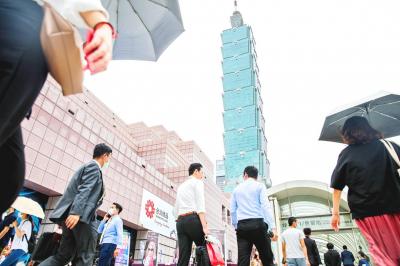
Japanese footwear brand Onitsuka Tiger today issued a public apology and said it has suspended an employee amid allegations that the staff member discriminated against a Vietnamese customer at its Taipei 101 store. Posting on the social media platform Threads yesterday, a user said that an employee at the store said that “those shoes are very expensive” when her friend, who is a migrant worker from Vietnam, asked for assistance. The employee then ignored her until she asked again, to which she replied: "We don't have a size 37." The post had amassed nearly 26,000 likes and 916 comments as of this
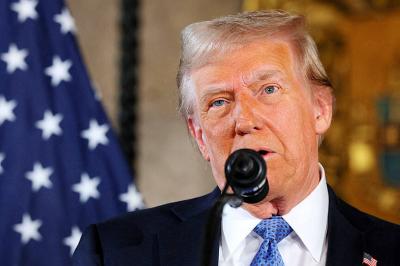
US President Donald Trump said "it’s up to" Chinese President Xi Jinping (習近平) what China does on Taiwan, but that he would be "very unhappy" with a change in the "status quo," the New York Times said in an interview published yesterday. Xi "considers it to be a part of China, and that’s up to him what he’s going to be doing," Trump told the newspaper on Wednesday. "But I’ve expressed to him that I would be very unhappy if he did that, and I don’t think he’ll do that," he added. "I hope he doesn’t do that." Trump made the comments in
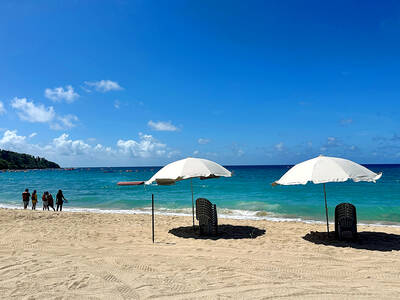
Tourism in Kenting fell to a historic low for the second consecutive year last year, impacting hotels and other local businesses that rely on a steady stream of domestic tourists, the latest data showed. A total of 2.139 million tourists visited Kenting last year, down slightly from 2.14 million in 2024, the data showed. The number of tourists who visited the national park on the Hengchun Peninsula peaked in 2015 at 8.37 million people. That number has been below 2.2 million for two years, although there was a spike in October last year due to multiple long weekends. The occupancy rate for hotels
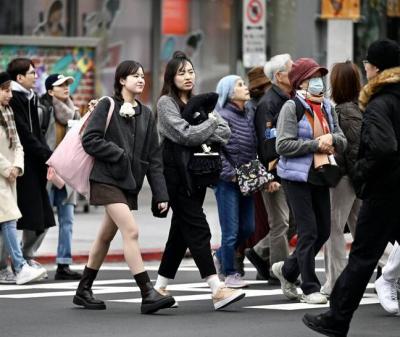
A cold surge advisory was today issued for 18 cities and counties across Taiwan, with temperatures of below 10°C forecast during the day and into tonight, the Central Weather Administration (CWA) said. New Taipei City, Taipei, Taoyuan and Hsinchu, Miaoli and Yilan counties are expected to experience sustained temperatures of 10°C or lower, the CWA said. Temperatures are likely to temporarily drop below 10°C in most other areas, except Taitung, Pingtung, Penghu and Lienchiang (Matsu) counties, CWA data showed. The cold weather is being caused by a strong continental cold air mass, combined with radiative cooling, a process in which heat escapes from


 RSS
RSS