

After two separate incidents of pilots failing alcohol tests in the past month, members of the legislature’s Transportation Committee yesterday proposed filing criminal charges against pilots who are found under the influence of alcohol.
Democratic Progressive Party (DPP) legislators Cheng Pao-ching (鄭寶清), Chao Cheng-yu (趙正宇) and Lin Chun-hsien (林俊憲) said that pilots who drink alcohol directly before reporting for duty should face criminal charges.
Cheng said he found it ironic that the Civil Aeronautics Administration (CAA) would list the punishment for lightweight-aircraft pilots in the Civil Aviation Act (民航法) if they were found to intend to operate the aircraft under the influence of alcohol.
However, the penalties for pilots operating large civilian aircraft for the same offense is stipulated in the Aircraft Flight Operation Regulations (飛航作業管理規則), which are lower in legal status compared with the act, he said.
The CAA should consider amending the Civil Aviation Act, because drunk drivers can be charged for endangering public safety, Cheng said.
According to the CAA, airlines on average randomly test about one-third of their pilots when they report for duty, and airport officials randomly test about 3 percent to 5 percent of pilots.
The CAA should subject all pilots to alcohol testing when they report for work, Cheng and Chao said.
Lin said that an airline is to face a fine between NT$60,000 and NT$300,000 if one of its pilots fails an alcohol test, but the fine is too small.
The penalty should be 10 times more than that, he said.
CAA Director-General Lin Kuo-hsien (林國顯) said that pilots should not be under the influence of alcohol when they are on duty, including when they sign in, wait to get on an airplane, do preparatory work in the cockpit and fly an aircraft.
Airline ground crew and copilots should report if the captain is behaving strangely, as happened in a case in Canada recently, he said.
Lin said that the CAA is to meet with airline representatives within two weeks and will discuss proper ways to screen pilots for alcohol use.
Meanwhile, United Airlines’ forceful removal of a passenger from a US flight over his refusal to yield his seat was also the focus of the committee meeting.
Lawmakers said they were concerned that Taiwanese airlines might bump passengers off an overbooked flight in a similar way.
Lin said that no domestic airline has ever treated a passenger that way, adding that the CAA had only received three complaints related to overbooked flights.
Lin said that it is common for airlines to oversell flights to increase occupancy rates, particularly in peak travel seasons.
However, the CAA does not have data showing the number of seats that domestic airlines have oversold each year, he said.
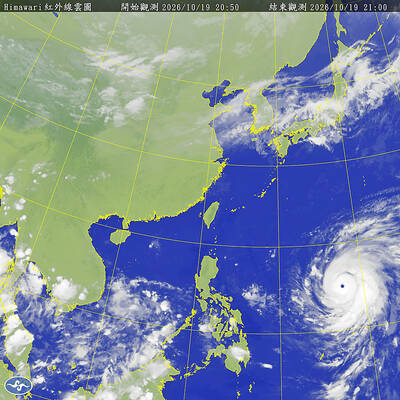
Typhoon Champi is forecast to turn northward earlier than previously expected, sparing Taiwan a direct hit but still bringing heavy rain to the north of the country on Friday and Saturday, the Central Weather Administration (CWA) said yesterday. Typhoon Champi had strengthened and increased in size over the past 12 hours, and as of yesterday afternoon, was packing sustained winds of 198kph near its center, CWA forecaster Cheng Chieh-jen (鄭傑仁) said. However, due to the weakening of a Pacific high-pressure system the storm is now expected to turn northward earlier than initially forecast, likely around Japan’s Ishigaki Island, Cheng said. As Champi brushes

MAYORAL RACE: Su Chiao-hui made gains by persuading undecided voters and winning over voters in KMT-leaning districts, a pollster said Legislator Su Chiao-hui (蘇巧慧), the Democratic Progressive Party’s (DPP) candidate for New Taipei City mayor, has a 13.1 percentage point lead over her Chinese Nationalist Party (KMT) rival Lee Shu-chuan (李四川), a poll released yesterday showed. The poll, commissioned by the Taipei Trust in Democracy Association, showed that 43.1 percent of respondents said they would vote for Su, up 7.9 percentage points from a poll conducted in late August, while support for Lee was at 30 percent, down 4.7 percentage points. It showed that 48.6 percent of respondents thought Su would make a suitable mayor, compared with 35.9 percent for Lee. Independent candidate
A Chinese People's Liberation Army (PLA) Navy aircraft carrier group was being monitored after entering the western Pacific, the Ministry of National Defense said today, after Beijing yesterday criticized Taiwan for using a water cannon against a Chinese fishing boat near the Pratas Islands (Dongsha Islands, 東沙群島). A Chinese naval task group led by the aircraft carrier Liaoning (遼寧) yesterday sailed to the western Pacific for training, Chinese state-run Xinhua news agency quoted the PLA Navy as saying. “The drill is part of the annual routine training plan aimed at testing and improving the troops’ combat readiness and enhancing their ability to
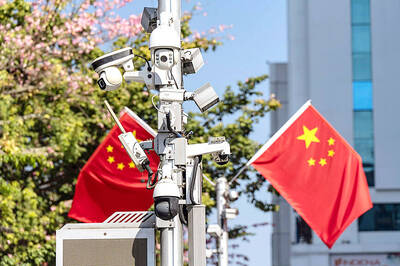
Pulled aside onto the balcony of an empty hotel room by Chinese state security officers, a Taiwanese tourist on a trip to Tibet described facing an unnerving barrage of questions about his military background and political loyalties. The man surnamed Lin (林) reported his experience in a viral post on Threads before accepting an interview with the Central News Agency (CNA) yesterday. Lin, who works as a nurse, told CNA that he knew some Taiwanese had run afoul of Chinese law enforcement, but he thought he would be safe, as he did not post much about his personal political views online. It came


 RSS
RSS