


The Tourism Bureau yesterday rolled out new incentives to attract tourists from nations targeted by the government’s “new southbound policy,” after the Ministry of Foreign Affairs further relaxed visa requirements for people from some Asia and Southeast Asia nations.
Bureau of Consular Affairs Director Deneral Agnes Chen (陳華玉) said that since August last year the ministry has waived visas for Thais and Bruneians.
Although the program is a trial, Chen said that it has already contributed to significant growth in visitor numbers from both countries.

Photo: Liao Chen-huei, Taipei Times
The ministry has extended the visa-waiver program for both for another year, Chen said, adding that the program is to expire on July 31 next year.
Chen said that the Philippines is to be included in the program this year, for one year.
Indian, Vietnamese, Indonesian, Burmese, Cambodian and Laotian tourists can apply for a Taiwan travel authorization certificate online, Chen said.
Such requirements are to apply to visitors from Southeast Asian countries who have been granted visas (work visa excluded) in the past 10 years and did not overstay their visas, she said.
Sri Lankans and Bhutanese can also apply for tourist visas as the ministry relaxed the screening procedures for travelers from those countries, Chen added.
Indian, Vietnamese, Indonesian, Burmese, Cambodian and Laotian business travelers can apply for electronic visas if they have recommendations from the Taiwan External Trade Development Council office in their country, she said.
The ministry said the Philippines has been included the visa-waiver program after consultation with government agencies in charge of immigration, trade, national security and others found that the number of Filipinos who have overstayed their visa are “within a controllable range.”
Tourism Bureau Director-General Chou Yung-hui (周永暉) said that the bureau considers the Philippines a strong potential tourism market.
The Philippines is geographically close and travelers can reach Taiwan within five hours, he said.
He said that the visa-waiver program would likely help increase the number of Filipino tourists by 33 percent to about 230,000 people.
The bureau also introduced the incentives to attract other international visitors, it said.
International tourists who come with tour groups could receive between NT$20,000 and NT$150,000 in subsidies if they spend three days in Taiwan and visit artistic and historic sites.
Each person could receive a subsidy of between NT$400 and NT$800 for tour groups that spend more than four days in Taiwan.
Tourists of incentive tour groups from Singapore, Malaysia, the Philippines, Thailand, Brunei, Indonesia, Vietnam, Lao, Myanmar, Cambodia, India, Bhutan, Australia and New Zealand can each receive NT$400 on the first or second day of the four-day tour in Taiwan if the group has more than 50 people, the tour said. In addition, their tour groups would receive NT$80,000 to NT$120,000 in additional subsidy if they also watch local art performances subsidized by the Ministry of Culture or historic and cultural sites recommended by the local governments, depending on the size of their tour groups.
“We estimate that the incentive will generate more than NT$800 million (US$26.18 million) in revenue,” Chou said.

Yangmingshan National Park authorities yesterday urged visitors to respect public spaces and obey the law after a couple was caught on a camera livestream having sex at the park’s Qingtiangang (擎天崗) earlier in the day. The Shilin Police Precinct in Taipei said it has identified a suspect and his vehicle registration number, and would summon him for questioning. The case would be handled in accordance with public indecency charges, it added. The couple entered the park at about 11pm on Thursday and began fooling around by 1am yesterday, the police said, adding that the two were unaware of the park’s all-day live

A former soldier and an active-duty army officer were yesterday indicted for allegedly selling classified military training materials to a Chinese intelligence operative for a total of NT$79,440. The Taipei District Prosecutors’ Office indicted Chen Tai-yin (陳泰尹) and Lee Chun-ta (李俊達) for contravening the National Security Act (國家安全法) and the Anti-Corruption Act (貪污治罪條例). Chen left the military in September 2013 after serving alongside then-staff sergeant Lee, now an army lieutenant, at the 21st Artillery Command of the army’s Sixth Corps from 2011 to 2013, according to the indictment. Chen met a Chinese intelligence operative identified as “Wang” (王) through a friend in November

Minister of Digital Affairs Lin Yi-ching (林宜敬) yesterday cited regulatory issues and national security concerns as an expert said that Taiwan is among the few Asian regions without Starlink. Lin made the remarks on Facebook after funP Innovation Group chief executive officer Nathan Chiu (邱繼弘) on Friday said Taiwan and four other countries in Asia — China, North Korea, Afghanistan and Syria — have no access to Starlink. Starlink has become available in 166 countries worldwide, including Ukraine, Malaysia, the Philippines and Vietnam, in the six years since it became commercial, he said. While China and North Korea block Starlink, Syria is not
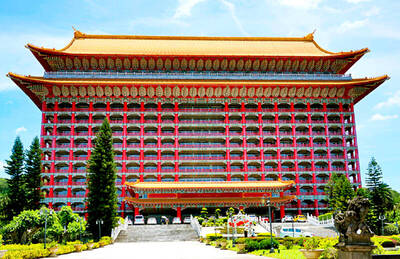
The Grand Hotel Taipei has rejected media reports claiming that the hotel had prevented CBS from broadcasting coverage of the Beijing summit between U.S. President Donald Trump and Chinese President Xi Jinping (習近平) on its premises. Media reports alleging that the hotel owner, dissatisfied with CBS’s coverage, prohibited the network from broadcasting political content on the hotel premises, are not true, the hotel said in a statement issued last night. The reports were “inconsistent with how the hotel actually handled the matter,” it said. The hotel said it received a refund request from a


 RSS
RSS