


Foreigners will be able to apply for a local driver’s license after they have lived in Taiwan for six months when amendments to the Road Traffic Safety Rules (道路交通安全規則) take effect before the end of next month, the Ministry of Transportation and Communications (MOTC) said.
Current rules stipulate that travelers can use an international driver’s license for 30 days if their home nation has a reciprocal agreement with Taiwan. If they plan to stay for longer, they must apply for a local driver’s license if they want to continue driving. However, to apply for a local driver’s license, the person must be granted permission to stay in Taiwan for at least one year.
Chao Chin-wei (趙晉緯), a specialist at the Department of Railways and Highways, said the rules are to be amended to comply with the National Development Council’s policy of creating a living environment friendly to foreigners.
“Instead of having to obtain permission to stay for at least one year, following the amendment, expats will be able to apply for a local driver’s license if they are granted a stay of more than six months,” Chao said. “The amended rules will also eliminate the clause requiring foreigners to submit an application within one year after their entry date. This means that foreigners can apply for a local driver’s license at any time during their stay.”
The amendments will also affect taxi drivers. They will see the mandatory retirement age for taxi drivers pushed back from 68 to 70. However, drivers who are 68 or older can only renew their licenses if they pass an updated physical examination and a cognitive test proving that they do not have dementia or another mental impairment.
A renewed taxi driver’s license would only be valid for one year, and drivers are to be subject to physical tests every year.
Meanwhile, from Friday the minimum driving speed of the Hsuehshan Tunnel on the Chiang Wei-Shui Memorial Freeway (National Freeway No. 5) is to be raised from 60kph to 70kph.
The National Freeway Bureau said drivers would be given a one-month grace period.
The official crackdown on slow drivers inside the tunnel is begin on April 10, the bureau said, adding that offenders would face fines of NT$3,000 to NT$6,000.
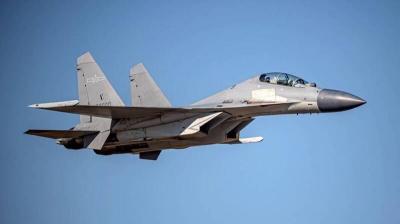
Eight Chinese naval vessels and 24 military aircraft were detected crossing the median line of the Taiwan Strait between 6am yesterday and 6am today, the Ministry of National Defense said this morning. The aircraft entered Taiwan’s northern, central, southwestern and eastern air defense identification zones, the ministry said. The armed forces responded with mission aircraft, naval vessels and shore-based missile systems to closely monitor the situation, it added. Eight naval vessels, one official ship and 36 aircraft sorties were spotted in total, the ministry said.
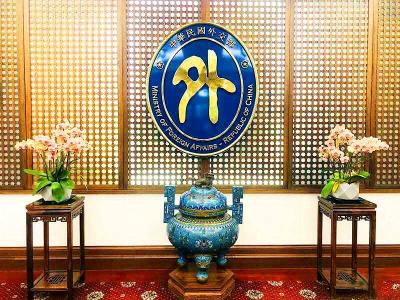
The Ministry of Foreign Affairs (MOFA) today said that if South Korea does not reply appropriately to its request to correct Taiwan’s name on its e-Arrival card system before March 31, it would take corresponding measures to alter how South Korea is labeled on the online Taiwan Arrival Card system. South Korea’s e-Arrival card system lists Taiwan as “China (Taiwan)” in the “point of departure” and “next destination” fields. The ministry said that it changed the nationality for South Koreans on Taiwan’s Alien Resident Certificates from “Korea” to “South Korea” on March 1, in a gesture of goodwill and based on the

Taiwanese officials were shown the first of 66 F-16V fighter jets purchased by Taiwan from the United States, the Ministry of National Defense said yesterday, adding the aircraft has completed an initial flight test and is expected to be delivered later this year. A delegation led by Deputy Minister of National Defense Hsu Szu-chien (徐斯儉) visited Lockheed Martin’s F-16 C/D Block 70 (also known as F-16V) assembly line in South Carolina on March 16 to view the aircraft. The jet will undergo a final acceptance flight in the US before being delivered to Taiwan, the
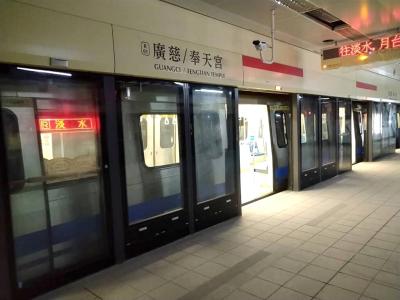
The New Taipei Metro's Sanyin Line and the eastern extension of the Taipei Metro's Tamsui-Xinyi Line (Red Line) are scheduled to begin operations in June, the National Development Council said today. The Red Line, which terminates at Xiangshan Station, would be connected by the 1.4km extension to a new eastern terminal, Guangci/Fengtian Temple Station, while the Sanyin Line would link New Taipei City's Tucheng and Yingge stations via Sanxia District (三峽). The council gave the updates at a council meeting reviewing progress on public construction projects for this year. Taiwan's annual public infrastructure budget would remain at NT$800 billion (US$25.08 billion), with NT$97.3


 RSS
RSS