


The Air Defense Missile Command is to be merged with the air force next month, a move expected to enhance and streamline the nation’s air defense command system.
The merger is to take effect on Wednesday — with command, now under the management of the Ministry of National Defense’s General Staff Headquarters — to be put under the purview of the air force, military sources said.
With Patriot Advanced Capability-3 missile systems, Tien Kung III surface-to-air missile systems and Hawk anti-aircraft missiles, the command is responsible for medium-to-long-range air defense and controls tactical weapons, such as Hsiung Feng IIE cruise missiles.
The command is reportedly to merge with the Air Defense Artillery Command by the end of the year to streamline the chain of command and augment operational efficiency.
The Air Defense Artillery Command has the “Skyguard” short-range air defense system — with AIM-7 Sparrow surface-to-air missiles — and the Antelope air defense system with batteries of Tien Chien-I missiles.
To counter China’s advanced missile threat, the command is to become a top military unit akin to the three branches of the military. The Air Defense Missile Command is a brigade-level unit led by a major general. Following the merger, it will be a corps-level unit led by a lieutenant general.
The reorganization and merger are to counter China’s deployment of more than 1,400 missiles against Taiwan and are in response to a doctrinal shift in the nation’s defense strategy from “effective deterrence” to “multiple deterrence.”
The merger is the latest in a series of missile unit reorganizations.
The ministry established the first missile batteries in 1959 under the army when the government acquired the US-made Nike-Hercules surface-to-air missile. The missile command was established in 1979.
In 2004, the ministry merged the navy’s Hai Feng Shore Based Anti-ship Missile Squadron with the missile command and put it under the ministry’s General Staff Headquarters.
In 2006, the Hai Feng squadron was returned to the navy and the missile command’s air defense troops were transferred to the air force.
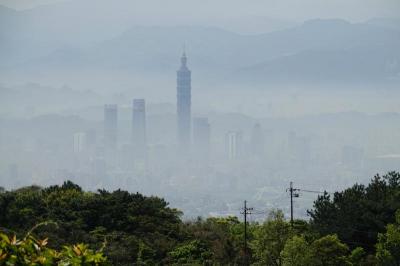
A strong continental cold air mass is to bring pollutants to Taiwan from tomorrow, the Ministry of Environment said today, as it issued an “orange” air quality alert for most of the country. All of Taiwan except for Hualien and Taitung counties is to be under an “orange” air quality alert tomorrow, indicating air quality that is unhealthy for sensitive groups. In China, areas from Shandong to Shanghai have been enveloped in haze since Saturday, the ministry said in a news release. Yesterday, hourly concentrations of PM2.5 in these areas ranged from 65 to 160 micrograms per cubic meter (mg/m³), and pollutants were
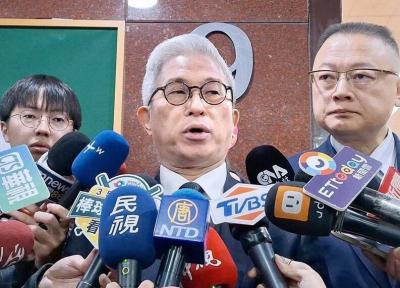
Taiwan’s armed forces have established response protocols for a wide range of sudden contingencies, including the “Wan Chun Plan” to protect the head of state, the Ministry of Defense (MND) said today. After US President Donald Trump on Saturday launched a series of airstrikes in Venezuela and kidnapped Venezuelan President Nicolas Maduro, concerns have been raised as to whether China would launch a similar “decapitation strike” on Taiwan. The armed forces regularly coordinate with relevant agencies and practice drills to ensure preparedness for a wide range of scenarios, Vice Minister of National Defense Hsu Szu-chien (徐斯儉) told reporters before a
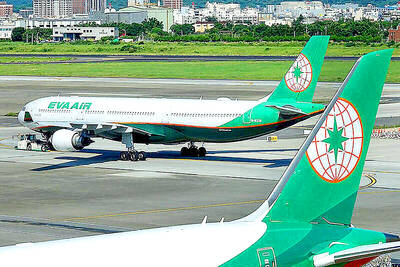
EVA Airways on Saturday said that it had suspended a pilot and opened an investigation after he allegedly lost his temper and punched the first officer several times as their plane was taxiing before takeoff at Los Angeles International Airport. According to a report published on Thursday by The Reporter, the incident occurred after the flight’s Malaysian first officer tried to warn the Taiwanese pilot, surnamed Wen (文), that he was taxiing faster than the speed limit of 30 knots (55.6kph). After alerting the pilot several times without response, the first officer manually applied the brakes in accordance with standard operating
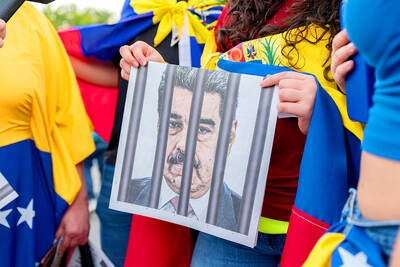
NOT AN OPENING: Trump’s violation of international law does not affect China’s consideration in attacking Taiwan; Beijing lacks capability, not precedent, an official said Taiwanese officials see the US’ capture of the president of Venezuela as a powerful deterrent to Beijing’s aggression and a timely reminder of the US’ ability to defeat militaries equipped with Chinese-made weapons. The strikes that toppled Venezuelan President Nicolas Maduro signaled to authoritarian leaders, including Chinese President Xi Jinping (習近平), US President Donald Trump’s willingness to use military might for international affairs core to US interests, one senior official in Taipei’s security circle said. That reassured Taiwan, the person said. Taipei has also dismissed the idea that Trump’s apparent violation of international law could embolden Beijing, said the official, who was not


 RSS
RSS