


The Ill-gotten Party Assets Settlement Committee yesterday said that it would unfreeze the Chinese Nationalist Party’s (KMT) Bank SinoPac account so it can pay its employees’ salaries and bonuses.
“On the grounds of protecting the rights of the KMT’s employees, the committee will allow it to withdraw from its Bank SinoPac account to pay its employees this month’s salaries and year-end and performance bonuses,” committee Chairman Wellington Koo (顧立雄) said after a closed-door “compulsory” negotiation with KMT officials and its employees, which was held at the request of the Taipei Department of Labor.
After the KMT’s account was frozen by the committee last year, it has experienced difficulty paying its employees.
The money from the account should be used to pay salaries and bonuses, while the remainder may be used to pay severance fees and pensions due to a planned mass layoff, Koo said, but added that the KMT cannot use the funds to pay employees it has rehired.
Due to financial difficulties, the KMT in November last year proposed a mass layoff of 738 of its employees by the end of this month before rehiring 310 next month.
The committee is to hold a meeting on Monday before an official resolution on unfreezing the account is made, Koo said.
Asked whether he was worried that KMT employees might storm the committee’s offices, as they stormed the Executive Yuan on Wednesday, Koo said that he failed to see the legitimacy of the intrusion.
The Executive Yuan has decided not to file a complaint against the workers, but said prosecutors might take the matter into their own hands, as the building is a historic site and damaging it is a crime.
The protesters should have known that half of their salaries from November and last month would be transferred today, Koo said, adding that negotiations had been scheduled to address the issues of their salaries and bonuses.
Koo said the “bizarre” event was the result of “information asymmetry,” urging the KMT to facilitate communication with its employees.
Meanwhile, the KMT and its employees failed to reach an agreement on how to calculate severance.
KMT union head Liu Hui-ling (劉慧玲) said the union is against the KMT Administration and Management Committee’s plan to pay permanently laid off workers full severance packages, while only paying 20 percent to rehired employees.
The union has also opposed the KMT’s plan to skirt a statute in its charter that calculates the seniority of employees by including their time in military service, which would affect the size of their pensions, she said.
The party is trying to break the rule, citing dire financial circumstances, she said.

The Centers for Disease Control (CDC) yesterday reported the first case of a new COVID-19 subvariant — BA.3.2 — in a 10-year-old Singaporean girl who had a fever upon arrival in Taiwan and tested positive for the disease. The girl left Taiwan on March 20 and the case did not have a direct impact on the local community, it said. The WHO added the BA.3.2 strain to its list of Variants Under Monitoring in December last year, but this was the first imported case of the COVID-19 variant in Taiwan, CDC Deputy Director-General Lin Ming-cheng (林明誠) said. The girl arrived in Taiwan on

South Korea is planning to revise its controversial electronic arrival card, a step Taiwanese officials said prompted them to hold off on planned retaliatory measures, a South Korean media report said yesterday. A Yonhap News Agency report said that the South Korean Ministry of Foreign Affairs is planning to remove the “previous departure place” and “next destination” fields from its e-arrival card system. The plan, reached after interagency consultations, is under review and aims to simplify entry procedures and align the electronic form with the paper version, a South Korean ministry official said. The fields — which appeared only on the electronic form

The Ministry of Foreign Affairs (MOFA) is suspending retaliation measures against South Korea that were set to take effect tomorrow, after Seoul said it is updating its e-arrival system, MOFA said today. The measures were to be a new round of retaliation after Taiwan on March 1 changed South Korea's designation on government-issued alien resident certificates held by South Korean nationals to "South Korea” from the "Republic of Korea," the country’s official name. The move came after months of protests to Seoul over its listing of Taiwan as "China (Taiwan)" in dropdown menus on its new online immigration entry system. MOFA last week
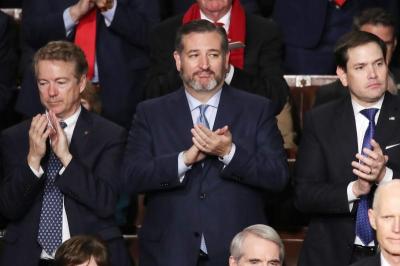
A bipartisan group of US senators has introduced a bill to enhance cooperation with Taiwan on drone development and to reduce reliance on supply chains linked to China. The proposed Blue Skies for Taiwan Act of 2026 was introduced by Republican US senators Ted Cruz and John Curtis, and Democratic US senators Jeff Merkley and Andy Kim. The legislation seeks to ease constraints on Taiwan-US cooperation in uncrewed aerial systems (UAS), including dependence on China-sourced components, limited access to capital and regulatory barriers under US export controls, a news release issued by Cruz on Wednesday said. The bill would establish a "Blue UAS


 RSS
RSS