


Chinese Nationalist Party (KMT) Taipei city councilors yesterday said they would try to cut Taipei Mayor Ko Wen-je’s (柯文哲) second reserve fund from NT$1.25 billion to NT$800 million (US$38.8 million to US$24.8 million), citing Ko’s poor use of the fund last year.
Ko has again proposed a NT$1.25 billion budget for this year’s second reserve fund, which is unreasonable, given that the mayor only used 29.8 percent of the fund last year, KMT Taipei City Councilor Wang Hsin-yi (王欣儀) told a news conference in Taipei.
Ko’s administration last year earmarked NT$717 million of the fund, but only used NT$361 million, of which NT$160 million was used to cover an increase in pensions the municipal government was required to allocate following an amendment to Article 56 of the Labor Standards Act (勞動基準法), she said.
Ko is requesting a budget for the fund larger than those requested by any of his predecessors, which is superfluous and at odds with the spirit of the Budget Act (預算法), Wang said, adding that Ko approved NT$230 million from the fund for construction work, of which NT$160 million has remained unused.
She also criticized Ko’s use of the fund, citing as examples a traffic improvement plan on Zhongxiao W Road and road leveling plans around venues to be used for this year’s Universiade, which were carried out using the fund to “cover unexpected needs related to the implementation of city policies,” which she said reflected Ko’s foresight in policy implementation.
Quoting Ko, who said the fund remained mostly untapped because fewer typhoons hit Taipei last year, which reduced rescue and cleanup expenses, Wang urged Ko to refrain from such false rhetoric, as the city government was last year granted NT$700 million for a disaster reserve fund.
Ko has requested the same amount for the reserve fund as last year to save face, in an effort to hide his inability to effectively use the money, KMT Taipei City Councilor Chin Huei-chu (秦慧珠) said.
The second reserve fund should only be used for pressing matters, but Ko has used it to renovate sinks at Taipei City Hall and move flower stands at the Wanhua District Office, KMT Taipei City Councilor Li Keng Kuei-fang (厲耿桂芳) said.
Meanwhile, a project related to air conditioning at the Taipei Fine Arts Museum and procurements for the establishment of an online payment platform have remained in limbo since January last year, when Ko approved NT$7.67 million and NT$6.93 million respectively from the reserve fund for the projects, KMT Taipei City Councilor Wang Hung-wei (王鴻薇) said.
In response to reporters’ requests for comment, Ko said that expending the fund is not the point, as it should only be used when necessary.
“Previous mayors used the second reserve fund however they liked, but I have a standard operating procedure for its use,” Ko said. “That I was given a larger fund does not mean I misused it. I spent less money by being prudent.”
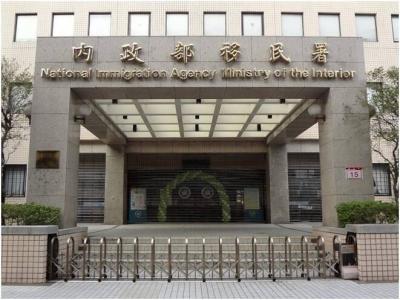
A small number of Taiwanese this year lost their citizenship rights after traveling in China and obtaining a one-time Chinese passport to cross the border into Russia, a source said today. The people signed up through Chinese travel agencies for tours of neighboring Russia with companies claiming they could obtain Russian visas and fast-track border clearance, the source said on condition of anonymity. The travelers were actually issued one-time-use Chinese passports, they said. Taiwanese are prohibited from holding a Chinese passport or household registration. If found to have a Chinese ID, they may lose their resident status under Article 9-1
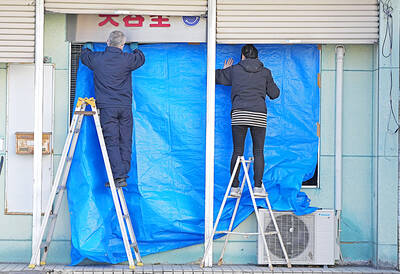
Taiwanese were praised for their composure after a video filmed by Taiwanese tourists capturing the moment a magnitude 7.5 earthquake struck Japan’s Aomori Prefecture went viral on social media. The video shows a hotel room shaking violently amid Monday’s quake, with objects falling to the ground. Two Taiwanese began filming with their mobile phones, while two others held the sides of a TV to prevent it from falling. When the shaking stopped, the pair calmly took down the TV and laid it flat on a tatami mat, the video shows. The video also captured the group talking about the safety of their companions bathing

PROBLEMATIC APP: Citing more than 1,000 fraud cases, the government is taking the app down for a year, but opposition voices are calling it censorship Chinese Nationalist Party (KMT) Chairwoman Cheng Li-wun (鄭麗文) yesterday decried a government plan to suspend access to Chinese social media platform Xiaohongshu (小紅書) for one year as censorship, while the Presidential Office backed the plan. The Ministry of the Interior on Thursday cited security risks and accusations that the Instagram-like app, known as Rednote in English, had figured in more than 1,700 fraud cases since last year. The company, which has about 3 million users in Taiwan, has not yet responded to requests for comment. “Many people online are already asking ‘How to climb over the firewall to access Xiaohongshu,’” Cheng posted on

A classified Pentagon-produced, multiyear assessment — the Overmatch brief — highlighted unreported Chinese capabilities to destroy US military assets and identified US supply chain choke points, painting a disturbing picture of waning US military might, a New York Times editorial published on Monday said. US Secretary of Defense Pete Hegseth’s comments in November last year that “we lose every time” in Pentagon-conducted war games pitting the US against China further highlighted the uncertainty about the US’ capability to intervene in the event of a Chinese invasion of Taiwan. “It shows the Pentagon’s overreliance on expensive, vulnerable weapons as adversaries field cheap, technologically


 RSS
RSS