


DPP caucus whip Ker Chien-ming (柯建銘) yesterday accused New Power Party (NPP) Executive Chairman Huang Kuo-chang (黃國昌), a vocal critic of under-the-table negotiations, of orchestrating such negotiations.
Ker said on Facebook that the NPP had “branded institutionalized and legal cross-caucus negotiations as ‘clandestine negotiations’” when running in the legislative elections in January, but the party has been attending such negotiations, convened by Legislative Speaker Su Jia-chyuan (蘇嘉全), since it was elected to the legislature.
While the NPP denounced cross-caucus negotiations as a private mechanism run by Ker and Chinese Nationalist Party (KMT) Legislator and former legislative speaker Wang Jin-pyng (王金平), Huang sought a private meeting with President Tsai Ing-wen (蔡英文) in October over amendments to the Labor Standards Act (勞動基準法).
However, Huang was critical of the president and the DPP over the proposed labor legislation after the meeting, a “trick” that sabotaged understanding between the NPP and the DPP, Ker said.
“Huang is an expert [in under-the-table dealings]. During the Sunflower movement, the media reported that Huang arranged a secret meeting with former Presidential Office deputy secretary-general Hsiao Hsu-tsen (蕭旭岑), and attempted to arrange a private meeting with Wang, but failed,” Ker said, questioning whether Huang also sought to meet with Su in private.
Ker defended the legitimacy of cross-caucus negotiations, saying that the mechanism was established in 1999 when a set of legislative organizational and procedural regulations were implemented to ensure equal opportunities for minority parties.
Negotiations are attended by all caucuses and agreements have to be signed by three top officials of each, leaving little room for manipulation by a handful of politicians, Ker said.
However, the NPP, as a campaign strategy, has criticized the mechanism and described Ker as dictating the negotiations, Ker said.
“It is the NPP’s strategy to achieve something immoral with mudslinging, attacks and lies,” he said.
Huang said he would not comment on Ker’s remarks, as lawmakers have to devote time and effort to their work.
The public has a negative impression of cross-caucus negotiations, which were responsible for the confusion in amending the Accounting Act (會計法) in 2013, so the public voted for an open and transparent government this year, Huang said.
Huang denied accusations that he attempted to arrange a private meeting with Su, but said he asked Ker to speak with Tsai about her meeting with Huang.
The NPP planned to hold a seminar on cross-caucus negotiations after the last legislative session, but the party had to cancel, because Ker refused to participate, Huang said.
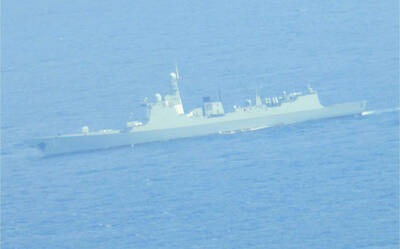
The military has spotted two Chinese warships operating in waters near Penghu County in the Taiwan Strait and sent its own naval and air forces to monitor the vessels, the Ministry of National Defense (MND) said. Beijing sends warships and warplanes into the waters and skies around Taiwan on an almost daily basis, drawing condemnation from Taipei. While the ministry offers daily updates on the locations of Chinese military aircraft, it only rarely gives details of where Chinese warships are operating, generally only when it detects aircraft carriers, as happened last week. A Chinese destroyer and a frigate entered waters to the southwest
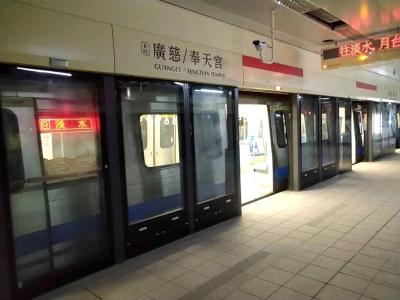
The eastern extension of the Taipei MRT Red Line could begin operations as early as late June, the Taipei Department of Rapid Transit Systems said yesterday. Taipei Rapid Transit Corp said it is considering offering one month of free rides on the new section to mark its opening. Construction progress on the 1.4km extension, which is to run from the current terminal Xiangshan Station to a new eastern terminal, Guangci/Fengtian Temple Station, was 90.6 percent complete by the end of last month, the department said in a report to the Taipei City Council's Transportation Committee. While construction began in October 2016 with an
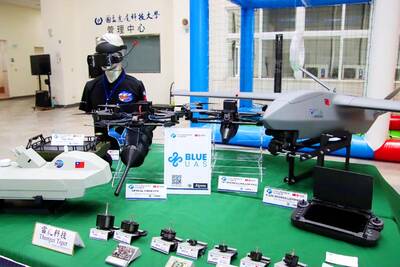
NON-RED SUPPLY: Boosting the nation’s drone industry is becoming increasingly urgent as China’s UAV dominance could become an issue in a crisis, an analyst said Taiwan’s drone exports to Europe grew 41.7-fold from 2024 to last year, with demand from Ukraine’s fight against Russian aggression the most likely driver of growth, a study showed. The Institute for Democracy, Society and Emerging Technology (DSET) in a statement on Wednesday said it found that many of Taiwan’s uncrewed aerial vehicle (UAV) sales were from Poland and the Czech Republic. These countries likely transferred the drones to Ukraine to aid it in its fight against the Russian invasion that started in 2022, it said. Despite the gains, Taiwan is not the dominant drone exporter to these markets, ranking second and fourth

Japanese Prime Minister Sanae Takaichi’s comment last year on Tokyo’s potential reaction to a Taiwan-China conflict has forced Beijing to rewrite its invasion plans, a retired Japanese general said. Takaichi told the Diet on Nov. 7 last year that a Chinese naval blockade or military attack on Taiwan could constitute a “survival-threatening situation” for Japan, potentially allowing Tokyo to exercise its right to collective self-defense. Former Japan Ground Self-Defense Force general Kiyofumi Ogawa said in a recent speech that the remark has been interpreted as meaning Japan could intervene in the early stages of a Taiwan Strait conflict, undermining China’s previous assumptions


 RSS
RSS