


Chinese Nationalist Party (KMT) Vice Chairman Hau Lung-bin (郝龍斌) yesterday launched a civil alliance as the first step in a campaign to call for a national referendum on food safety, but denied his action was a precursor to a run for KMT chairperson next year.
A referendum asking people whether they support a proposal to ease the nation’s ban on imports from five Japanese prefectures “is not one option. It is the only option,” Hau said at a news conference held to announce the Vote for Food Safety Alliance (守護食安公投聯盟).
The former Taipei mayor last week proposed a national referendum on food imports from the five Japanese prefectures. He will now begin collecting a minimum of 94,000 signatures to make the proposal official.
As stipulated by the Referendum Act (公民投票法), the proportion of signatories for a referendum to be valid must be no less than 0.5 percent of the total electorate at the previous presidential election. For Hau’s proposal, the number of eligible voters at the Jan. 16 election was 18,782,991.
Hau has said that he hopes to collect 95,000 signatures in 30 days or fewer.
At the present time, 25,000 endorsements have been received for the referendum proposal, he said.
Amid speculation that the referendum drive is an attempt by Hau to pave way for his chairmanship bid next year, Hau said that if the KMT continues to fail to address the public’s needs, the party’s momentum would stall and then it would make no difference who was at the helm of the KMT.
“This is an issue of people’s livelihoods... The public should refrain from politicizing the matter and blurring the focus,” Hau said.
With an “arbitrary and dictatorial” government that ignores the protests on the streets, Hau said the only way to see the public’s will realized is by direct democracy.
To reflect the public’s hope for no food products be imported from radiation-affected areas, a national referendum is the only option, Hau said.
The alliance has several joint conveners, including KMT caucus whip Liao Kuo-tung (廖國棟); Lucy Sun Hwang (孫璐西), a professor at National Taiwan University’s Institute of Food Science and Technology; Julia Chou (周春娣), the chairwoman of the Conservation Mothers Foundation; and Junior-high Union of Parents Association in Taipei chairman Hsu Hsiao-jen (許孝仁).
They all attended the alliance’s news conferences yesterday, with Hau saying that former minister of health Yaung Chih-liang (楊志良), whom he called a supporter of the referendum proposal, missed the event because he is overseas.
The Democratic Progressive Party government is considering lifting the ban on food products from all the prefectures except Fukushima, where the Dai-ichi nuclear power is located, but has run into virulent opposition.

The military has spotted two Chinese warships operating in waters near Penghu County in the Taiwan Strait and sent its own naval and air forces to monitor the vessels, the Ministry of National Defense (MND) said. Beijing sends warships and warplanes into the waters and skies around Taiwan on an almost daily basis, drawing condemnation from Taipei. While the ministry offers daily updates on the locations of Chinese military aircraft, it only rarely gives details of where Chinese warships are operating, generally only when it detects aircraft carriers, as happened last week. A Chinese destroyer and a frigate entered waters to the southwest

A magnitude 6.1 earthquake struck off the coast of Yilan County at 8:39pm tonight, the Central Weather Administration (CWA) said, with no immediate reports of damage or injuries. The epicenter was 38.7km east-northeast of Yilan County Hall at a focal depth of 98.3km, the CWA’s Seismological Center said. The quake’s maximum intensity, which gauges the actual physical effect of a seismic event, was a level 4 on Taiwan’s 7-tier intensity scale, the center said. That intensity level was recorded in Yilan County’s Nanao Township (南澳), Hsinchu County’s Guansi Township (關西), Nantou County’s Hehuanshan (合歡山) and Hualien County’s Yanliao (鹽寮). An intensity of 3 was

Japanese Prime Minister Sanae Takaichi’s comment last year on Tokyo’s potential reaction to a Taiwan-China conflict has forced Beijing to rewrite its invasion plans, a retired Japanese general said. Takaichi told the Diet on Nov. 7 last year that a Chinese naval blockade or military attack on Taiwan could constitute a “survival-threatening situation” for Japan, potentially allowing Tokyo to exercise its right to collective self-defense. Former Japan Ground Self-Defense Force general Kiyofumi Ogawa said in a recent speech that the remark has been interpreted as meaning Japan could intervene in the early stages of a Taiwan Strait conflict, undermining China’s previous assumptions
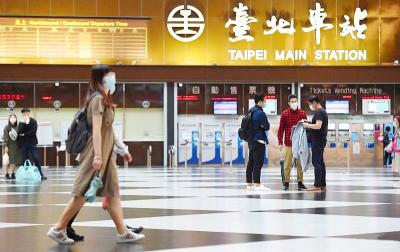
Taiwan Railways Corp (TRC) today announced that Shin Kong Mitsukoshi has been selected as the preferred bidder to operate the Taipei Railway Station shopping mall, replacing the current operator, Breeze Development Co Ltd. Among eight qualified firms that delivered presentations and were evaluated by a review committee, Shin Kong Mitsukoshi was ranked first, while Breeze was named the runner-up, the rail company said in a statement. Contract negotiations are to proceed in accordance with regulations, it said, adding that if negotiations with the top bidder fail, it could invite the second-ranked applicant to enter talks. Breeze in a statement today expressed doubts over


 RSS
RSS