


A commentator urged Taiwanese to understand the basic philosophy of US president-elect Donald Trump, saying billionaire real-estate mogul benefited from then-US president Ronald Reagan’s economic policy in the 1980s and became a believer in “Reaganomics.”
Investment Media and Wealth Magazine chairman Hsieh Chin-ho (謝金河) spoke about his view on why Trump took a telephone call from President Tsai Ing-wen (蔡英文) on Friday last week and the effects the 10-minute call could have.
China was initially relieved — and even happy — that Trump won the US presidential election, believing he would be “easier to deal with” than former US secretary of state Hillary Rodham Clinton, Hsieh said on Facebook on Sunday.
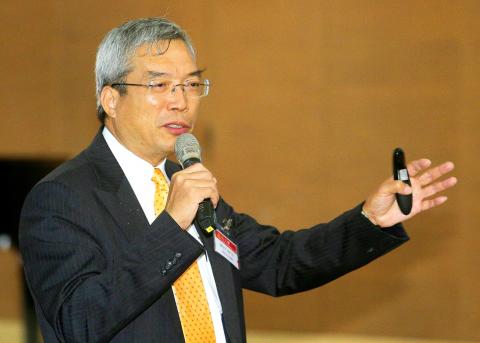
Photo: CNA
However, Beijing remains highly uncertain as to what Trump’s policies will be, he said.
To better understand Trump as he heads to the White House, Hsieh said that much can be learned from recalling that in 1980 the US was reeling from the aftermath of the Vietnam War and “stagflation,” resulting in a basic interest rate of 20 percent.
When then-Republican candidate Reagan hit the campaign trail, his slogan of “Let’s make America great again” resonated well with voters, Hsieh said, adding that then-US president Jimmy Carter sustained a resounding defeat at the polls.
After taking office, Reagan immediately cut taxes, increased government spending and undertook wide-reaching deregulation to free up the economy, helping the US weather the downturn of 1981-1982, said Hsieh, who also hosts a TV program on finance and economy.
It was Reagan’s tough defense policy, boosted by an uptick in military spending, that forced then-superpower Soviet Union to back down and laid the groundwork for the fall of the Berlin Wall and the Soviet collapse in 1989 and 1991 respectively.
Reagan’s two-term presidency ended in 1988.
Trump has modeled his economic policy on Reagan’s — from his main slogan to tax cuts, deregulation and boosting infrastructure spending, Hsieh said, adding that Trump made his fortune in the 1980s through real-estate investments, making him a beneficiary of Reaganomics.
Reaganomics prevailed during the Cold War and now Trump is trying to “make America great again” before China surges ahead economically to become a superpower, he said, adding that world affairs will be dominated by that contest over the next 10 years.
In the face of rapid and huge changes, nations are seeking to be strong economically and if Taiwan continues to allow the pursuit of “justice and fairness” to blunt its economic competitiveness, “it might not have a future.”
Hsieh’s comments drew some criticism from netizens, with one asking: “What’s wrong with seeking social justice and fairness?”
“Does our current economic system, which features an unfair tax system — placing too heavy a burden on the salaried class — not favor the capitalists enough?” the netizen said.
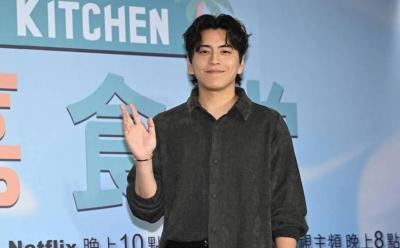
Actor Darren Wang (王大陸) was sentenced to six months in prison, commutable to a fine, by the New Taipei District Court today for contravening the Personal Data Protection Act (個人資料保護法) in a case linked to an alleged draft-dodging scheme. Wang allegedly paid NT$3.6 million (US$114,380) to an illegal group to help him evade mandatory military service through falsified medical documents, prosecutors said. He transferred the funds to Chen Chih-ming (陳志明), the alleged mastermind of a draft-evasion ring, although he lost contact with him as he was already in detention on fraud charges, they said. Chen is accused of helping a
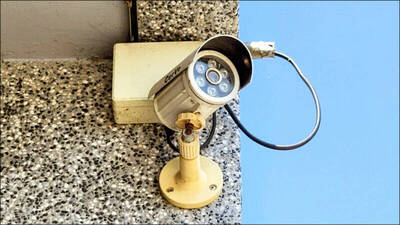
UNREASONABLE SURVEILLANCE: A camera targeted on an road by a neighbor captured a man’s habitual unsignaled turn into home, netting him dozens of tickets The Taichung High Administrative Court has canceled all 45 tickets given to a man for failing to use a turn signal while driving, as it considered long-term surveillance of his privacy more problematic than the traffic violations. The man, surnamed Tseng (曾), lives in Changhua County and was reported 45 times within a month for failing to signal while driving when he turned into the alley where his residence is. The reports were filed by his neighbor, who set up security cameras that constantly monitored not only the alley but also the door and yard of Tseng’s house. The surveillance occurred from July

SECURITY: Starlink owner Elon Musk has taken pro-Beijing positions, and allowing pro-China companies to control Taiwan’s critical infrastructure is risky, a legislator said Starlink was reluctant to offer services in Taiwan because of the nation’s extremely high penetration rates in 4G and 5G services, the Ministry of Digital Affairs said yesterday. The ministry made the comments at a meeting of the legislature’s Transportation Committee, which reviewed amendments to Article 36 of the Telecommunications Management Act (電信管理法). Article 36 bans foreigners from holding more than 49 percent of shares in public telecommunications networks, while shares foreigners directly and indirectly hold are also capped at 60 percent of the total, unless specified otherwise by law. The amendments, sponsored by Chinese Nationalist Party (KMT) Legislator Ko

A Japan Self-Defense Forces vessel entered the Taiwan Strait yesterday, Japanese media reported. After passing through the Taiwan Strait, the Ikazuchi was to proceed to the South China Sea to take part in a joint military exercise with the US and the Philippines, the reports said. Japan Self-Defense Force vessels were first reported to have passed through the strait in September, 2024, with two further transits taking place in February and June last year, the Asahi Shimbun reported. Yesterday’s transit also marked the first time since Japanese Prime Minister Sanae Takaichi took office that a Japanese warship has been sent through the Taiwan


 RSS
RSS