


A Chinese Nationalist Party (KMT) lawmaker yesterday called for regulatory changes to allow the spouses and children of foreign professionals to obtain permanent residency and work in the nation.
Speaking at a morning news conference at the Legislative Yuan, KMT Legislator Jason Hsu (許毓仁) said that current regulations make life difficult for expatriates who plan to stay in Taiwan for the long term, including restrictions on their children obtaining permanent residency.
Once the children of expats reach the age of maturity, they are required to leave the country, making it impossible for the family to continue living together, while accompanying spouses also cannot take on part-time employment, he said.

Photo: Fang Pin-chao, Taipei Times
Hsu said he hoped to introduce a series of changes, including an amendment to Article 25 of the Immigration Act (入出國及移民法), to allow the spouses and dependent children of foreign professionals to apply for permanent residency.
Other plans include amending Article 42 of the Employment Services Act (就業服務法) to allow spouses and dependent children of those who have become permanent residents to work, he said.
Hsu said he also hoped that children who are disabled or otherwise unable to care for themselves would be allowed to extend their permanent residence status past the age of maturity through an amendment to Article 23 of the Immigration Act.
He added that Article 9 of the Nationality Act (國籍法) should also be revised so that those who decide to apply for Republic of China (ROC) citizenship would not be required to abandon their original citizenship until after they have been naturalized.
Lin Chih-mei (林至美), director of the National Development Council’s Department of Human Resources Development, told the news conference that she would put together a proposal for a draft bill after gathering input from all the relevant parties.
Tsai Meng-liang (蔡孟良), deputy director of the Ministry of Labor’s Workforce Development Agency, said efforts to relax relevant regulations are under way, as the government is aware that attracting professional talent is critical to making the nation internationally competitive.
“Taiwan cannot close itself off from the world. We naturally need to attract international talent,” Tsai said.
The way to achieve this is to loosen restrictions, Tsai said.
The idea of exempting foreign professionals from the need to apply for permanent residence in the first place is being discussed, adding that their dependent children would automatically receive permanent residence under the proposal, Tsai said.
The ministry is moving in the same direction on the issue as what Hsu is proposing, Tsai said.

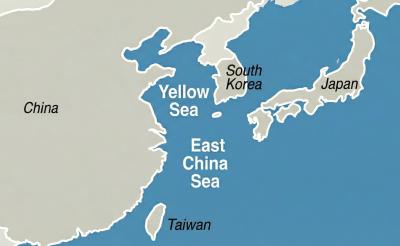
China has reserved offshore airspace in the Yellow Sea and East China Sea from March 27 to May 6, issuing alerts usually used to warn of military exercises, although no such exercises have been announced, the Wall Street Journal (WSJ) reported yesterday. Reserving such a large area for 40 days without explanation is an “unusual step,” as military exercises normally only last a few days, the paper said. These alerts, known as Notice to Air Missions (Notams), “are intended to inform pilots and aviation authorities of temporary airspace hazards or restrictions,” the article said. The airspace reserved in the alert is
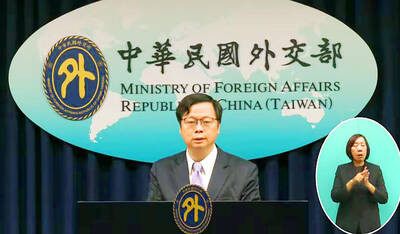
NAMING SPAT: The foreign ministry called on Denmark to propose an acceptable solution to the erroneous nationality used for Taiwanese on residence permits Taiwan has revoked some privileges for Danish diplomatic staff over a Danish permit that lists “Taiwan” as “China,” Eric Huang (黃鈞耀), head of the Ministry of Foreign Affairs’ Department of European Affairs, told a news conference in Taipei yesterday. Reporters asked Huang whether the Danish government had responded to the ministry’s request that it correct the nationality on Danish residence permits of Taiwanese, which has been listed as “China” since 2024. Taiwan’s representative office in Denmark continues to communicate with the Danish government, and the ministry has revoked some privileges previously granted to Danish representatives in Taiwan and would continue to review

More than 6,000 Taiwanese students have participated in exchange programs in China over the past two years, despite the Mainland Affairs Council’s (MAC) “orange light” travel advisory, government records showed. The MAC’s publicly available registry showed that Taiwanese college and university students who went on exchange programs across the Strait numbered 3,592 and 2,966 people respectively. The National Immigration Agency data revealed that 2,296 and 2,551 Chinese students visited Taiwan for study in the same two years. A review of the Web sites of publicly-run universities and colleges showed that Taiwanese higher education institutions continued to recruit students for Chinese educational programs without
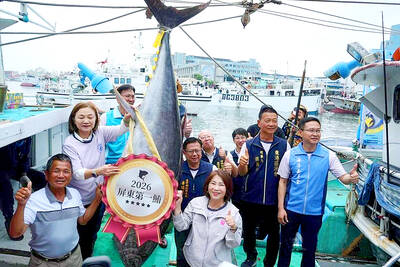
The first bluefin tuna of the season, brought to shore in Pingtung County and weighing 190kg, was yesterday auctioned for NT$10,600 (US$333.5) per kilogram, setting a record high for the local market. The auction was held at the fish market in Donggang Fishing Harbor, where the Siaoliouciou Island-registered fishing vessel Fu Yu Ching No. 2 delivered the “Pingtung First Tuna” it had caught for bidding. Bidding was intense, and the tuna was ultimately jointly purchased by a local restaurant and a local company for NT$10,600 per kilogram — NT$300 ,more than last year — for a total of NT$2.014 million. The 67-year-old skipper


 RSS
RSS