


A new draft cybersecurity bill that aims to protect sensitive government information is to rank government agencies on a three-tier system according to the data they handle, sources said.
A total of 123 key government institutions, including the Presidential Office, the National Security Council, the Executive Yuan, the Ministry of National Defense and the National Security Bureau, have been identified by the Executive Yuan as tier-A organizations in terms of information security interests, a source who declined to be named said.
The institutions would be required to conform to semiannual inspections, as well as conduct cyberattack response drills at least once a year.
While relations between China and Taiwan seemingly thawed during former president Ma Ying-jeou’s (馬英九) tenure, former premier Simon Chang (張善政) had previously acknowledged that attacks on Taiwan’s computer systems by Chinese hackers were still frequent at that time.
The Democratic Progressive Party resolved to upgrade computer security measures at government organizations after it took power in May and learned of the frequency of cyberattacks, sources said.
The government sees information security as synonymous with national security and places great importance on its protection, sources said, adding that the Executive Yuan earlier this year established the Department of Cybersecurity, which is tasked with implementing its draft bill on information security.
The Executive Yuan is expected to approve the proposed bill next month, the sources said, adding that all central and divisional government organizations and associated enterprises will be ranked as tier A, B or C according to the level of sensitivity of the information they handle, with tier A denoting the highest level of sensitivity and C the lowest.
Some ostensibly less at-risk organizations such as the Civil Aeronautics Administration, the Directorate-General of Highways and the Central Weather Bureau would be classified as tier A given the importance the information they work with, sources said.
The government computer systems of the six special municipalities — Taipei, New Taipei City, Kaohsiung, Taoyuan, Taichung and Tainan — would also fall under tier-A regulations due to their high populations, sources said.
The tier-B classification would cover organizations working with less sensitive information such as the National Archives Administration, the Bureau of Cultural Affairs and the Occupational Safety and Health Administration.
The remaining 6,310 government organizations, such as Kinmen Kaoliang Liquor Inc and state-run Matsu Daily News would fall under tier C, sources said.
Tier-A core computer systems would all require authentication for data access and operators would need to be certified, sources said, adding that at tier-B organizations only two core systems where sensitive data is kept would require authentication for access.
Tier-C organizations would determine themselves what information requires authentication to retrieve, the sources said.

Yangmingshan National Park authorities yesterday urged visitors to respect public spaces and obey the law after a couple was caught on a camera livestream having sex at the park’s Qingtiangang (擎天崗) earlier in the day. The Shilin Police Precinct in Taipei said it has identified a suspect and his vehicle registration number, and would summon him for questioning. The case would be handled in accordance with public indecency charges, it added. The couple entered the park at about 11pm on Thursday and began fooling around by 1am yesterday, the police said, adding that the two were unaware of the park’s all-day live
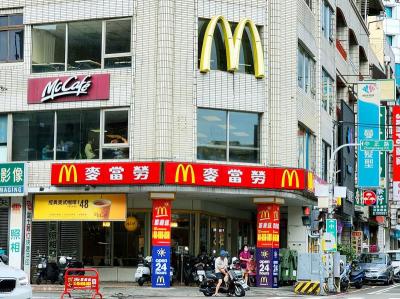
Fast food chain McDonald's is to raise prices by up to NT$5 on some products at its restaurants across Taiwan, starting on Wednesday next week, the company announced today. The prices of all extra value meals and sharing boxes are to increase by NT$5, while breakfast combos and creamy corn soup would go up by NT$3, the company said in a statement. The price of the main items of those meals, if ordered individually, would remain the same. Meanwhile, the price of a medium-sized lemon iced tea and hot cappuccino would rise by NT$3, extra dipping sauces for chicken nuggets would go up

Yangmingshan National Park’s Qingtiangang (擎天崗) nature area has gone viral after a park livestream camera observed a couple in the throes of intimate congress, which was broadcast live on YouTube, drawing large late-night crowds and sparking a backlash over noise, bright lights and disruption to wildlife habitat. The area’s livestream footage appeared to show a couple engaging in sexual activity on a picnic table in the park on Friday last week, with the uncensored footage streamed publicly online. The footage quickly spread across social media, prompting a tide of visitors to travel to the site to “check in” and recreate the

Minister of Digital Affairs Lin Yi-ching (林宜敬) yesterday cited regulatory issues and national security concerns as an expert said that Taiwan is among the few Asian regions without Starlink. Lin made the remarks on Facebook after funP Innovation Group chief executive officer Nathan Chiu (邱繼弘) on Friday said Taiwan and four other countries in Asia — China, North Korea, Afghanistan and Syria — have no access to Starlink. Starlink has become available in 166 countries worldwide, including Ukraine, Malaysia, the Philippines and Vietnam, in the six years since it became commercial, he said. While China and North Korea block Starlink, Syria is not


 RSS
RSS