


Denying Taiwan participation in the International Civil Aviation Organization (ICAO) is only part of China’s strategy to pressure Taiwan into accepting the so-called “1992 consensus,” but such tactics are not beneficial to improving cross-strait relations, a high-ranking government official said.
The official, who declined to be named, said thatsince President Tsai Ing-wen (蔡英文) of the Democratic Progressive Party (DPP) was inaugurated on May 20, Beijing has been applying diplomatic pressure on Taiwan because of the Tsai administration’s refusal to recognize the “1992 consensus.”
The “1992 consensus” — a term former Mainland Affairs Council chairman Su Chi (蘇起) admitted making up in 2000 — refers to a supposed understanding reached during talks in 1992 that both Taiwan and China acknowledge that there is “one China,” with each side having its own interpretation of what that means.
Beijing has recently upped the ante during the visit of six pan-blue local government heads and two independents to China by announcing that it would make preferential treatment toward these counties and cities in terms of tourism and agricultural products sold to China, the official said.
The move aims to foment internal unrest and force civil pressure onto the Tsai administration, the official added.
DPP Legislator Lo Chih-cheng (羅致政) said that as Taiwan is unable to join the UN at this time, it should seek to participate in other organizations under the UN and make “meaningful contributions.”
Lo said that Taiwan is still sending a seven-person delegation to next week’s ICAO meeting in Montreal, Canada, including Civil Aeronautics Administration (CAA) deputy director-general Ho Shu-ping (何淑萍), to conduct sideline talks with other nations.
“We need to make China understand that not inviting Taiwan is its loss,” Lo said, adding that delegates might be able to win more support for the nation if they gave impressive speeches at events similar to the ICAO meeting.
Lo said that Beijing was maintaining a strategy of applying pressure, but not seeking open conflict, adding that China wants Taiwan to feel nervous, but is unlikely go as far as leaving Taiwan isolated and without diplomatic allies.
Because of this, Taiwan is not seeking to antagonize China by repeating a cut-throat diplomacy war with China like during former president Chen Shui-bian’s (陳水扁) era, Lo said, adding that it was the same policy for tourism: China has reduced the number of tourists visiting Taiwan, but has not stopped them from coming entirely.
Taiwan Foundation for Democracy deputy executive director Maysing Yang (楊黃美幸) said the more China attempts to oppress Taiwan, the more sympathetic the international community would be to Taipei.
Taiwan should seek international support, Yang said, adding that the government should step up efforts to let the international community know how Taiwan is unfairly treated and oppressed to place more international pressure on China.
Yang said that the government should push Taiwan’s non-governmental organizations to interact with international non-governmental organizations to win their support for Taiwan’s participation internationally.
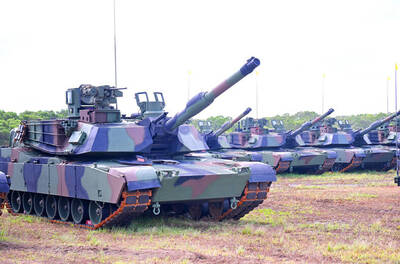
The manufacture of the remaining 28 M1A2T Abrams tanks Taiwan purchased from the US has recently been completed, and they are expected to be delivered within the next one to two months, a source said yesterday. The Ministry of National Defense is arranging cargo ships to transport the tanks to Taiwan as soon as possible, said the source, who is familiar with the matter. The estimated arrival time ranges from late this month to early next month, the source said. The 28 Abrams tanks make up the third and final batch of a total of 108 tanks, valued at about NT$40.5 billion
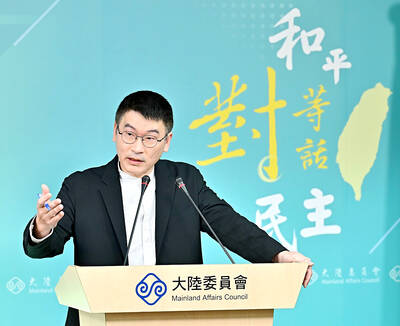
Two Taiwanese prosecutors were questioned by Chinese security personnel at their hotel during a trip to China’s Henan Province this month, the Mainland Affairs Council (MAC) said yesterday. The officers had personal information on the prosecutors, including “when they were assigned to their posts, their work locations and job titles,” MAC Deputy Minister and spokesman Liang Wen-chieh (梁文傑) said. On top of asking about their agencies and positions, the officers also questioned the prosecutors about the Cross-Strait Joint Crime-Fighting and Judicial Mutual Assistance Agreement, a pact that serves as the framework for Taiwan-China cooperation on combating crime and providing judicial assistance, Liang
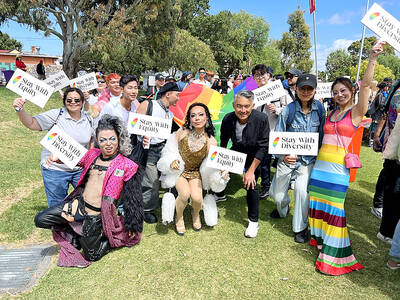
A group from the Taiwanese Designers in Australia association yesterday represented Taiwan at the Midsumma Pride March in Melbourne. The march, held in the St. Kilda suburb, is the city’s largest LGBTQIA+ parade and the flagship event of the annual Midsumma Festival. It attracted more than 45,000 spectators who supported the 400 groups and 10,000 marchers that participated this year, the association said. Taiwanese Designers said they organized a team to march for Taiwan this year, joining politicians, government agencies, professionals and community organizations in showing support for LGBTQIA+ people and diverse communities. As the first country in Asia to legalize same-sex
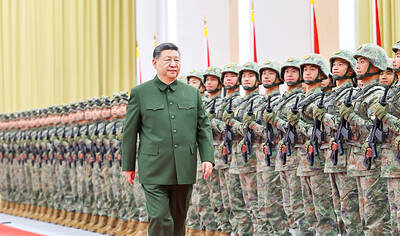
MOTIVES QUESTIONED The PLA considers Xi’s policies toward Taiwan to be driven by personal considerations rather than military assessment, the Epoch Times reports Chinese President Xi Jinping’s (習近平) latest purge of the Chinese People’s Liberation Army (PLA) leadership might have been prompted by the military’s opposition to plans of invading Taiwan, the Epoch Times said. The Chinese military opposes waging war against Taiwan by a large consensus, putting it at odds with Xi’s vision, the Falun Gong-affiliated daily said in a report on Thursday, citing anonymous sources with insight into the PLA’s inner workings. The opposition is not the opinion of a few generals, but a widely shared view among the PLA cadre, the Epoch Times cited them as saying. “Chinese forces know full well that


 RSS
RSS