


Former National Palace Museum director Feng Ming-chu’s (馮明珠) decision to change regulations to reduce the time period during which retired museum officials are barred from visiting China after leaving their posts was an “autonomous violation of regulations,” the Mainland Affairs Council said yesterday.
The council issued a statement after a meeting with government agencies, and the museum is expected to repeal the change and reinstate the original waiting period.
In accordance with the Act Governing Relations Between the People of the Taiwan Area and the Mainland Area (臺灣地區與大陸地區人民關係條例), the museum required its former staff to seek approval from a review committee consisting of officials from the Ministry of Justice, the Ministry of the Interior, the National Security Bureau and the council before visiting China within three years of leaving government service.

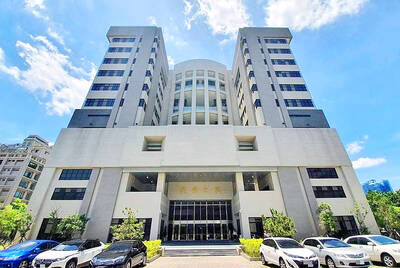
Photo: Lin Yi-chang, Taipei Times
However, according to the museum’s internal documents, Feng signed an official document on April 15 asking that the threshold be reduced to “within one year of leaving government service” and sent it to the National Immigration Agency on May 4.
She then reissued the document, signed it and sent it to the agency on May 13 asking that the restriction be lowered to three months.
Feng was on Tuesday hired as a research adviser by the research institute of Beijing’s Palace Museum, less than four months after stepping down from the Taipei post, stirring up controversy.
Feng yesterday released a statement saying that she accepted the offer because she felt the Beijing museum could benefit from her 38 years of experience.
She referred to the National Palace Museum as the “Taipei Palace Museum” in the statement, a different attitude from the one she displayed when the National Palace Museum held an exhibition in Japan three years ago when she was director. Feng nearly canceled the exhibition at the time, because the word “national” was not used when referring to the museum in promotional materials.
In response to criticism from several of her colleagues who said she was “forgetting her roots,” Feng said that after she stepped down from the post, she was not invited as a consultant by any of the nation’s museums, including the National Palace Museum, adding that the research adviser position in Beijing is an unpaid honorary role.
Regarding her changing of regulations to reduce the embargo from three years to three months, Feng said that the change was done in accordance with government procedures and was out of her control.
Democratic Progressive Party (DPP) Legislator Rosalia Wu (吳思瑤) said that she was shocked by the change in Feng’s stance regarding the museum.
“How could Feng diminish the status of our National Palace Museum while transitioning from a government official to a civilian?” Wu asked.
In response to Feng’s remark that she has not broken any regulations, Wu cited Article 6 of the Civil Service Act (公務員服務法), which stipulates that an official cannot use their position to pursue personal benefit, adding: “If her new role is an unpaid honorary position, why is she in such a hurry?”
DPP Legislator Ho Hsin-chun (何欣純) said that China has long infringed upon Taiwan’s rights and questioned whether there could be some risk of China having access to Feng’s knowledge, as she was a public servant for more than 30 years.
Ho also questioned Feng’s argument that changing the waiting period for retired civil servants was out of her control, saying that she signed off on the documents on two separate occasions.
“Making a public statement to the effect that this was out of her control is a blatant lie,” Ho said.

Taiwanese can file complaints with the Tourism Administration to report travel agencies if their activities caused termination of a person’s citizenship, Mainland Affairs Council Minister Chiu Chui-cheng (邱垂正) said yesterday, after a podcaster highlighted a case in which a person’s citizenship was canceled for receiving a single-use Chinese passport to enter Russia. The council is aware of incidents in which people who signed up through Chinese travel agencies for tours of Russia were told they could obtain Russian visas and fast-track border clearance, Chiu told reporters on the sidelines of an event in Taipei. However, the travel agencies actually applied

Japanese footwear brand Onitsuka Tiger today issued a public apology and said it has suspended an employee amid allegations that the staff member discriminated against a Vietnamese customer at its Taipei 101 store. Posting on the social media platform Threads yesterday, a user said that an employee at the store said that “those shoes are very expensive” when her friend, who is a migrant worker from Vietnam, asked for assistance. The employee then ignored her until she asked again, to which she replied: "We don't have a size 37." The post had amassed nearly 26,000 likes and 916 comments as of this

New measures aimed at making Taiwan more attractive to foreign professionals came into effect this month, the National Development Council said yesterday. Among the changes, international students at Taiwanese universities would be able to work in Taiwan without a work permit in the two years after they graduate, explainer materials provided by the council said. In addition, foreign nationals who graduated from one of the world’s top 200 universities within the past five years can also apply for a two-year open work permit. Previously, those graduates would have needed to apply for a work permit using point-based criteria or have a Taiwanese company
The Shilin District Prosecutors’ Office yesterday indicted two Taiwanese and issued a wanted notice for Pete Liu (劉作虎), founder of Shenzhen-based smartphone manufacturer OnePlus Technology Co (萬普拉斯科技), for allegedly contravening the Act Governing Relations Between the People of the Taiwan Area and the Mainland Area (臺灣地區與大陸地區人民關係條例) by poaching 70 engineers in Taiwan. Liu allegedly traveled to Taiwan at the end of 2014 and met with a Taiwanese man surnamed Lin (林) to discuss establishing a mobile software research and development (R&D) team in Taiwan, prosecutors said. Without approval from the government, Lin, following Liu’s instructions, recruited more than 70 software


 RSS
RSS