


The Chinese Nationalist Party (KMT) has laundered some of its ill-gotten party assets by transferring the ownership of a party-run machinery corporation to two private companies, Democratic Progressive Party (DPP) Legislator Lin Chun-hsien (林俊憲) said yesterday.
Lin’s allegation was backed by Liu Chao-yi (劉昭毅), son of former KMT investment boss Liu Tai-ying (劉泰英).
Chung Hsin Electric and Machinery Corp (中興電工), founded in 1962 by the then-KMT-owned China Development Industrial Bank (中華開發工業銀行) and Central Insurance Co (中央產險), was 100 percent owned and run by the KMT, but the party transferred its ownership as it tried to hide its assets from government oversight, Lin told a news conference in Taipei.
Chung Hsin chairman Chiang Yi-fu (江義福), who was appointed by Liu Tai-ying in 1996, in 1998 used the company’s funds to establish two investment firms, Jih Jih Hsing Co (日日興) and Sheng Yuan Co (盛元), Lin said.
Those two firms then bought Chung Hsin shares and took over ownership of the machinery company from China Development and Central Insurance to whitewash Chung Hsin’s affiliation with the KMT and turn party assets into private ones, he said.
“Is Chiang the dummy chairman of a business controlled by the KMT? Or did he misappropriate the KMT’s assets?” the lawmaker said.
Chiang has been able to remain as chairman because he orchestrated the ownership shift, Lin said.
“There are 20 to 30 companies affiliated with the KMT that have been ‘whitewashed,’ including CTCI Corp (中鼎工程), an engineering company,” Lin said.
Liu Chao-yi said that Chiang’s appointment had been made by his father. It was the one of the only remarks he made.
Lin said Liu Chao-yi attended the news conference to testify to Chung Hsin’s affiliation with the KMT and the KMT’s attempts to hide party assets, but Liu Chao-yi rejected the claim.
“My father was responsible for managing the KMT’s businesses, but it was beyond his authority to dispose of party assets,” Liu Chao-yi said, in an apparent bid to disentangle his father from the investigation of the KMT’s assets.
It has been reported that the Ill-gotten Party Assets Settlement Committee plans to interview Liu Tai-ying.
In related news, the committee also held a news conference, where it said that the KMT appears to have relied on ill-gotten assets to fund its management activities and its election campaigns for the past 10 years.
Ten political parties were established before 1987 and therefore subject to the committee’s investigation, but only the KMT and the DPP were active and regularly submitted annual financial reports, committee chairman Wellington Koo (顧立雄) said.
The KMT’s financial statements for the past 10 years show that its legal income was not enough to pay its expenses, and it depended on the income of trust assets to cover its expenses, Koo said.
“It is presumed that the KMT’s trust assets are an illegitimate source of income because they are not party membership fees, political donations, government subsidies or interest generated — the only legitimate sources of income for a political party,” Koo said.
Investigations and hearings will be held to determine whether organizations and properties believed to be controlled by the KMT are in fact such, he said.
The public is welcome to provide information related to the party assets issue, he said, adding that the committee will interview Liu Tai-ying if necessary.
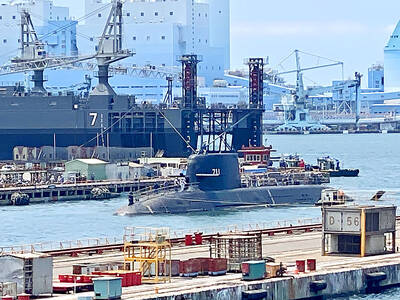
AGING: While Japan has 22 submarines, Taiwan only operates four, two of which were commissioned by the US in 1945 and 1946, and transferred to Taiwan in 1973 Taiwan would need at least 12 submarines to reach modern fleet capabilities, CSBC Corp, Taiwan chairman Chen Cheng-hung (陳政宏) said in an interview broadcast on Friday, citing a US assessment. CSBC is testing the nation’s first indigenous defense submarine, the Hai Kun (海鯤, Narwhal), which is scheduled to be delivered to the navy next month or in July. The Hai Kun has completed torpedo-firing tests and is scheduled to undergo overnight sea trials, Chen said on an SET TV military affairs program. Taiwan would require at least 12 submarines to establish a modern submarine force after assessing the nation’s operational environment and defense

A white king snake that frightened passengers and caused a stir on a Taipei MRT train on Friday evening has been claimed by its owner, who would be fined, Taipei Rapid Transit Corp (TRTC) said yesterday. A person on Threads posted that he thought he was lucky to find an empty row of seats on Friday after boarding a train on the Bannan (Blue) Line, only to spot a white snake with black stripes after sitting down. Startled, he jumped up, he wrote, describing the encounter as “terrifying.” “Taipei’s rat control plan: Release snakes on the metro,” one person wrote in reply, referring
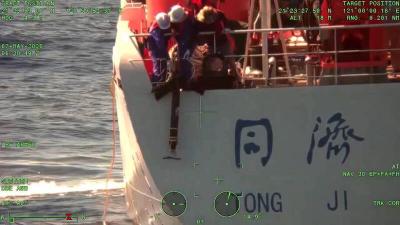
The coast guard today said that it had disrupted "illegal" operations by a Chinese research ship in waters close to the nation and driven it away, part of what Taipei sees a provocative pattern of China's stepped up maritime activities. The coast guard said that it on Thursday last week detected the Chinese ship Tongji (同濟號), which was commissioned only last year, 29 nautical miles (54km) southeast of the southern tip of Taiwan, although just outside restricted waters. The ship was observed lowering ropes into the water, suspected to be the deployment of scientific instruments for "illegal" survey operations, and the coast
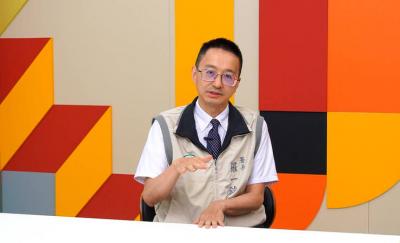
Taiwan’s two cases of hantavirus so far this year are on par with previous years’ case numbers, and the government is coordinating rat extermination work, so there should not be any outbreaks, Centers for Disease Control (CDC) Director-General Philip Lo (羅一鈞) said today in an interview with the Liberty Times (the Taipei Times’ sister newspaper). An increase in rat sightings in Taipei and New Taipei City has raised concerns about the spread of hantavirus, as rats can carry the disease. In January, a man in his 70s who lived in Taipei’s Daan District (大安) tested positive posthumously for hantavirus, Taiwan’s


 RSS
RSS