


With World Breastfeeding Week starting today, the Health Promotion Administration yesterday said a survey it conducted showed the nation’s breastfeeding rate in the first six months of a baby’s life reached 45.5 percent, adding that there is still room for improvement in creating a breastfeeding-friendly environment.
According to the agency’s statistics collected last year, Taiwan’s breastfeeding rate surpassed the world average rate of 38 percent and is getting closer to the WHO’s global target of increasing the rate of exclusive breastfeeding in the first six months up to at least 50 percent by 2025.
The survey showed that 65.3 percent of breastfeeding mothers are satisfied with the general breastfeeding environment and 78.1 percent consider their workplace supportive of breastfeeding or pumping.
Administration Director Wang Ying-wei (王英偉) said the survey also showed that 57.1 percent of mothers stopped breastfeeding because they did not have enough breast milk, while 21.9 percent said they had difficulty breastfeeding or pumping at their workplace.
The survey showed that some people are not satisfied with the breastfeeding environment, so there is still room for improvement, the agency said.
Breastfeeding is a natural and low-cost method of feeding infants and is good for their health, it said, adding that the World Alliance for Breastfeeding Action also said that breast milk is a nutritious and safer food for infants, adding that breastfeeding is friendlier to the ecosystem than formula feeding.
It recommended exclusive breastfeeding for the first six months and introducing complementary foods with breastfeeding until the baby is two years old or older.
Administration official Chen Miao-hsin (陳妙心) said some studies have found that benefits of breastfeeding for infants include a reduced risk of developing ear infections, digestive tract and respiratory diseases, as well as diabetes or allergies.
The administration said women should give birth at hospitals that have a “baby-friendly hospital” certification — of which there are 182 in the nation — so that they are allowed to have direct skin contact with their newborn within 30 minutes of giving birth and to stay in the same room as their baby for at least 24 hours, adding that healthcare practitioners can also instruct new mothers how to breastfeed.
Wang said collective participation is needed to raise a baby, adding that in addition to the help of family members, society should support a breastfeeding and baby-friendly environment.
Agencies provide various resources to help new parents, Wang said, adding that a toll-free hotline (0800-870-870) and a Web site (http://mammy.hpa.gov.tw) is available for pregnant women to ask questions or find information about pregnancy.
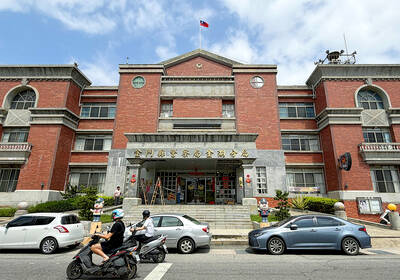
NATIONAL SECURITY: Authorities are working to confirm the identities of the military personnel involved and investigating possible illegal conduct and regulatory violations Authorities are probing possible national security implications after Kinmen police and immigration officers on Sunday found a Chinese woman allegedly posing as a tourist while engaging in prostitution involving more than 10 military personnel. The woman, surnamed Chen (陳), has since been deported, authorities said, adding that investigators are still working to confirm the identities of those implicated, as the records only listed code names and aliases. The case stemmed from a report received by the Kinmen District Prosecutors’ Office on Friday last week from the Jinhu Precinct of the Kinmen County Police Bureau. On Sunday, police, along with the National Immigration

GLOBALGIVING: ‘ Caving to external pressure is not acceptable for an organization that has cultivated justice reform and human rights for 30 years,’ one NGO said A slew of non-government organizations (NGOs) have withdrawn from the GlobalGiving fundraising platform after it announced it would use “Chinese Taipei” instead of “Taiwan” from next month. The Taiwan Good Rice Association wrote on Facebook on Friday that it was informed on April 28 via a teleconference call of the change, which was made because the platform wanted to operate in China. Taiwan Good Rice is to terminate all cooperative relationships with GlobalGiving in response to the platform’s “unilateral and non-negotiable” decision to remove references to Taiwan, the NGO said. “Taiwan is in the official name of Taiwan Good Rice Association and the

HEAVY WEATHER: Typhoon Jangmi is due to crash straight into the Ryukyus as airlines look to shift flights to larger aircraft or cancel flights to Okinawa entirely Taiwan’s international air carriers announced flight adjustments over the weekend as Typhoon Jangmi is forecast to hit the Ryukyu Islands today and tomorrow. The Central Weather Administration (CWA) upgraded Jangmi from a tropical storm to a typhoon at 8am yesterday, with the eye located 580km south of Naha city. It was moving north at 19kph. Today, China Airlines’ CI-120, CI-121, CI-122 and CI-123 flights between Taoyuan and Naha, Okinawa, have been canceled as well as CI-132 and CI-133 between Kaohsiung and Naha. EVA Air’s BR-112, BR-113, BR-186 and BR-185 flights between Taoyuan and Naha are also canceled. Low-cost carrier Tigerair Taiwan canceled IT-230,
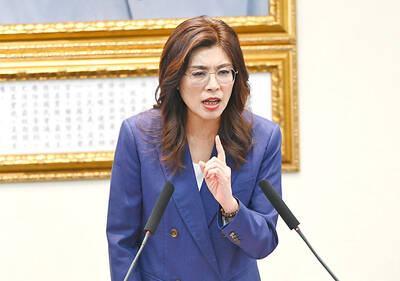
Chinese Nationalist Party (KMT) Chairwoman Cheng Li-wun (鄭麗文) yesterday briefed her party’s Central Standing Committee regarding her scheduled visit to the US between Monday next week and June 16, saying that her purpose would be to persuade the US that the Republic of China (ROC) Constitution was a “one China” constitution that would foster stable and peaceful cross-strait relations. The ROC Constitution is the most important defense for all Taiwanese citizens, as it upholds our democracy and has contributed to our robust economy, which aligns with international and US interests, she said. “We would not be troublemakers and drag the US under,”


 RSS
RSS