


Chinese Nationalist Party (KMT) Chairwoman Hung Hsiu-chu (洪秀柱) said at a “consensus camp” held by the party for young people yesterday in Taipei that critics did not properly understand the so-called “1992 consensus,” and that terms such as “unification” should not spark fear.
She also defined the China-Taiwan relationship as being “between two regions,” saying that as the Republic of China (ROC) Constitution still exists and the Act Governing Relations Between the People of the Taiwan Area and the Mainland Area (臺灣地區與大陸地區人民關係條例) has not been abolished, the cross-strait relationship is one between two regions.
Before people criticize the “1992 consensus,” they should first have a good understanding of the historical background of this term and give it an unbiased evaluation, she said.
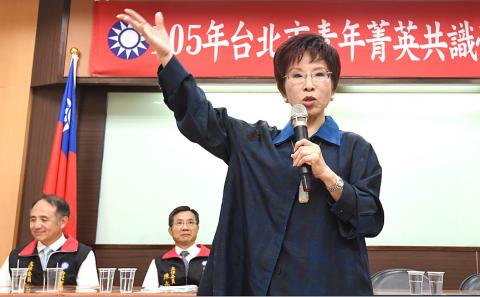
Photo: Liu Hsin-de, Taipei Times
The “1992 consensus” — a term former Mainland Affairs Council chairman Su Chi (蘇起) admitted making up in 2000 — refers to a tacit understanding between the Chinese Nationalist Party (KMT) and the Chinese government that both sides acknowledge there is “one China,” with each side having its own interpretation of what “China” means.
Hung said that the nation’s identity is in crisis and many Taiwanese fear talk of “unification” or any mention of “zhong guo “(China,中國).
“We cannot unify others but are afraid of being unified by the Chinese Communist Party,” she said. “Taiwan simply does not have the needed materials to obtain independence, because that would mean waging a war. Do people really have the guts to throw their heads away and spill hot blood to establish a Taiwan republic?”
She said the KMT is endeavoring to help Taiwan find a way out, as there is no guarantee for how long Taiwan can maintain the “status quo,” but lamented that the KMT in doing so has often been labeled “red.”
“However, I’m not afraid of being labeled. Because politicians need to speak truthfully, rather than talk nonsense for the votes,” she said, adding that people would not support the KMT if it simply copies the Democratic Progressive Party (DPP).
Hung said that people have forgotten that the KMT kept Taiwan safe and helped it to develop and prosper after it came to Taiwan, and remember only the 228 Incident and the White Terror era.
“Has the KMT done nothing else?” she said, adding that learning from history is the way to prevent repeating it.
“It is tragic for Taiwan that some politicians always pour salt into the wound and manufacture hatred, opposition and polarization,” she said.
Hung also commented on the recent change of rules made by Academia Historica on reading files stored in the institution that would restrict people from China, Hong Kong and Macao from accessing the files, which the institution said is “returning to what the law demands.”
“The DPP in the name of transitional justice wants the KMT to open its files concerning the party’s history to the public, but at the same time discriminates against people from certain regions when it comes to accessing the nation’s history, which is a move that is clearly of questionable intent and inappropriate,” she said.
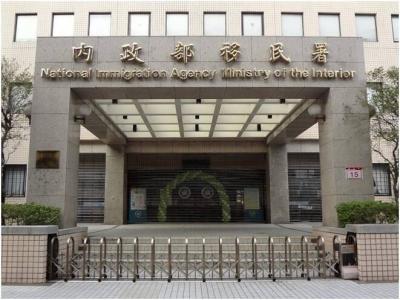
A small number of Taiwanese this year lost their citizenship rights after traveling in China and obtaining a one-time Chinese passport to cross the border into Russia, a source said today. The people signed up through Chinese travel agencies for tours of neighboring Russia with companies claiming they could obtain Russian visas and fast-track border clearance, the source said on condition of anonymity. The travelers were actually issued one-time-use Chinese passports, they said. Taiwanese are prohibited from holding a Chinese passport or household registration. If found to have a Chinese ID, they may lose their resident status under Article 9-1

Taiwanese were praised for their composure after a video filmed by Taiwanese tourists capturing the moment a magnitude 7.5 earthquake struck Japan’s Aomori Prefecture went viral on social media. The video shows a hotel room shaking violently amid Monday’s quake, with objects falling to the ground. Two Taiwanese began filming with their mobile phones, while two others held the sides of a TV to prevent it from falling. When the shaking stopped, the pair calmly took down the TV and laid it flat on a tatami mat, the video shows. The video also captured the group talking about the safety of their companions bathing

PROBLEMATIC APP: Citing more than 1,000 fraud cases, the government is taking the app down for a year, but opposition voices are calling it censorship Chinese Nationalist Party (KMT) Chairwoman Cheng Li-wun (鄭麗文) yesterday decried a government plan to suspend access to Chinese social media platform Xiaohongshu (小紅書) for one year as censorship, while the Presidential Office backed the plan. The Ministry of the Interior on Thursday cited security risks and accusations that the Instagram-like app, known as Rednote in English, had figured in more than 1,700 fraud cases since last year. The company, which has about 3 million users in Taiwan, has not yet responded to requests for comment. “Many people online are already asking ‘How to climb over the firewall to access Xiaohongshu,’” Cheng posted on
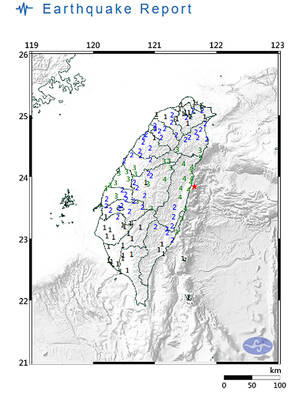
A magnitude 5.7 earthquake yesterday struck off the coast of Hualien, causing brief transportation disruptions in northern and eastern Taiwan, as authorities said that aftershocks of magnitude 5 or higher could occur over the next three days. The quake, which hit at 7:24pm at a depth of 24.5km, registered an intensity of 4 in Hualien and Nantou counties, the Central Weather Administration (CWA) said. There were no immediate reports of damage or injuries. In Taipei, the MRT railway’s operations control center received an earthquake alert and initiated standard safety procedures, briefly halting trains on the Bannan (blue) line for about a minute.


 RSS
RSS