


The legislature’s Internal Administration Committee yesterday passed a review of a proposed amendment to Article 17 of the Act Governing Relations Between the People of the Taiwan Area and the Mainland Area (臺灣地區與大陸地區人民關係條例) to require Chinese spouses to pass civic tests as a condition for obtaining citizenship.
The proposed amendment would require the Ministry of the Interior to set the criteria for the tests, while the length of the currently stipulated residency requirements for naturalizing Chinese spouses would remain unaltered on a provisional basis, but could be subject to change in future legislative negotiations.
The committee on June 13 passed the amendment in committee review, but the deal collapsed when a procedural flaw led to mutual recriminations, with pan-blue and pan-green caucuses mobilizing their lawmakers to prepare for a contentious vote.

Photo: Fang Pin-chao, Taipei Times
However, Democratic Progressive Party (DPP) caucus whip Ker Chien-ming (柯建銘) and Chinese Nationalist Party (KMT) Legislator Wang Jin-pyng (王金平) intervened to calm tensions, brokering a deal to revisit the bill yesterday and avert a confrontation on the legislative floor.
At issue between pan-blue and pan-green lawmakers is the alleged discrepancies in the conditions for the naturalization of foreign spouses from China and those from other nations, a distinction that arose from the fact that the two groups are regulated by different laws, sources said.
KMT legislators said that Chinese spouses — who are subject to the Act Governing Relations Between the People of the Taiwan Area and the Mainland Area — should not be required to wait six years for naturalization, and that their residency requirements should be reduced to four years, which is how long non-Chinese spouses must wait.
However, DPP legislators said that prior to obtaining citizenship, non-Chinese spouses must pass civic tests, provide financial statements and give up their original citizenships, which Chinese spouses do not have to do.
The waiting time for Chinese spouses was last reduced in 2009, when the government cut an eight-year waiting period to six years.
In lieu of a consensus, the committee voted to pass the amendment via a preliminary review.
All eight DPP members voted for the bill and all four KMT members voted against it, which would see civic tests necessary for the naturalization of Chinese spouses and retain the current residency requirement.
KMT Legislator Lin Li-chan (林麗蟬) voiced discontent with the result and accused the DPP of “discrimination against ‘new immigrants,’” saying that Chinese spouses wanted national ID cards primarily to attain a sense of belonging and identity.
DPP Legislator Lee Chun-yi (李俊俋) cited the Mainland Affairs Council’s briefing to the committee, saying that the difference between residency and citizenship for Chinese spouses is found in suffrage and the right to political participation.
All nations set some limits on the naturalization of foreign citizens, Lee said.
Lee said that he believes that naturalization preconditions should be applied equally to all classes of foreign spouses, and that the Act Governing Relations Between the People of the Taiwan Area and the Mainland Area, the Nationality Act (國籍法) and the Immigration Act (入出國移民法) should be amended to have the same standards.
The committee’s deliberations yesterday became so heated that conveners had to call three recesses to preserve order.
KMT Legislator Huang Chao-shun (黃昭順) ended up requesting — and getting — Ker’s presence at the committee meeting. Ker’s mediation efforts eventually restored relative calm to the proceedings.
As the committee members debated the proposed amendments, scores of Chinese spouses and their supporters held a rally outside the Legislative Yuan.
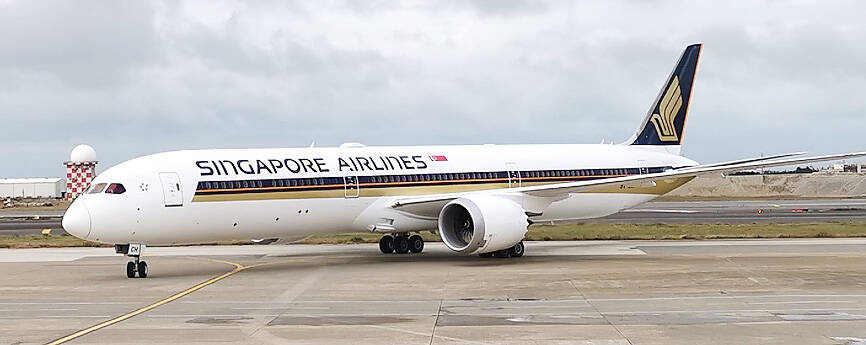
INCREASED CAPACITY: The flights on Mondays, Wednesdays, Fridays and Sundays would leave Singapore in the morning and Taipei in the afternoon Singapore Airlines is adding four supplementary flights to Taipei per week until May to meet increased tourist and business travel demand, the carrier said on Friday. The addition would raise the number of weekly flights it operates to Taipei to 18, Singapore Airlines Taiwan general manager Timothy Ouyang (歐陽漢源) said. The airline has recorded a steady rise in tourist and business travel to and from Taipei, and aims to provide more flexible travel arrangements for passengers, said Ouyang, who assumed the post in July last year. From now until Saturday next week, four additional flights would depart from Singapore on Monday, Wednesday, Friday
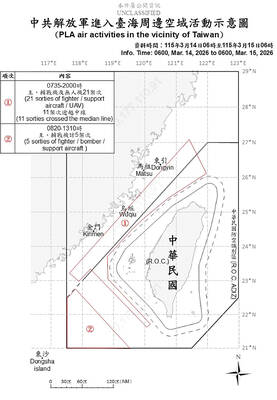
The Ministry of National Defense yesterday reported the return of large-scale Chinese air force activities after their unexplained absence for more than two weeks, which had prompted speculation regarding Beijing’s motives. China usually sends fighter jets, drones and other military aircraft around the nation on a daily basis. Interruptions to such routine are generally caused by bad weather. The Ministry of National Defense said it had detected 26 Chinese military aircraft in the Taiwan Strait over the previous 24 hours. It last reported that many aircraft on Feb. 25, when it spotted 30 aircraft, saying Beijing was carrying out another “joint combat

Taiwan successfully defended its women’s 540 kilogram title and won its first-ever men’s 640 kg title at the 2026 World Indoor Tug of War Championships in Taipei yesterday. In the women’s event, Taiwan’s eight-person squad reached the final following a round-robin preliminary round and semifinals featuring teams from Ukraine, Japan, Thailand, Vietnam, the Basque Country and South Korea. In the finals, they swept the Basque team 2-0, giving the team composed mainly of National Taiwan Normal University students and graduates its second championship in a row, and its fourth in five years. Team captain
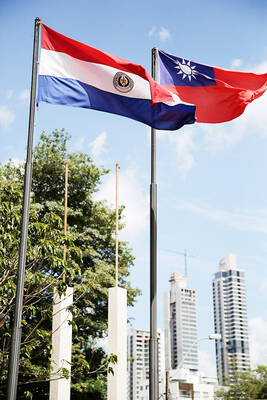
When Paraguayan opposition lawmaker Leidy Galeano returned from an all-expenses-paid tour of six Chinese cities late last year, she was convinced Paraguay risked missing out on major economic gains by sticking with longtime ally Taipei over Beijing — a message that participants on the trip heard repeatedly from Chinese officials. “Everything I saw there, I wanted for my country,” said Galeano, a member of the newly-formed Yo Creo party whose senior figures have spoken favorably about China. This trip and others like it — which people familiar with the visits said were at the invitation of the Chinese consulate in Sao Paulo


 RSS
RSS