


President Tsai Ing-wen (蔡英文) is committed to maintaining the “status quo” and peace and stability in the relationship with China, the Mainland Affairs Council (MAC) said yesterday.
The council was responding to China’s Taiwan Affairs Office Minister Zhang Zhijun’s (張志軍) comments that China’s 1.3 billion people are united in their determination to never allow Taiwan to become independent.
China has repeatedly warned the Democratic Progressive Party of negative consequences if it fails to recognize that Taiwan is a part of China under Beijing’s “one China” principle.
Meeting a group of Taiwanese business representatives in Beijing, Zhang said anything that goes against the “one China” principle would only bring tension and upheaval.
“There is no future in Taiwanese independence and this cannot become an option for Taiwan’s future,” Xinhua news agency cited Zhang as saying.
“This is the conclusion of history,” he said.
“Some people say that you must pay attention to broad public opinion in Taiwan, and that one can understand the attitude and feelings of Taiwanese formed by its special historical experiences and social environment, but Taiwanese society ought to understand and attach importance to the feelings of the 1.37 billion residents of the mainland,” he said.
Separately yesterday, Premier Lin Chuan (林全) said he hopes to see more friendly exchanges between the two sides of the Taiwan Strait to enhance the relationship.
“This is the Executive Yuan’s stance,” Lin said.
“It will not change,” he said.
Legislative Speaker Su Jia-chyuan (蘇嘉全) said that any presupposed political framework across the Taiwan Strait would be counter to peaceful cross-strait development and would negatively affect cross-strait stability.
“The two sides should undertake coordination with sincerity rather than a presupposed political framework,” he said.
Citing Tsai’s inaugural address, the council on Wednesday said that the government would “conduct cross-strait affairs in accordance with the Republic of China Constitution, the Act Governing Relations between the People of the Taiwan Area and the Mainland Area (臺灣地區與大陸地區人民關係條例) and other relevant legislation.”
Tsai has shown the utmost flexibility and goodwill on cross-strait ties, the council said, calling for the two sides to pragmatically face and deal with cross-strait relations.
The council also said the two sides must set aside the baggage of history, cherish the hard-earned fruit borne of the more than 20 years of bilateral interactions and negotiations, and engage in positive dialogue for the benefit of their people.
Additional reporting by Alison Hsiao
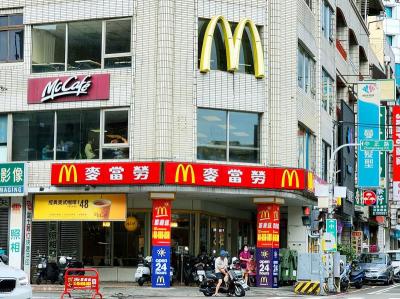
Fast food chain McDonald's is to raise prices by up to NT$5 on some products at its restaurants across Taiwan, starting on Wednesday next week, the company announced today. The prices of all extra value meals and sharing boxes are to increase by NT$5, while breakfast combos and creamy corn soup would go up by NT$3, the company said in a statement. The price of the main items of those meals, if ordered individually, would remain the same. Meanwhile, the price of a medium-sized lemon iced tea and hot cappuccino would rise by NT$3, extra dipping sauces for chicken nuggets would go up

Nvidia Corp CEO Jensen Huang (黃仁勳) arrived in Taiwan yesterday ahead of upcoming AI and technology events, saying he plans to meet with clients and Taiwan Semiconductor Manufacturing Co Chairman C.C. Wei (魏哲家) during his visit. After landing at Taipei Songshan Airport, Huang posed for photos with fans and handed out Yakult drinks to reporters and supporters waiting at the scene, saying he has “a lot to do” during the trip. Asked about reports that Nvidia’s planned headquarters site in Taipei’s Beitou Shilin Technology Park could break ground on May 27, Huang said that if the company holds an event, he would

FUKUOKA SITUATION: Japanese media reported that the pathogen is expected to be identified by the summer, while the CDC downplayed the idea that it was hMPV A “mysterious cold-like illness” reported in Japan’s Fukuoka Prefecture does not seem to be a new disease, but Japanese authorities have been asked about the situation, the Centers for Disease Control (CDC) said yesterday. The Fukuoka Prefectural Medical Association on Wednesday told a news conference that a “mystery cold” that has become a hot topic on social media is “highly likely to be caused by some kind of viral infection,” Japan’s KBC News reported. “Many people are experiencing symptoms starting with a sore throat, followed by a runny nose, phlegm and a severe cough,” KBC News reported, citing association officials. Health authorities are

Carrefour Taiwan is to begin using a new name from the start of July, but it cannot divulge the name until then, the chairman of the supermarket chain's parent company said today. President Chain Store Co chairman Lo Chih-hsien (羅智先) was asked by reporters after a shareholders' meeting to confirm whether the company has settled on a new name for the supermarket brand. In March, the government-registered name of two Carrefour Taiwan branches was quietly changed to "Le Chia Kang" (樂家康) in Chinese, raising speculation that has been selected as the name. Lo said that because of local regulations and contractual obligations, the


 RSS
RSS