


Several lawmakers yesterday blasted China over a decision by customs officials in Macau to deny entry to a Taiwanese woman because her passport had a sticker on it that read: “Taiwan is my country.”
The Chinese-language Apple Daily reported that the woman, surnamed Su (蘇), is a dancer who arrived in Macau on Thursday last week with the rest of her dance troupe for performances there on Friday and Saturday.
The report said that after seeing the sticker on the back cover of her passport, Macau customs officials took Su into a small room for questioning, during which they allegedly told her: “You are asking for trouble by challenging China’s authority.”
Su was denied entry on the grounds that “the authenticity of [her] travel document is questionable,” causing her to face possible compensation claims from her agency due to her failure to take part in the planned performances, the report said.
In an interview with the Apple Daily, Su said she put the sticker on the back cover of her passport when she was studying abroad in 2012 and that she had no trouble entering Japan, South Korea and European nations in the past four years.
The report quoted Su as saying that in a last-ditch attempt to not let her passport jeopardize her chance of participating in the performances, she had expressed willingness to remove it.
However, the customs officials still asked her to sign an affidavit and arranged for her to be on the next available flight to Taiwan, Su was quoted as saying.
Democratic Progressive Party Legislator Ho Hsin-chun (何欣純) on Facebook yesterday said that the incident occurred before the new government was sworn in, on May 20, exposed China’s ugly side of being truculent and unreasonable.
“Because of this sticker, a young dancer was deported by Macau customs officials, which affected her work,” Ho said.
“I demand that the Straits Exchange Foundation lodge a protest and negotiate with China, and that the Ministry of Foreign Affairs’ personnel stationed in Macau also take their complaints to the Macau government and customs, to safeguard our citizens’ freedom, personal security and right to work,” Ho said.
New Power Party Legislator Freddy Lim (林昶佐) said the incident underscored China’s deliberate attempts to single out Taiwanese and make things difficult for them.
“Unless there is evidence that there have also been cases of US or Japanese citizens being denied entry when seeking to enter Hong Kong or Macau with sticker-adorned passports, it is without doubt that the policy only targets Taiwanese,” Lin said.
Ministry of Foreign Affairs spokeswoman Eleanor Wang (王珮玲) said any unauthorized modifications made to a passport could impede its identification purpose and global credibility.
“The ministry has repeatedly cautioned our citizens about the matter. The nation’s passports currently enjoy visa-free or landing visa status in 164 countries... The public should cherish this hard-earned achievement and refrain from making any alterations to passports to safeguard their rights while traveling,” Wang said.
Wang said that as of yesterday, a total of 16 Taiwanese, including Su, had been denied entry by Macau customs officials due to stickers on their passports this year.
The incident came weeks after the legislature’s Foreign Affairs and National Defense Committee approved a proposal to eliminate a controversial addendum to the Enforcement Rules of the Passport Act (護照條例施行細則) that bans any modifications to passports.
The ban had been perceived as targeting the pro-independence Taiwanese passport sticker movement, which encourages Taiwanese to cover the “Republic of China” seal on their passport cover with a “Republic of Taiwan” sticker.
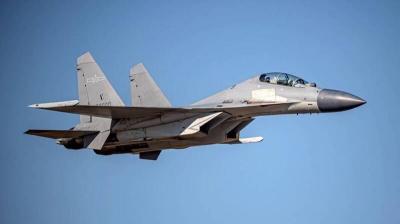
Eight Chinese naval vessels and 24 military aircraft were detected crossing the median line of the Taiwan Strait between 6am yesterday and 6am today, the Ministry of National Defense said this morning. The aircraft entered Taiwan’s northern, central, southwestern and eastern air defense identification zones, the ministry said. The armed forces responded with mission aircraft, naval vessels and shore-based missile systems to closely monitor the situation, it added. Eight naval vessels, one official ship and 36 aircraft sorties were spotted in total, the ministry said.
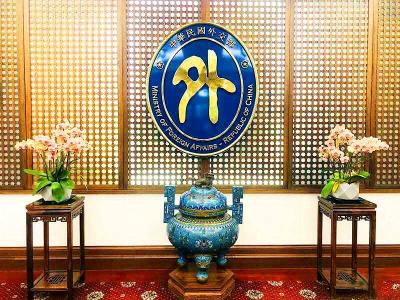
The Ministry of Foreign Affairs (MOFA) today said that if South Korea does not reply appropriately to its request to correct Taiwan’s name on its e-Arrival card system before March 31, it would take corresponding measures to alter how South Korea is labeled on the online Taiwan Arrival Card system. South Korea’s e-Arrival card system lists Taiwan as “China (Taiwan)” in the “point of departure” and “next destination” fields. The ministry said that it changed the nationality for South Koreans on Taiwan’s Alien Resident Certificates from “Korea” to “South Korea” on March 1, in a gesture of goodwill and based on the

Taiwanese officials were shown the first of 66 F-16V fighter jets purchased by Taiwan from the United States, the Ministry of National Defense said yesterday, adding the aircraft has completed an initial flight test and is expected to be delivered later this year. A delegation led by Deputy Minister of National Defense Hsu Szu-chien (徐斯儉) visited Lockheed Martin’s F-16 C/D Block 70 (also known as F-16V) assembly line in South Carolina on March 16 to view the aircraft. The jet will undergo a final acceptance flight in the US before being delivered to Taiwan, the
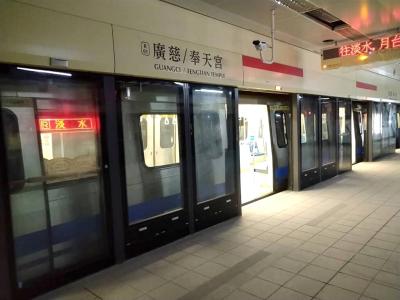
The New Taipei Metro's Sanyin Line and the eastern extension of the Taipei Metro's Tamsui-Xinyi Line (Red Line) are scheduled to begin operations in June, the National Development Council said today. The Red Line, which terminates at Xiangshan Station, would be connected by the 1.4km extension to a new eastern terminal, Guangci/Fengtian Temple Station, while the Sanyin Line would link New Taipei City's Tucheng and Yingge stations via Sanxia District (三峽). The council gave the updates at a council meeting reviewing progress on public construction projects for this year. Taiwan's annual public infrastructure budget would remain at NT$800 billion (US$25.08 billion), with NT$97.3


 RSS
RSS