


American Institute in Taiwan (AIT) Director Kin Moy yesterday visited Legislative Speaker Su Jia-chyuan (蘇嘉全) at the Legislative Yuan in Taipei to congratulate him on his recent election, as both parties expressed their desire for stronger US-Taiwan ties.
Su, who on Monday was elected the nation’s first non-Chinese Nationalist Party (KMT) legislative speaker, said Moy contacted him through the Legislative Yuan’s public relations office and expressed his wish to pay him a visit and offer his congratulations.
“We have talked a lot, including how legislative meetings proceeded in the past, and he praised Taiwan’s democracy, saying that, despite the disputes, lawmakers could always reach conclusions in the end,” Su said after a 40-minute meeting behind closed doors. “He also said that Taiwan and the US have a very close relationship, adding that the US hopes that Taiwan stabilizes its economic development, and that Taiwan and the US can be good partners in the future.”

Photo: Fang Pin-chao, Taipei Times
In response to media queries on whether they touched on more sensitive issues, such as the ongoing territorial disputes in the South China Sea, Su said: “No.”
Moy was more concerned about the legislature’s priorities in lawmaking, Su said, adding that a bill on transition of power is expected to be passed soon after the next legislative session starts on Feb. 19, while more controversial bills will be left to further cross-party negotiations.
In related news, Deputy Legislative Speaker Tsai Chi-chang (蔡其昌) spoke about what he plans to do to allow the public to petition for legislative proposals online.
Tsai said that he would begin research on the creation of an online petition platform after the Lunar New Year holiday, adding that he expected to meet two major challenges.
“On the technical part, we have to overcome issues on security and authenticity, because petitioning for legislation online cannot be like dong a petition on Facebook, where anyone can apply for an account,” Tsai said. “But if you want the public to leave their personal data, you must make sure that it is safe.”
Tsai said that laws would need to be amended to make online petitions legally valid, while a set of regulations would also be needed to regulate details of the petition procedure, such as the threshold.

The military has spotted two Chinese warships operating in waters near Penghu County in the Taiwan Strait and sent its own naval and air forces to monitor the vessels, the Ministry of National Defense (MND) said. Beijing sends warships and warplanes into the waters and skies around Taiwan on an almost daily basis, drawing condemnation from Taipei. While the ministry offers daily updates on the locations of Chinese military aircraft, it only rarely gives details of where Chinese warships are operating, generally only when it detects aircraft carriers, as happened last week. A Chinese destroyer and a frigate entered waters to the southwest
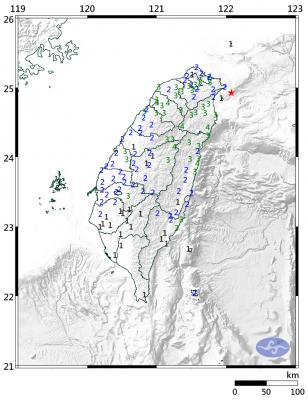
A magnitude 6.1 earthquake struck off the coast of Yilan County at 8:39pm tonight, the Central Weather Administration (CWA) said, with no immediate reports of damage or injuries. The epicenter was 38.7km east-northeast of Yilan County Hall at a focal depth of 98.3km, the CWA’s Seismological Center said. The quake’s maximum intensity, which gauges the actual physical effect of a seismic event, was a level 4 on Taiwan’s 7-tier intensity scale, the center said. That intensity level was recorded in Yilan County’s Nanao Township (南澳), Hsinchu County’s Guansi Township (關西), Nantou County’s Hehuanshan (合歡山) and Hualien County’s Yanliao (鹽寮). An intensity of 3 was

Japanese Prime Minister Sanae Takaichi’s comment last year on Tokyo’s potential reaction to a Taiwan-China conflict has forced Beijing to rewrite its invasion plans, a retired Japanese general said. Takaichi told the Diet on Nov. 7 last year that a Chinese naval blockade or military attack on Taiwan could constitute a “survival-threatening situation” for Japan, potentially allowing Tokyo to exercise its right to collective self-defense. Former Japan Ground Self-Defense Force general Kiyofumi Ogawa said in a recent speech that the remark has been interpreted as meaning Japan could intervene in the early stages of a Taiwan Strait conflict, undermining China’s previous assumptions
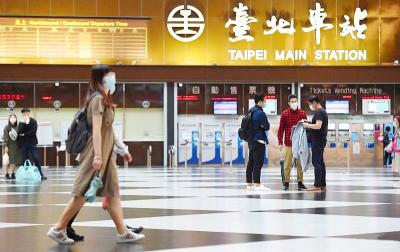
Taiwan Railways Corp (TRC) today announced that Shin Kong Mitsukoshi has been selected as the preferred bidder to operate the Taipei Railway Station shopping mall, replacing the current operator, Breeze Development Co Ltd. Among eight qualified firms that delivered presentations and were evaluated by a review committee, Shin Kong Mitsukoshi was ranked first, while Breeze was named the runner-up, the rail company said in a statement. Contract negotiations are to proceed in accordance with regulations, it said, adding that if negotiations with the top bidder fail, it could invite the second-ranked applicant to enter talks. Breeze in a statement today expressed doubts over


 RSS
RSS